
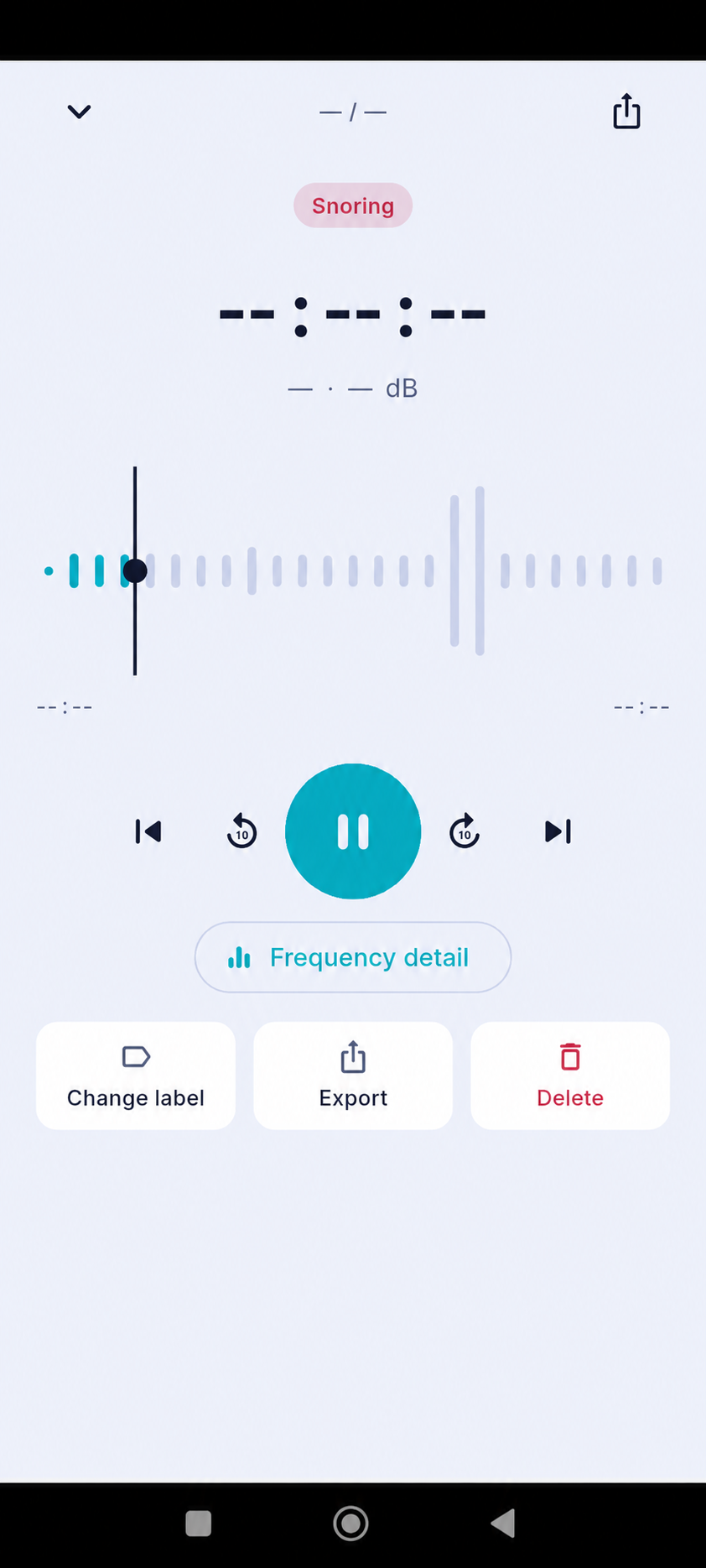
A snoring label in a sleep app is a prompt to review a sound, not a diagnosis. A phone microphone can capture overlapping noises, and a short recording cannot establish who made a sound, why it occurred, or whether it signals a medical condition. Reviewing clips calmly and alongside other context can help you keep useful notes without reading too much into one night.
Check the clip before accepting its label
Listen to the selected clip at a comfortable volume and compare the suggested category with the audio you hear. Background noise, a partner, a pet, or a fan can make a short sound seem similar to snoring. If it is unclear, leave the label as uncertain or correct it using the app’s available controls.
A sound label describes the app’s classification. It does not identify the person or confirm the cause. Avoid making assumptions about someone else from a recording, especially when the sound is brief or the room contains several possible sources.
Use timing and room context
Look at where the clip appears in the session timeline and listen to a little around it if that helps. Note room changes that could affect the microphone, such as a different phone position, open window, heating system, or another person sharing the space.
Comparing the same person or room across nights can still be misleading if the setup, distance, or background sound changed. Keep observations descriptive and record only context that is useful to you.
Look for recurring observations across nights
If you choose to track a pattern, review several sessions rather than focusing on the loudest or most memorable clip. A sleep diary can record when you noticed a sound and how rested you felt, without turning either detail into a score. Patterns may help you decide what questions to raise with a professional.
The app’s event count, label, or sound level is not a clinical measurement. A lack of detected snoring does not rule out a concern, and a detected clip does not prove a disorder. Use recordings as optional personal notes, not as a screening result.
Know when a healthcare conversation may help
If you have persistent sleep concerns, witnessed breathing pauses, or substantial daytime sleepiness, discuss them with a qualified healthcare professional. A recording can be shared only if you are comfortable and have considered the privacy of everyone who may be heard.
AuraSleep is a wellness app, not a medical device. It cannot diagnose sleep apnea or another breathing condition. A clinician can decide what assessment is appropriate based on your history and symptoms.
Review a snoring recording as one limited observation. Check whether the sound is clear, consider its timing and surroundings, look for patterns across several nights, and seek professional advice for persistent symptoms rather than relying on an app label.
Sources
- NHLBI: Healthy Sleep Habits · View source
- AASM/SRS: Recommended Amount of Sleep for a Healthy Adult · View source