
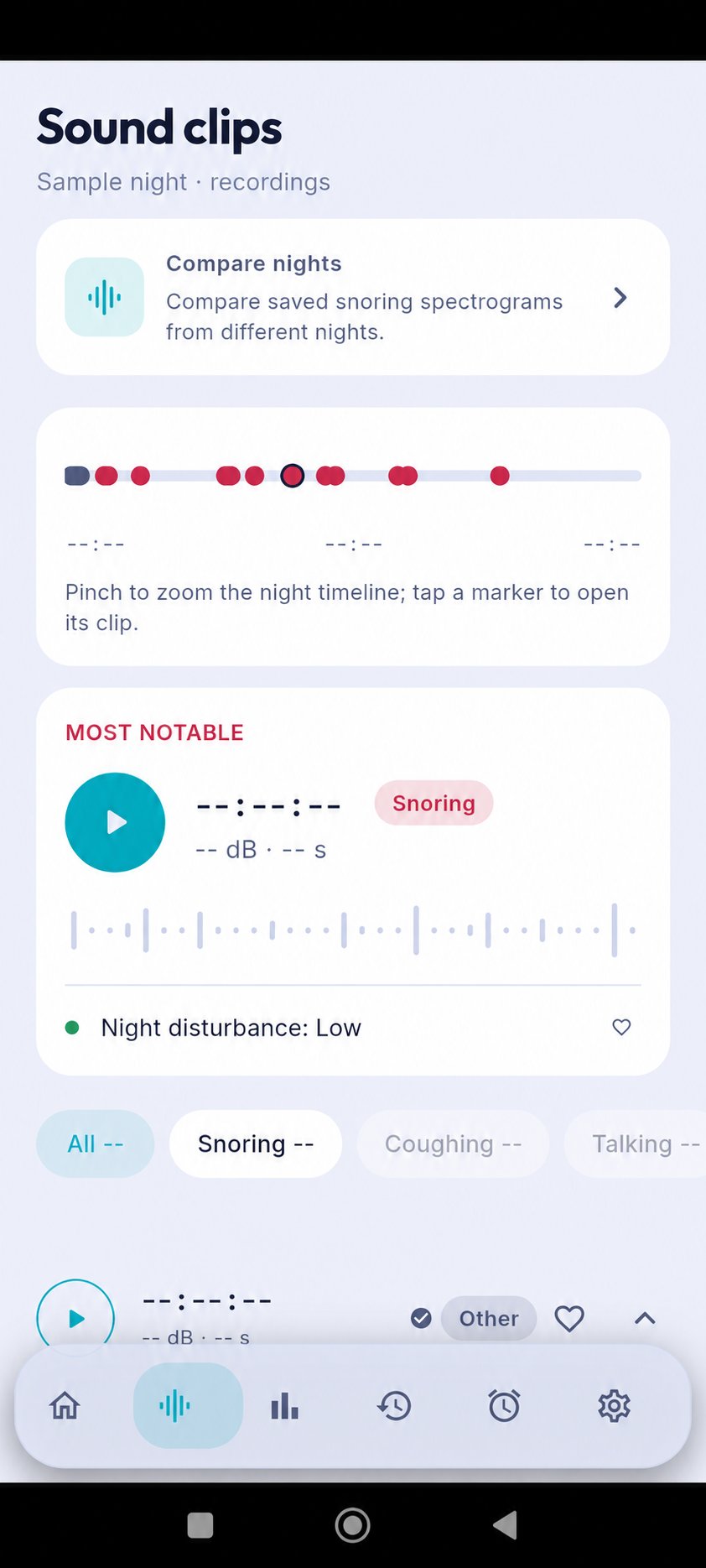
A sleep app may flag sounds that are worth reviewing, but a label is only a starting point. Rooms contain many overlapping noises, and a short clip cannot explain an entire night or identify a medical condition. A calm, consistent review helps you understand what the app captured while keeping personal notes and health questions in the right perspective.
Start with the whole timeline
Open the completed session and look at the event timeline before playing individual clips. The timeline can show when detected sounds occurred relative to the rest of the night. First notice broad clusters or quiet periods, rather than assuming that every marker represents a separate meaningful event.
Keep in mind that background noise, a partner, pets, traffic, and the phone’s position can all affect what is recorded. If the room setup changed, note that alongside the session instead of comparing the timeline as if conditions were identical.
Listen to a clip and check its context
Choose one clip and listen at a comfortable volume. Compare the app’s suggested label with what you can actually hear, and check the time around the marker if the app provides it. A sound can be ambiguous when it is brief, muffled, or mixed with other room noise, so it is reasonable to leave a label unchanged or mark it as uncertain.
Do not use a clip to infer what someone else was thinking or feeling. If another person may be recognizable, consider their privacy before replaying, exporting, or sharing the recording. Use the app’s deletion and retention settings according to your preferences.
Look for repeatable patterns, not a single result
After several sessions, you can compare general patterns such as whether a sound appears on multiple nights or near a change in your schedule. Add a short note about relevant context, such as travel or a different room. These observations may help you ask better questions, but they do not establish why a sound happened.
Avoid treating the number of markers, a sound category, or an app estimate as a score for sleep quality. Sleep varies naturally, and one unusual recording can have many explanations. A consistent diary note can be more useful than trying to interpret every second of audio.
Know when to seek professional advice
AuraSleep is a wellness app, not a medical device. Its sound detections cannot diagnose snoring-related conditions, breathing disorders, or other health concerns. If you have persistent sleep difficulties, witnessed breathing pauses, or significant daytime sleepiness, discuss them with a qualified healthcare professional.
If you decide to bring a recording or notes to an appointment, describe them as personal observations and include the dates or context only if you are comfortable sharing them. A clinician can assess concerns using appropriate questions and evaluation; an app clip is not a substitute.
Review night sound events as clues for reflection, not as definitive answers. Check the timeline, listen to individual clips in context, look for patterns over multiple nights, and protect the privacy of anyone who may be recorded.
Sources
- NHLBI: Healthy Sleep Habits · View source
- AASM/SRS: Recommended Amount of Sleep for a Healthy Adult · View source