
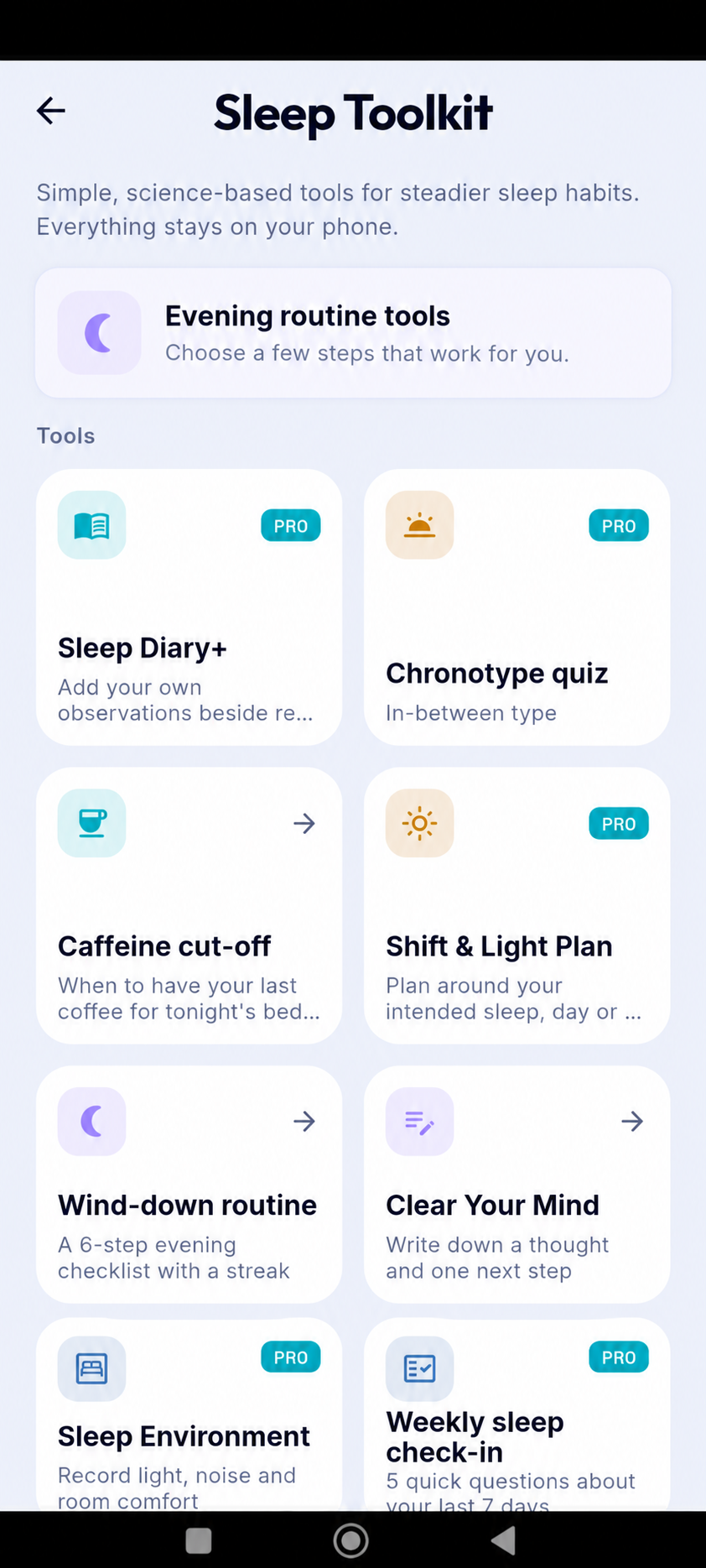
A repeatable evening routine can make the transition to bed feel clearer, even when the day has been unpredictable. Start with a few practical cues that fit your schedule; the point is to create a comfortable rhythm, not to guarantee sleep on command.
Start with a wake-up time you can keep
A steady wake-up time gives your day a reliable anchor. Choose one that works on most workdays and days off, then plan bedtime around the amount of sleep you need. Adults generally benefit from at least seven hours, though individual needs vary. If your current schedule is far from your goal, shift it gradually rather than trying to change everything in one night.
Regularity matters more than a perfect minute-by-minute schedule. A small, sustainable adjustment is easier to repeat than a strict plan that conflicts with family, work, or travel.
Create a short wind-down window
Set aside a calm period before bed and use it for a few low-effort actions. You might dim bright lights, put tomorrow’s essentials in one place, take a warm shower, read on paper, or listen to quiet audio. Pick steps that feel relaxing to you; a routine should reduce decisions, not become another task list to complete perfectly.
Keep the sequence simple enough to remember. Linking one action to another—such as preparing clothes after brushing your teeth—can make the routine easier to follow without relying on motivation.
Make the bedroom support rest
A cool, dark, and quiet room works well for many people. Adjust what you can: reduce light, lower disruptive noise, and keep the bed comfortable. If outside sounds are difficult to control, a fan or gentle background sound may help mask them. The best setup is personal, so notice what makes your own room feel restful.
Try to keep work, scrolling, and stressful planning out of bed when possible. If you are awake and frustrated for a long time, a quiet activity in dim light can be more comfortable than watching the clock. Return to bed when you feel sleepy.
Use notes to learn what is repeatable
A brief sleep diary can help you notice patterns without turning sleep into a scorecard. Record a few details such as bedtime, wake time, caffeine timing, or how rested you felt. After several days, look for broad patterns rather than drawing conclusions from one unusual night.
AuraSleep includes a wind-down checklist and a sleep journal for personal observations. These tools can help you keep a routine visible and review your own notes over time. They are for general wellness and are not a medical assessment.
Adjust the routine when life changes
A routine should bend around shift work, caregiving, travel, and changing seasons. Keep one or two anchor habits when the full schedule is impossible, such as a quiet pre-sleep interval or a consistent wake-up cue. If a step regularly feels stressful, simplify or replace it.
Persistent trouble sleeping, loud snoring with breathing pauses, or significant daytime sleepiness deserves a conversation with a qualified health professional. An app or checklist cannot diagnose the cause.
The most useful bedtime routine is one you can return to. Choose a realistic wake-up anchor, add a short calming sequence, make the sleep space comfortable, and review patterns with curiosity rather than judgment.
Sources
- NHLBI: Healthy Sleep Habits · View source
- AASM/SRS: Recommended Amount of Sleep for a Healthy Adult · View source