
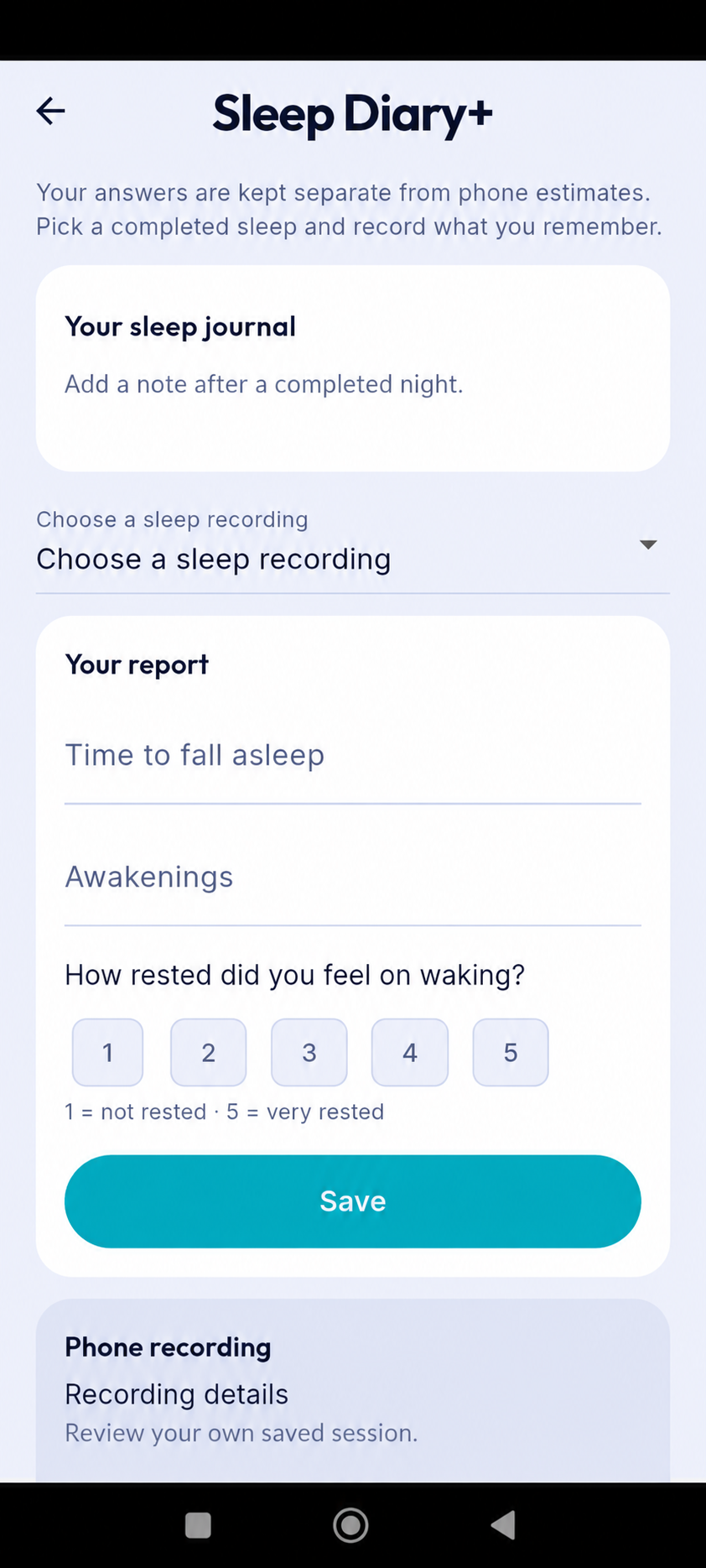
A sleep diary is a short record of what you remember about your night and how you felt in the morning. It can make routines easier to reflect on because it puts a few observations in one place. The goal is not to rate yourself or explain every rough night; it is to collect useful context over time.
Keep the entry short and repeatable
Start with details you can recall without extra effort: when you went to bed, when you got up, whether you remember waking, and how rested you felt. You might also note a late coffee, a change in work hours, travel, or a stressful evening if it seems relevant. Choose only a few fields you are likely to complete.
A diary works best when it is easy to return to. If writing several paragraphs feels like a chore, use a couple of words or a simple rating. Missing a day is not a failure; continue with the next night instead of trying to reconstruct everything.
Separate what you remember from what an app estimates
A personal note and a phone-generated estimate describe different kinds of information. Your memory can capture how the night felt, while a sleep-tracking app may summarize timing or recorded sound events using its own method. Keeping those perspectives distinct makes it easier to interpret both without treating either as a complete account.
AuraSleep Sleep Diary lets you add a morning check-in to a completed sleep and keeps those answers separate from phone estimates. You can record items such as how rested you felt, then review your own entries alongside the available night summary.
Look for a pattern across several days
After a week or two, review the notes for broad repetitions. Do later bedtimes often follow late shifts? Do you feel more rested after a particular evening routine? A diary cannot prove that one detail caused another, but it can help you decide which habit is worth observing more carefully.
Try not to turn each entry into a scorecard. Sleep varies naturally, and one unusual night can have many explanations. Use the diary to notice questions and patterns, not to diagnose a sleep disorder or make medical decisions on your own.
Bring clear notes to a professional when needed
If you speak with a healthcare professional about ongoing sleep difficulties, a concise record may help you describe your routine and concerns. Keep the notes factual and include the period they cover. A diary is supporting context, not a diagnosis or a substitute for clinical advice.
Persistent sleep problems, breathing pauses during sleep, or significant daytime sleepiness deserve professional attention. AuraSleep is a wellness app, not a medical device, and its diary does not assess or treat a condition.
A useful sleep diary is brief, personal, and consistent enough to reveal broad patterns. Record only what helps you reflect, keep personal recollections separate from app estimates, and ask a qualified professional when sleep problems persist.
Sources
- NHLBI: Insomnia Treatment and Sleep Diary · View source