
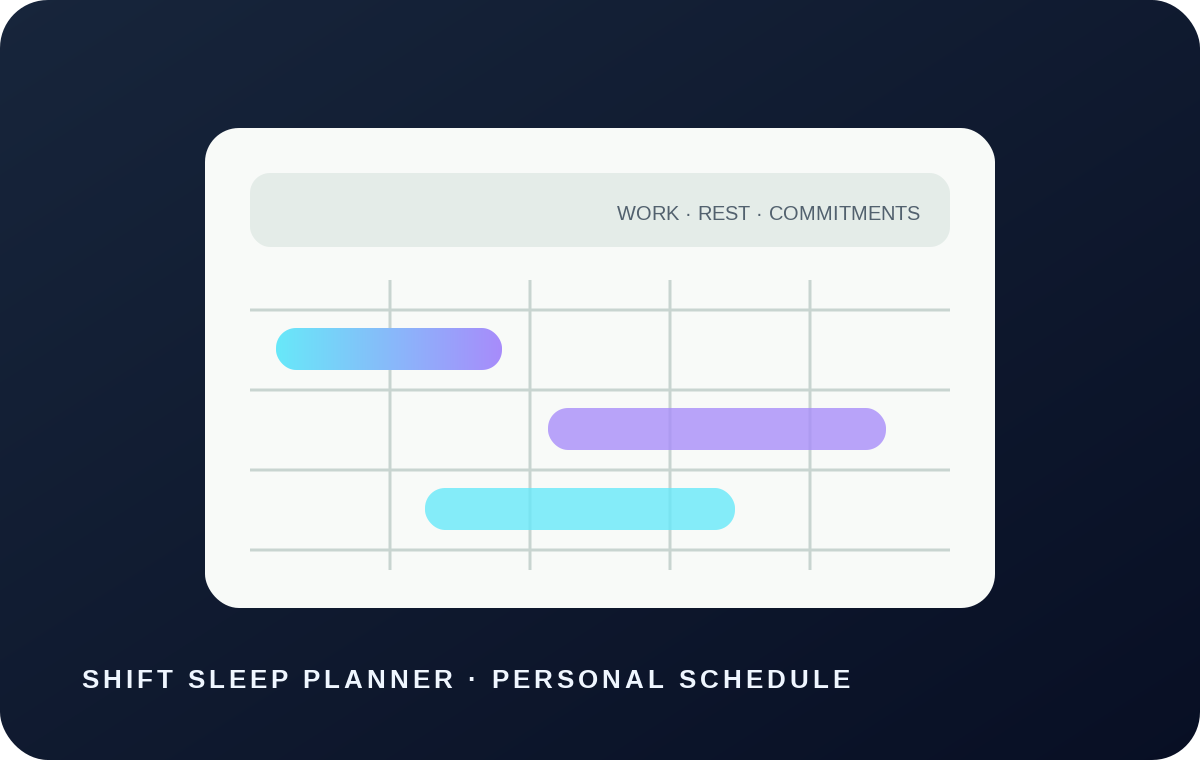
A shift plan maker helps turn a work rota into a personal week plan. The important design question is not how many colors it has; it is whether the plan includes the time and commitments that shape the day before and after a shift. A small, editable plan is often more useful than an elaborate schedule that becomes outdated.
Map the week in layers
Add the employer’s scheduled shifts first, then mark travel, handover, meals, family commitments, and appointments. Use separate categories so planned work does not get confused with personal blocks. For overnight shifts, write both the calendar date and local time clearly. This creates a view of the entire week rather than a series of disconnected shift cards.
Protect flexible recovery space
After each duty, identify a plausible wind-down and sleep opportunity. Keep the block flexible: delays, noise, and family needs can change what is possible. Leave some buffer before the next required activity rather than planning every minute. If you are changing from nights to days, compare options without assuming there is one perfect transition for everyone.
Review instead of over-optimizing
At the end of a week, note what changed and which assumptions were unrealistic. Perhaps the commute was longer, a handover regularly ran late, or a sleep block overlapped with an appointment. Adjust only the blocks that matter. This small feedback loop makes the next plan more accurate without framing the schedule as a performance score.
Create the plan in Shift Sleep Planner
Shift Sleep Planner offers a calendar for shifts, editable examples, fixed commitments, and sleep-window preferences. The app can help you see a plan in context, while you remain responsible for confirming its accuracy. It does not assign work or determine whether a shift pattern is safe or lawful; use your employer’s roster and official guidance for those questions.
A personal shift plan should make the week easier to understand and easier to update. Include real-life time around work, keep recovery blocks flexible, and verify changes against the roster.
Sources and further reading
- NIOSH — Work Organization Strategies for Nurses · View source