
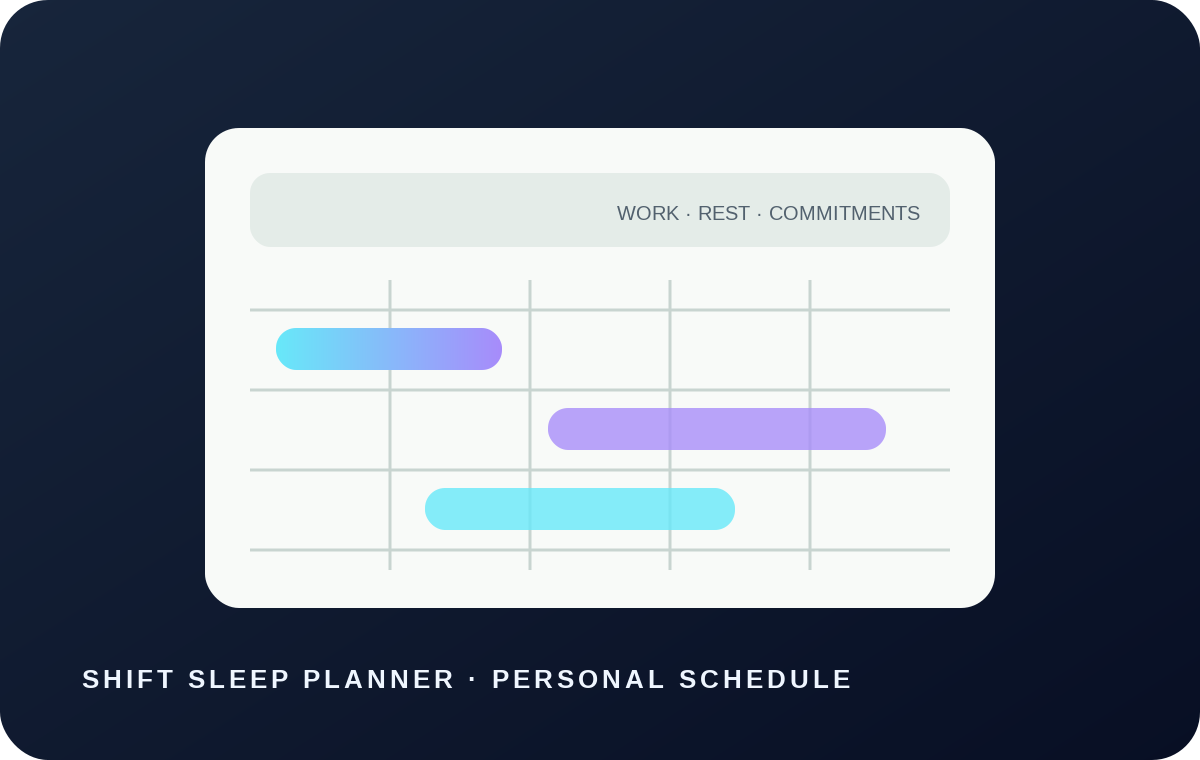
A nurse shift schedule is shaped by staffing, patient needs, contracts, and local practice. Two rosters with the same weekly hours can differ in start times, night sequences, short turnarounds, and notice of changes. A shift schedule planner can make the pattern visible, but it cannot decide whether a schedule is safe, legal, or suitable for a particular worker. Start with the roster that was actually issued, then describe the parts that affect your own time.
Map more than one week
Record each duty’s date, start, finish, and type across a complete rotation. Include weekends, on-call periods, split duties, overtime, training, and changes made after the original roster. Mark whether times are confirmed or tentative. A one-week screenshot may miss a repeating pattern or a sequence of nights followed by a quick return.
Inspect transitions and recovery gaps
For each pair of duties, note the interval from the recorded end of one to the next start. Then add the reality around it: travel, meals, family care, and the time you can actually protect for sleep. A gap between shifts is not the same thing as sleep obtained. This distinction helps a personal planner avoid presenting empty calendar space as guaranteed recovery.
Read research as evidence, not a rulebook
A later cluster randomized trial tested a schedule designed to reduce quick returns among healthcare workers. It is useful evidence about one organizational change in a defined setting, not proof that every nurse schedule should use the same minimum interval. Outcomes, staffing constraints, country rules, patient needs, and worker preferences all matter.
Make a personal view with Shift Sleep Planner
Shift Sleep Planner can display upcoming shifts beside personal commitments and highlight open time according to settings you choose. Use it to see a rotation, note uncertain duties, and prepare questions before a schedule discussion. Confirm every duty against the employer’s source because an imported or manually entered calendar can be incomplete or outdated.
Review the full roster, the transitions between duties, and the personal obligations that use recovery time. Research can identify patterns worth discussing, but it does not establish one schedule for every nurse. Use a planner to organize your own view and raise workplace concerns through the right channels.
Sources and further reading
- Cochrane Review — Adapting shift work schedules for sleep outcomes · View source
- Cluster randomized trial — reducing quick returns among healthcare workers · View source
- Integrative review — work schedule characteristics and fatigue among rotating-shift nurses · View source
- NIOSH — Fatigue and Work · View source