
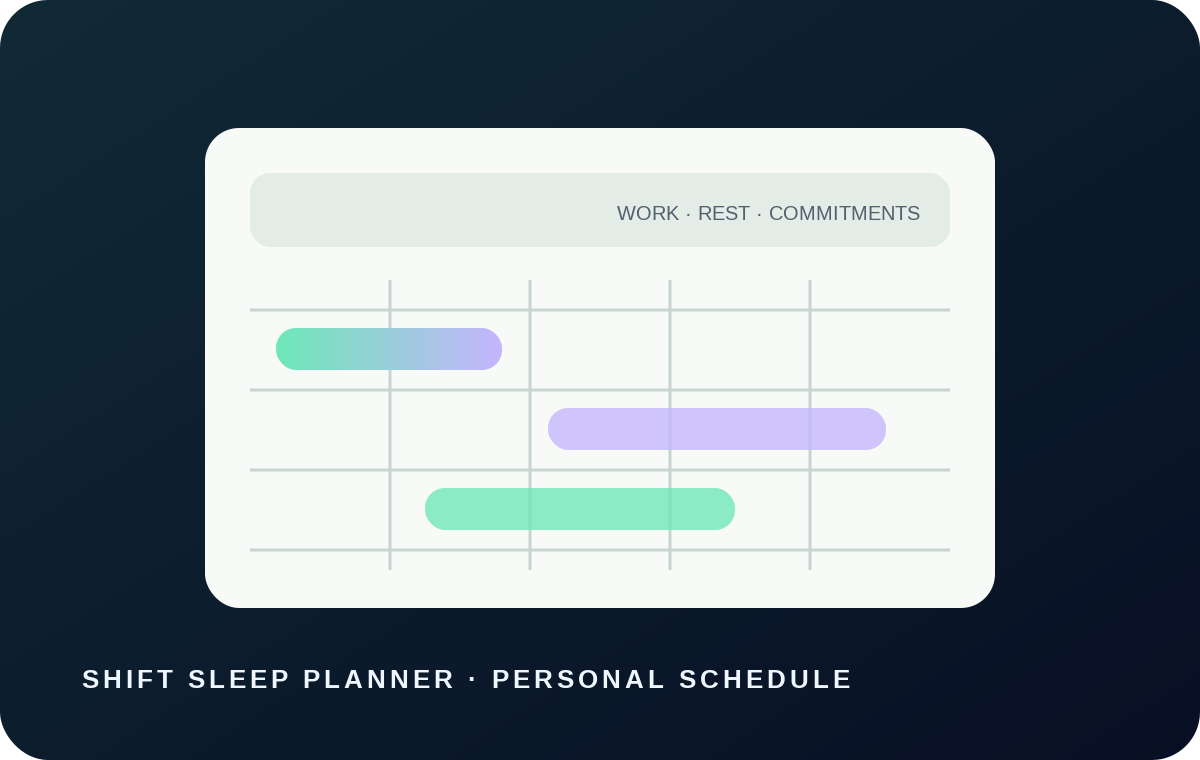
A nurse shift planner is most valuable when it reduces avoidable schedule confusion. Nurses may juggle changing start times, handovers, commuting, family responsibilities, and recovery. A personal planner cannot solve staffing pressures, but it can keep the current roster and personal commitments visible in one place.
Import or enter the source roster carefully
Use the employer’s current roster as the source. Check the date and time zone, especially for overnight duties and calendar imports. Confirm that repeated shifts did not duplicate, and that changes from a manager replaced outdated entries. If you use an imported feed, know whether it refreshes automatically or only when you request an update.
Build around the shift, not just the shift
Add preparation, commute, handover buffer, meals, and personal commitments that affect sleep opportunities. Mark a realistic wind-down or rest window after work, then leave flexibility for delays. Keep health or patient details out of personal calendar notes; record only what is necessary to coordinate your time.
Use a light weekly review
At a regular time, scan the next week for close turnarounds, overnight transitions, appointments, and days when your available sleep window is constrained. A planner can reveal a collision early so you can ask questions or adjust personal plans. It cannot validate legal rest requirements or declare a schedule safe.
How the Shift Sleep Planner workflow helps
Shift Sleep Planner supports calendar-based shift entry, fixed commitments, sleep-window preferences, reminders, and planning tools. You can review the day’s upcoming work and compare options. Keep the roster authoritative, confirm every change, and use your employer’s process for staffing concerns or local rule interpretation.
A personal nurse shift planner gives the week a clearer shape. Keep the employer roster as the source of truth, protect private information, and review the next shifts before they become urgent.
Sources and further reading
- NIOSH — Training for Nurses on Shift Work and Long Work Hours · View source
- NIOSH — Fatigue and Work · View source