
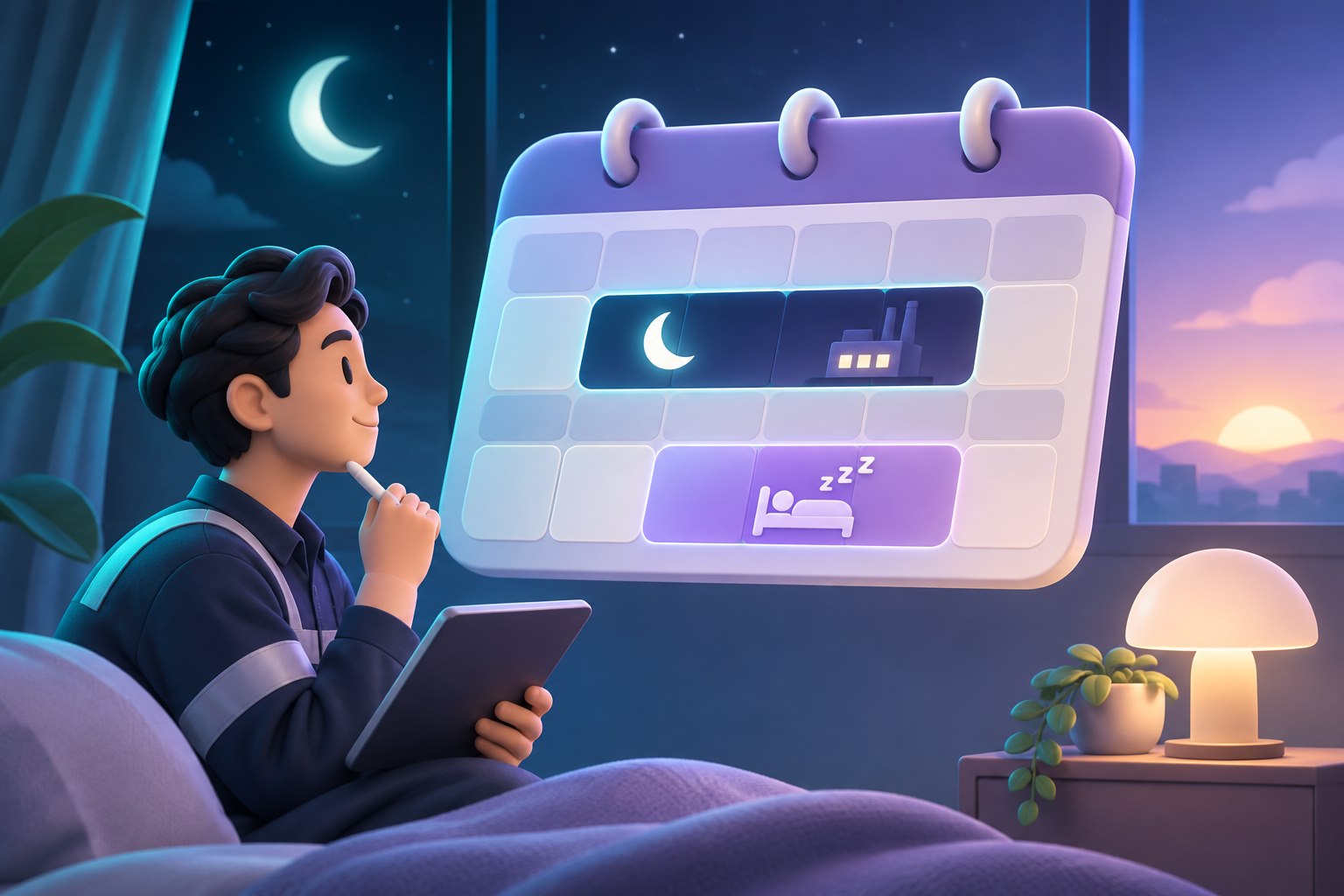
A night shift sleep planner is most useful when it shows the whole transition around a duty, rather than suggesting that every worker should follow one fixed bedtime. The hours after clock-out may include a handover, a commute, food, childcare, or a second responsibility. Those details change what is realistically available. This guide uses a worked example to help you map the next day, state what is uncertain, and prepare a conversation about recurring schedule pressure. It does not predict sleep, measure recovery, or determine whether you are safe to work or drive.
Build the timeline from clock-out to the next duty
Write down the shift end first, including whether it falls on the following date. Add required handover and the journey home as separate items. When the time varies, use a realistic range based on your own experience and label it as an estimate. Next, include meals, care responsibilities, appointments, and any other non-negotiable task. Finally, show the next duty or wake-related commitment. This creates a sequence that can be checked instead of relying on a single number called “time off.” A gap between recorded shifts is not the same thing as available sleep: it may contain travel, household work, and other demands.
Separate an open window from sleep itself
A calendar can show when an opportunity might exist, but it cannot tell whether you fell asleep, how often you woke, or how you felt afterward. Label the block “planned rest opportunity” or another neutral phrase. Avoid describing it as guaranteed sleep or recovery. This distinction matters when reviewing patterns: if a plan looked spacious but was repeatedly interrupted, the next step may be to change the assumptions or discuss the conflict, not to treat the calendar as proof that rest occurred. NIOSH shift-work material discusses sleep and fatigue as practical challenges around nonstandard schedules; personal scheduling tools remain organizational aids, not measurement devices.
Keep two versions for an uncertain day
A useful plan includes a normal case and a fallback. For example, if the commute is usually 35 minutes but sometimes takes an hour, show the range and decide what appointment or household task can move if the longer journey occurs. If a roster update may arrive, mark the affected shift as tentative and avoid anchoring the rest of the day to it as if confirmed. This small uncertainty note helps a partner or manager understand what changed. It also prevents false precision: a plan can be specific about known commitments while honest about what is not yet known.
Review repeated pressure points, not one imperfect day
After several shifts, look for recurring collisions: late handover followed by a long commute, a daytime obligation after an overnight duty, or an early start immediately after a late finish. Note dates and facts, and use workplace scheduling or occupational-health channels for recurring concerns. Avoid using a generic threshold from an online article as a legal rule. Requirements vary by country, industry, role, and agreement. NIOSH materials are educational resources; local rules and employer procedures remain the relevant references for work scheduling and safety decisions.
Use a planner to make the next conversation concrete
Shift Sleep Planner can place recorded duties, estimated travel, and personal time blocks on one calendar. Review the display after a roster change and update the block that is no longer accurate. The app does not record actual sleep, assess alertness, recommend a clinical sleep duration, or certify a shift as safe. Its value is in making the sequence visible so you can organize your own plans and describe a repeated conflict clearly. Keep sensitive personal notes private and share only what is needed with the people responsible for scheduling.
Choose one practical adjustment that fits your next shift, then review how it works for you. Shift Sleep Planner can organize the schedule; official rules and qualified guidance remain the reference for legal or health decisions.
Sources and further reading
- NIOSH: Shift Work and Long Work Hours · View source
- NIOSH: Prepare for Sleep · View source