
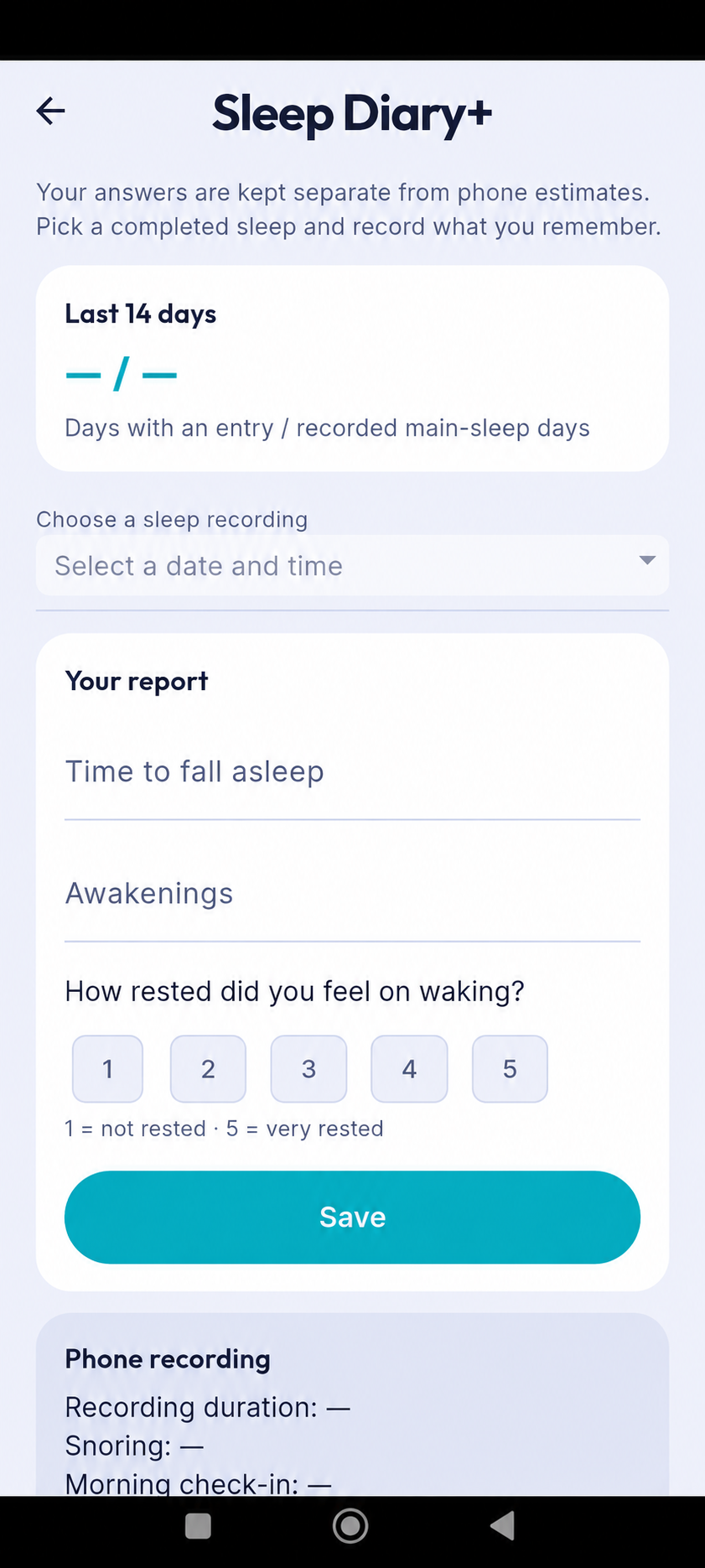
A useful morning sleep note does not need to be a long report. A few remembered details can help you keep track of your routine and how you felt after waking. Write what you know, distinguish memory from an app estimate, and avoid turning one night into a conclusion about your health.
Record a few details you can remember
You might note when you tried to sleep, when you got up, whether you remember waking during the night, and how rested you felt. If you took a nap or had an unusual schedule, include that context. It is fine to leave a field blank when you do not know the answer; precision is less important than an honest record.
Use simple, neutral words such as “woke once after noise” or “felt tired on waking.” Avoid guessing exact sleep stages or explaining why something happened unless you have evidence beyond the app’s estimate.
Keep your memory distinct from app estimates
A phone may show estimated duration or sound events, while your diary captures what you recall and how you experienced the morning. These sources describe different things and may not match perfectly. Labeling a value as an estimate or a memory can make later review clearer.
The NHLBI recommends recording sleep and daytime habits in a sleep diary that may help a clinician understand a concern. An app entry can support your own reflection, but it is not a clinical measurement or a substitute for a diary or records requested by your provider.
Make the note sustainable and private
A short entry that you can repeat is often easier to maintain than a detailed form. Focus on details that help you recognize patterns, such as schedule changes, naps, caffeine timing, or morning alertness. Review privacy and retention settings before storing sensitive information.
If sleep problems continue, interfere with daily activities, or concern you, consider sharing an appropriate sleep history with a qualified health professional. The note can help you remember what to discuss; it cannot diagnose the cause.
Keep a morning sleep note brief, honest, and useful to you. Record remembered details and context, separate them from app estimates, and use the history to support reflection or a conversation with a professional.
Sources
- NHLBI: Insomnia Diagnosis and Sleep Diary · View source
- NHLBI: Sleep Diary · View source