
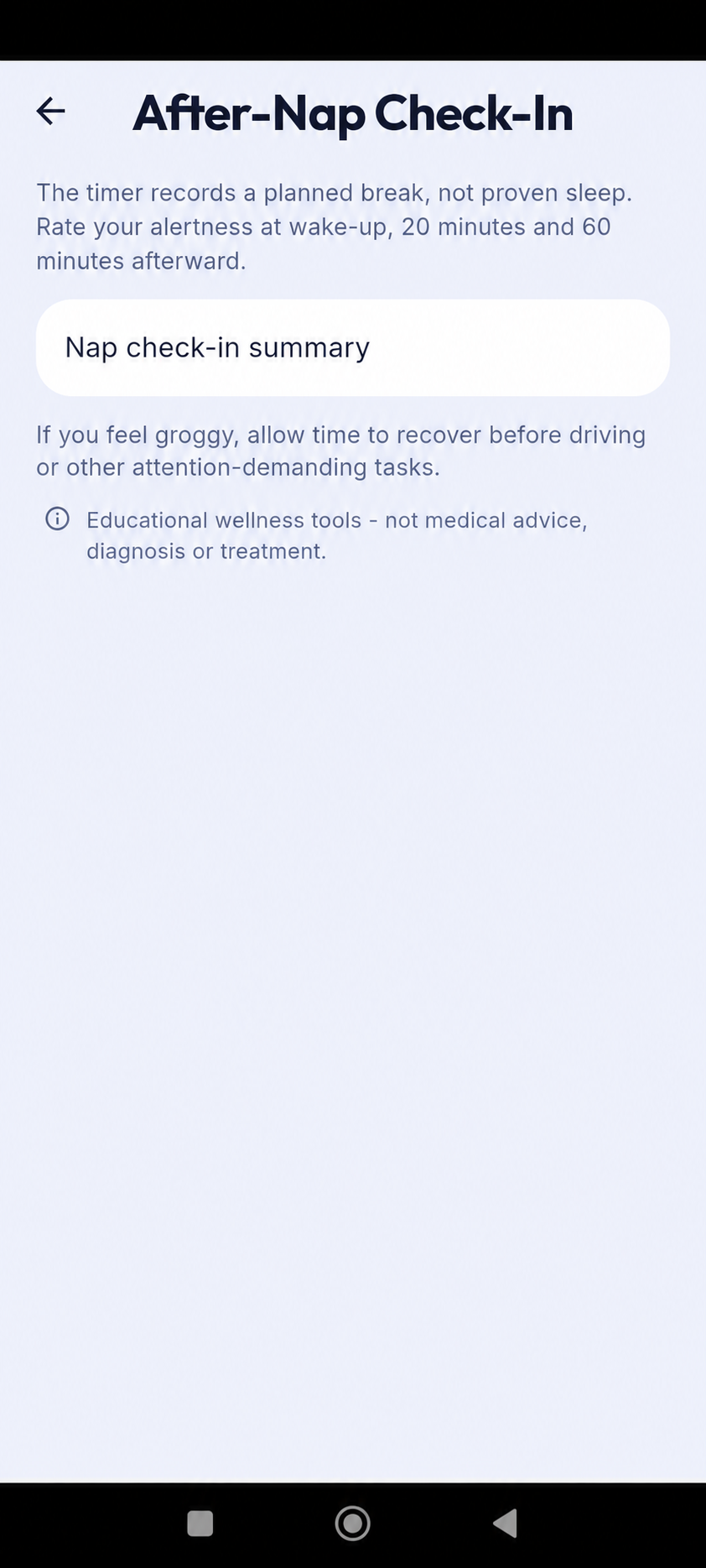
Waking from a nap can leave you temporarily foggy or slow. This transition is often called sleep inertia. It can be more noticeable after a longer nap, when you are sleep deprived, or when waking at an inconvenient point in your body clock.
Understand the pattern
Give yourself a buffer before driving, making important decisions, or doing safety-sensitive work. A nap alarm ends the sleep opportunity, but it cannot guarantee instant alertness.
Start by describing, not judging. Compare several ordinary days.
Try a practical adjustment
Note the nap start time, duration, and how long the grogginess lasted. This can help you decide whether a shorter nap or a different time is more practical for your routine.
Choose one change and give it a fair, comfortable trial.
Keep expectations realistic
NIOSH describes short planned naps as a fatigue countermeasure in some work settings, while emphasizing time for inertia to pass. Naps are not a replacement for adequate regular sleep.
Personal observations are useful context, not a diagnosis.
Why You Feel Groggy After a Nap is best approached as one part of a broader sleep picture. Observe your own routine, make a comfortable change if useful, and seek personalized guidance when ongoing symptoms affect daily life. AuraSleep can help organize sleep sessions and notes, but it does not diagnose or treat a sleep condition.
Sources
- CDC/NIOSH: Naps at Work · View source
- CDC/NIOSH: Napping Guidance · View source