
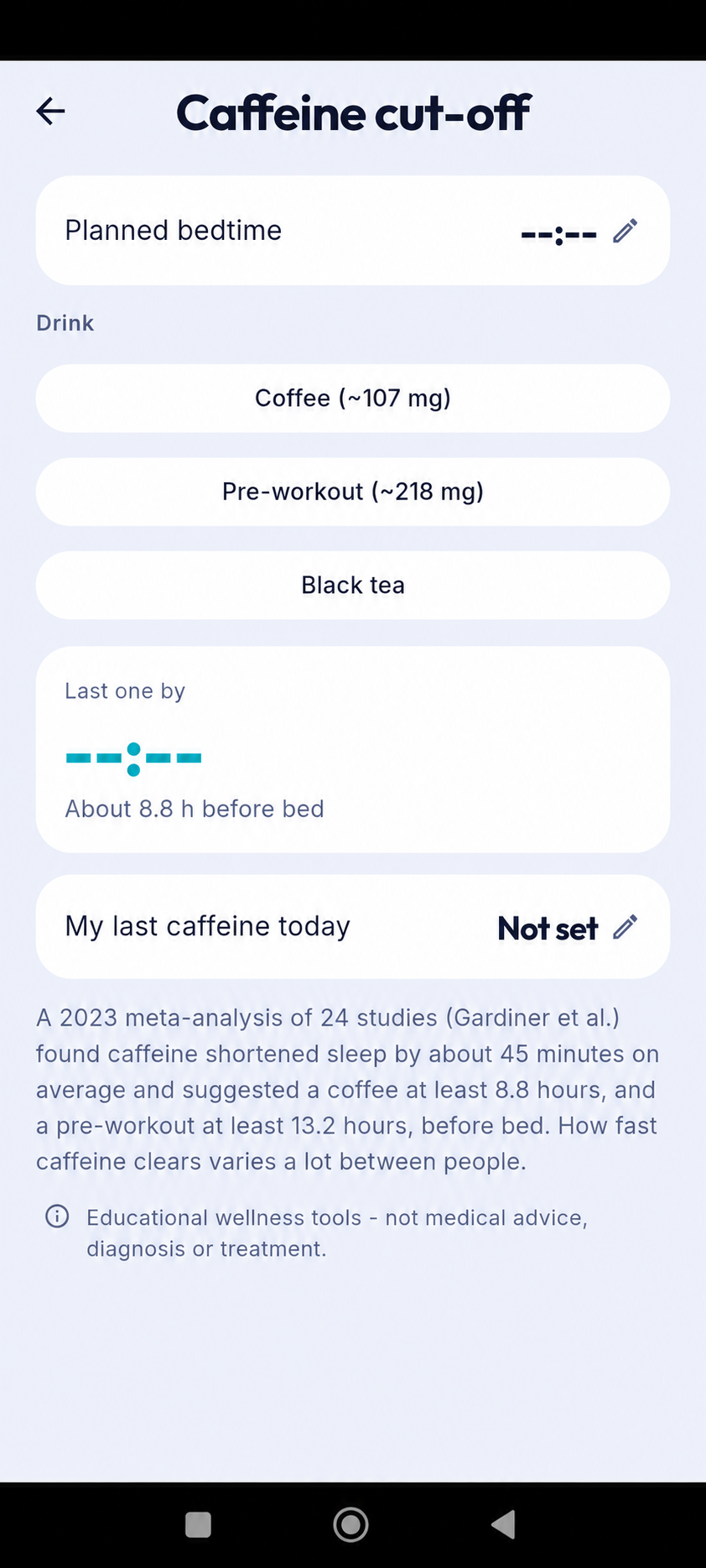
An afternoon coffee may still matter at night because caffeine does not disappear as soon as its energizing feeling fades. Its effects vary, so the same cup can feel harmless to one person and interfere with winding down for another.
Understand the pattern
Drink size and preparation change the caffeine amount. A large café drink, strong tea, cola, chocolate, and some supplements can all contribute, making “one cup” an imprecise measure.
Start by describing, not judging. Compare several ordinary days.
Try a practical adjustment
If you suspect a link, note the time and type of drink for several days. Try moving it earlier and compare your own sleep notes, without changing multiple parts of your evening at once.
Choose one change and give it a fair, comfortable trial.
Keep expectations realistic
The point is observation, not a universal ban on afternoon coffee. AuraSleep can keep caffeine notes alongside sleep sessions; it cannot determine whether caffeine caused a particular night’s result.
Personal observations are useful context, not a diagnosis.
Why Afternoon Coffee Can Affect Some People’s Sleep is best approached as one part of a broader sleep picture. Observe your own routine, make a comfortable change if useful, and seek personalized guidance when ongoing symptoms affect daily life. AuraSleep can help organize sleep sessions and notes, but it does not diagnose or treat a sleep condition.
Sources
- FDA: How Much Caffeine Is Too Much? · View source
- CDC/NIOSH: Improve Sleep · View source