
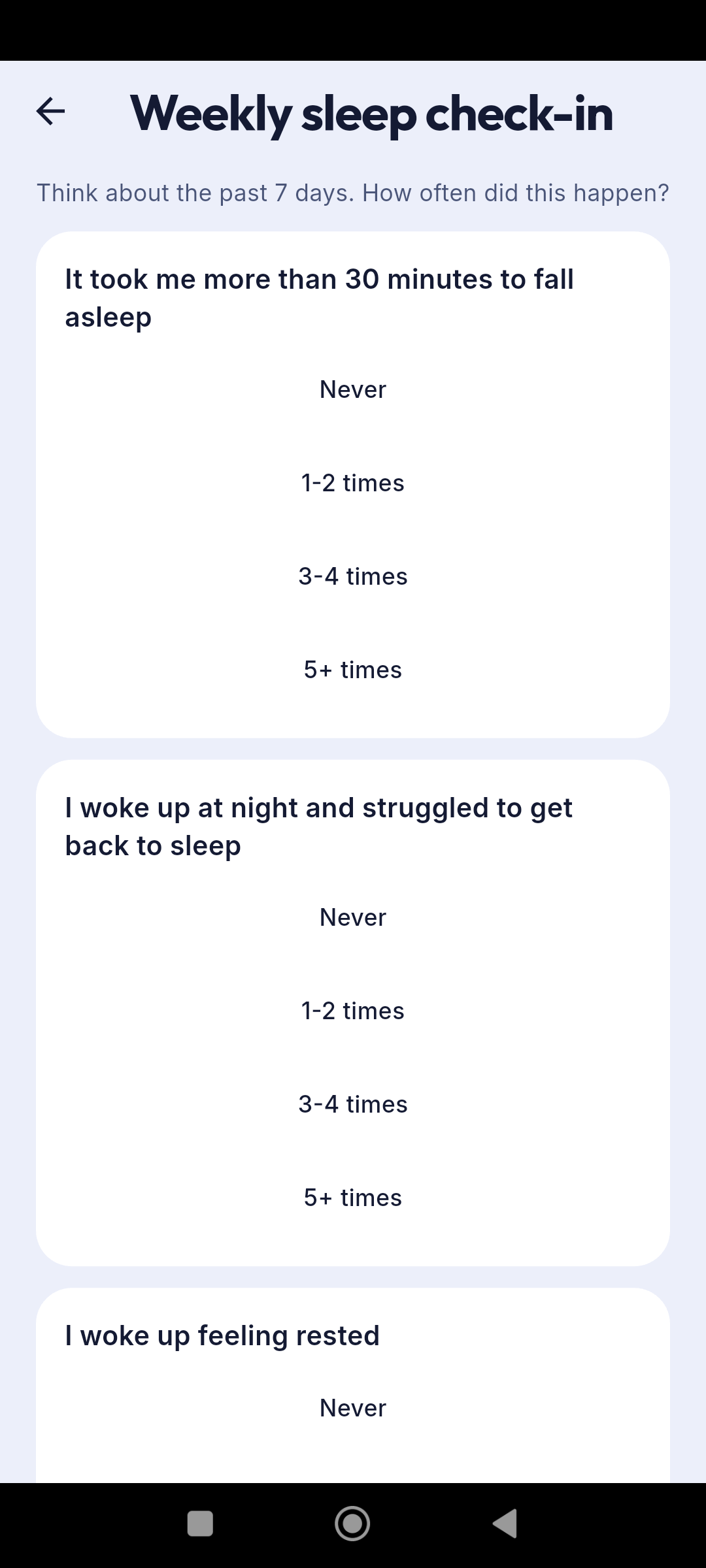
A weekly sleep check-in can give you a quiet moment to look back at routines and how you felt, rather than focusing only on a duration or score. The goal is not to grade yourself or find a medical answer in an app. It is to organize your own observations so they are easier to remember and, if useful, discuss with a health professional.
Look at habits as well as sleep estimates
Start with simple questions: Did your schedule change? Did you have time to wind down? Did you wake feeling rested? Were there interruptions or naps? These prompts provide context around a sleep estimate. An app’s estimate is not a direct measurement of every sleep stage or a complete account of your night.
Keep the review neutral. A difficult night is information, not a personal failure, and a high score does not prove that every part of your sleep was restorative. Record what you noticed without trying to force a pattern from one week.
Use a consistent, manageable review
Choose a regular time once a week and keep the check-in brief. You might note broad patterns in bedtime, wake time, naps, caffeine timing, or how alert you felt during the day. A sleep diary can be useful to share with a clinician; AuraSleep notes are personal wellness records and are not a clinical diary unless your provider says they are appropriate.
Compare weeks with similar schedules where possible, and mark unusual circumstances such as travel, illness, or shift changes. If a question does not fit your experience, leave it unanswered rather than guessing. You do not need to collect every detail for the reflection to be useful.
Know when to ask for help
A weekly reflection cannot diagnose insomnia or explain persistent daytime sleepiness. If sleep difficulties continue, affect daily activities, or raise safety concerns, consider discussing your observations with a qualified health professional. A clinician can interpret a sleep history alongside your health and circumstances.
NHLBI describes sleep diaries as a way to record sleep and daytime habits that may help a doctor understand a concern. Use an app check-in as a memory aid, not as a substitute for medical evaluation, treatment, or professional advice.
A helpful weekly sleep review is brief, kind, and grounded in context. Notice habits alongside estimates, compare similar weeks, and bring persistent concerns to a qualified professional rather than relying on a score.
Sources
- NHLBI: Insomnia Diagnosis and Sleep Diary · View source
- NHLBI: Sleep Diary · View source