
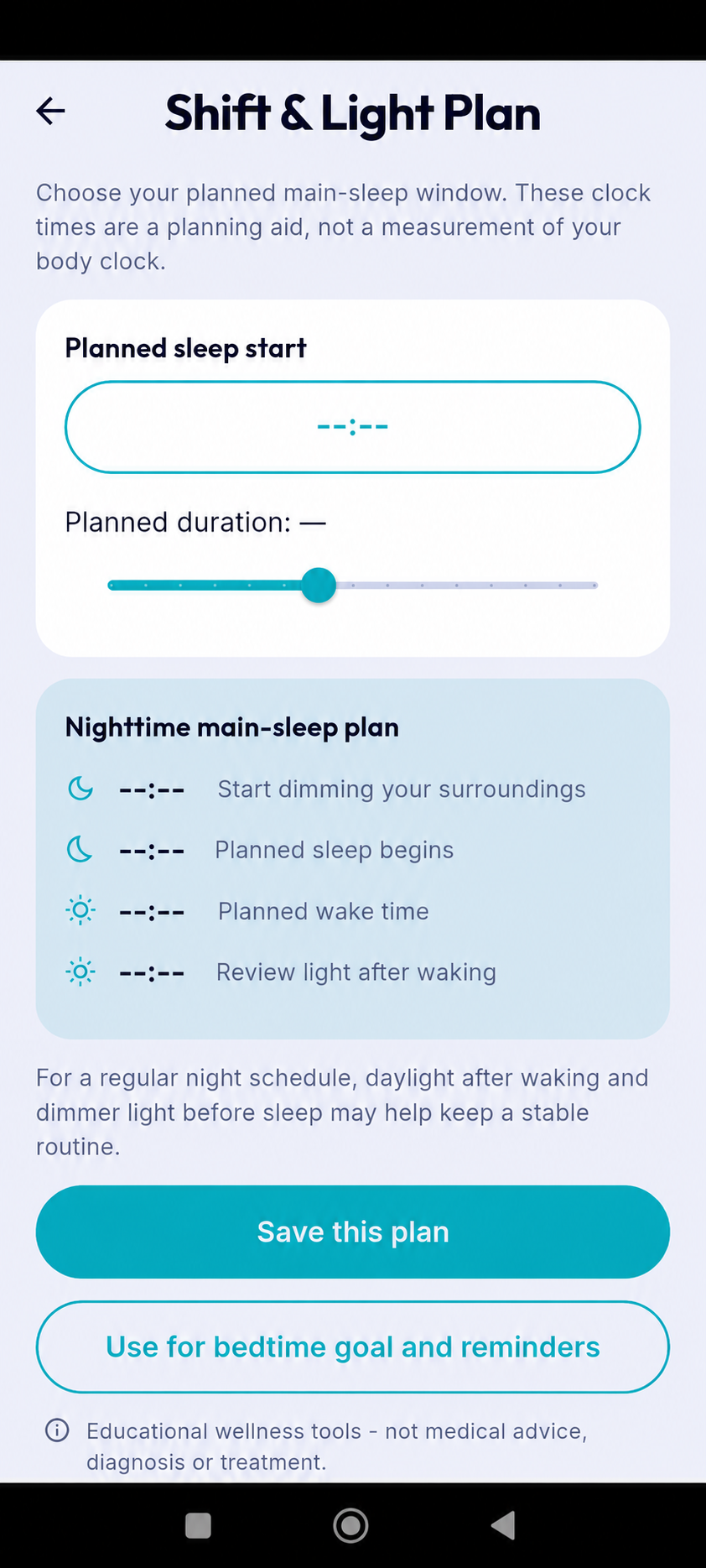
Rotating work shifts can make a consistent sleep routine difficult because work and rest times keep changing. A planning screen can help you write down the sleep window you intend to protect, but it cannot change a work schedule or predict how your body will respond. Use it as an organizer for your own plan, not a prescription.
Start with the shift you actually have
Write down the next shift, travel time, responsibilities, and the period you can realistically reserve for sleep. Focus first on allowing enough time to rest after work. A plan that ignores a commute, family care, or a changing roster may look tidy but will not fit your life.
For rotating schedules, compare workdays with days off instead of expecting every day to follow identical clock times. If some sleep time can remain consistent across the week, note that as an option to discuss with a qualified professional or workplace resource—not as a rule that works for everyone.
Use light and diary notes as context
A shift-and-light planner can remind you to consider when your environment is bright or dim around a planned sleep period. The screen is a planning aid: its times are not measurements of your circadian phase, and a general suggestion cannot account for every job, commute, or safety requirement.
Keep brief notes on the shift type, when you tried to sleep, how rested you felt, and factors such as noise or an unexpected call. Review several comparable days. This creates a personal record without claiming that one light exposure or schedule caused a particular result.
Protect rest and take fatigue seriously
The CDC’s NIOSH guidance recommends giving yourself enough opportunity to sleep after a shift and seeking help from an appropriate health professional when sleep is difficult. Workplaces also have a role in fatigue management; a phone app cannot make an unsafe schedule safe.
Do not drive or perform hazardous work when you feel too sleepy to do so safely. If changing shifts repeatedly disrupts sleep or affects health and daily functioning, talk with a clinician or occupational health service. AuraSleep is a wellness app, not a medical device or substitute for workplace safety guidance.
A useful shift-work sleep plan reflects the roster and responsibilities you actually face. Record intended sleep windows, review comparable days, and treat reminders as planning prompts. Persistent difficulty or safety concerns deserve professional support.
Sources
- CDC/NIOSH: Sleep and Work · View source
- CDC/NIOSH: Coping with Night and Evening Shifts · View source