
Sleep regularity describes how similar your sleep and wake timing is across days. It is different from sleep duration: two nights can last a similar number of hours but begin and end at different times. Regularity can be a helpful way to describe a pattern, yet real schedules include shifts, caregiving, school, travel, and days off. The practical question is not whether every night matches a perfect clock time. It is whether your timing varies in a way you want to understand, and what constraints shape that variation.
Define the timing you are comparing
Pick one or two markers you can record consistently, such as the time you tried to sleep and the final time you got out of bed. Avoid combining these with device-estimated sleep onset unless you label the source. A small table of dates and approximate times may be enough to show whether a routine is stable, changing gradually, or alternating between distinct schedule types.
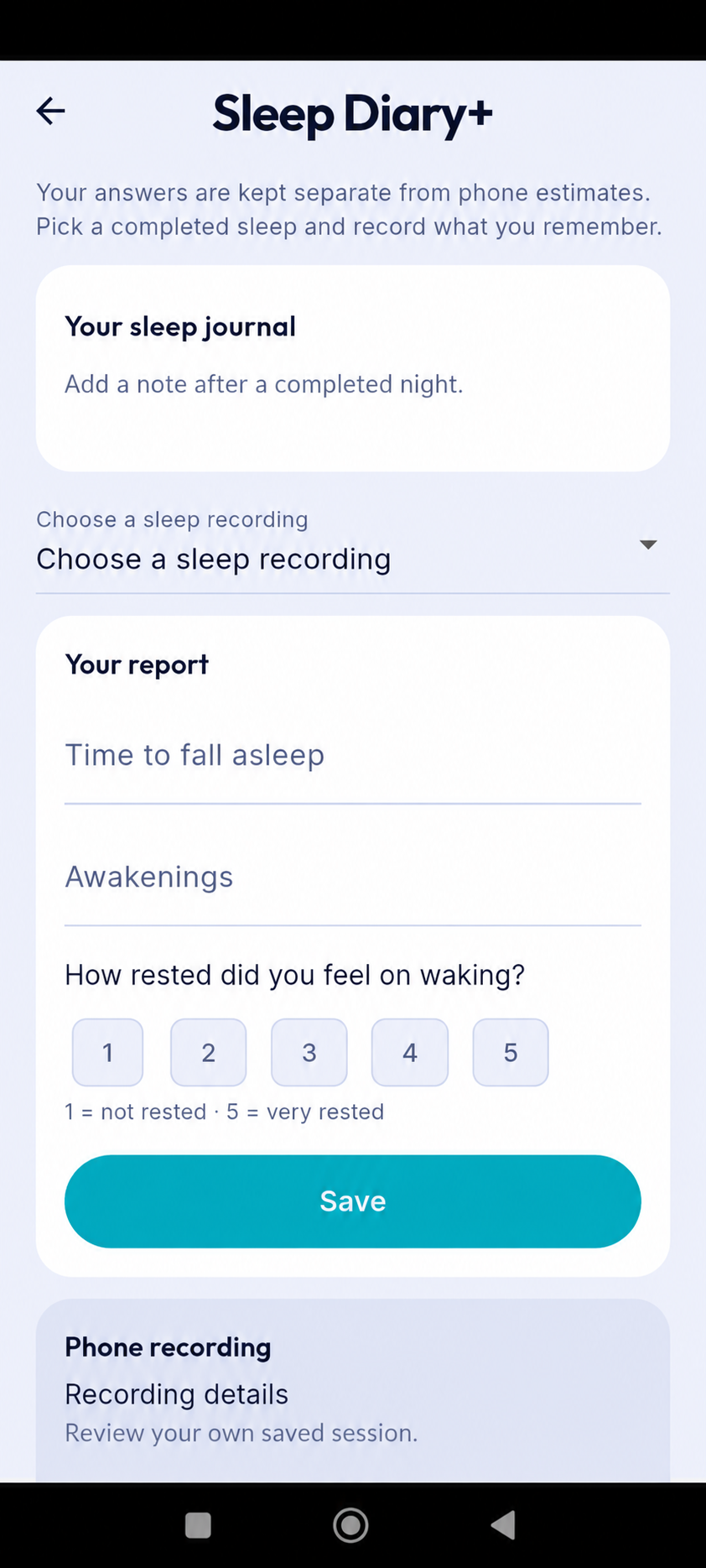
If your diary includes time in bed, name it that way. It does not directly measure when sleep began. A tracker may infer an interval from movement or other signals, but that is a different observation. Writing down both estimates can be informative if you keep them separate. If one time is unknown, mark it as missing rather than inventing a value; a complete-looking table is not more truthful than an honest partial record.
Compare like with like when your week has different demands
Separate workdays from days off, and distinguish day, evening, and overnight duties if those patterns apply. A weekly average can hide a schedule that alternates between two very different blocks. A night-shift worker who sleeps in the morning after duty should not be judged against a conventional bedtime without considering the actual sleep opportunity and upcoming responsibilities.
Use a few weeks of entries when possible, while noting roster changes, travel, illness, or unusually early commitments. This does not prove that a work pattern caused a timing shift; it lets you see what happened in context. There is no requirement to change your schedule if work or family obligations leave no flexibility. In that case, recording the constraint accurately is more useful than setting an unrealistic target.
What research says about regularity—and its limits
A 2023 National Sleep Foundation consensus statement reviewed the role of sleep timing and variability and described regularity as an important dimension to consider alongside duration and other aspects of sleep. The 2025 American Heart Association scientific statement likewise discusses timing and variability within a multidimensional view of sleep health. These sources summarize an emerging field, not a rule that every person should keep identical hours.
Research has linked measures of lower regularity with several health outcomes, but many such findings are observational and use different definitions, samples, and tracking methods. Association does not show that changing an individual’s bedtime will prevent a condition. The AHA statement notes that there is not one universally accepted measure or threshold that defines optimal sleep regularity. Treat population-level patterns as context for a question, not as a personal diagnosis or treatment target.
Choose a flexible next step, if one is available
If your schedule allows, test one small adjustment that fits your actual commitments—such as using a more predictable wake window on similar workdays or keeping a clear transition after an overnight shift. Review several comparable days before deciding whether it helped. Do not change several routines at once or infer a lasting result from one week with unusual demands.
If your roster changes without notice, a stable routine may not be possible. Focus instead on keeping the next planned sleep opportunity visible, protecting time you can control, and recording changes that explain the pattern. AuraSleep can help organize sleep timing notes and review them over time; it does not measure circadian phase, prescribe a schedule, or determine whether a shift pattern is safe. Persistent sleep concerns or substantial daytime sleepiness deserve discussion with a qualified professional.
Sleep regularity is one way to describe timing, not a requirement to follow the same clock every day. Compare similar schedule days, keep estimated and remembered times distinct, and interpret research cautiously. Use a timing goal only when it is realistic for your work, care, and health needs.
Sources
- Sletten et al. (2023), The importance of sleep regularity: a consensus statement of the National Sleep Foundation sleep timing and variability panel · View source
- American Heart Association (2025), Multidimensional Sleep Health: Definitions and Implications for Cardiometabolic Health: Scientific Statement · View source