
An alarm can mark the end of sleep without marking the start of full alertness. The foggy, slowed feeling some people notice after waking is commonly called sleep inertia. It is a transition, not a diagnosis, and its intensity is not the same every morning. A short night, an awakening during the biological night, or a changing work roster can all make the first part of wakefulness feel different. This guide explains what research can and cannot tell us, how shift workers can plan around the transition, and how a simple sleep record can help identify personal patterns without pretending to measure brain performance.
What sleep inertia feels like
Sleep inertia describes a temporary period of grogginess and reduced cognitive performance after awakening. People may feel slow to think, less attentive, or strongly sleepy. A review by Hilditch and McHill describes evidence from laboratory and real-world settings that performance can be impaired after waking and generally changes as time awake increases. The review also emphasizes that duration and severity vary with the person and circumstances; there is no single timer that predicts when everyone is ready for demanding work.
For shift workers, “morning” is not always the clock time when a sleep episode ends. Someone waking at 18:00 before a night shift can still be emerging from sleep inertia. Prior sleep loss, the biological time of awakening, and sleep stage at the moment of waking are among factors discussed in the research literature. These are influences, not a formula: a diary cannot tell which factor caused a particular groggy episode.
Why the first minutes matter
The transition matters most when a person must make quick decisions, handle equipment, drive, or take responsibility for another person soon after waking. The practical question is not whether a particular number of minutes is universally safe; research does not provide a personal clearance test for that. If you feel markedly drowsy or confused, pause where possible, follow workplace safety procedures, and avoid treating an alarm or an app score as proof that you are ready.
A 2024 questionnaire study compared reported sleep inertia in 4,561 shift workers and 2,093 non-shift workers. Shift workers reported higher sleep-inertia scores after statistical adjustment for several measured factors. Because it was an observational online survey, it shows an association in that sample; it does not establish that shift work alone caused an individual's symptoms or that all shift workers experience the same effect. This distinction is useful: population findings can explain why the topic deserves attention, while personal decisions still depend on the actual schedule, sleep opportunity, health, and job demands.
A louder alarm can wake someone, but it cannot guarantee alertness. Where a roster allows it, build a practical transition buffer between waking and a safety-sensitive task. For on-call work or tightly timed handovers, discuss realistic procedures with the employer rather than relying on a generic sleep tip.
Build a gentle wake-up routine
Start with observation rather than a perfect routine. For one or two weeks, note when the sleep episode ended, whether the shift was day, evening, or night, how much time was available for sleep, and roughly how long grogginess seemed to last. Record interruptions or unusual events only when they are relevant. The purpose is to see whether the experience clusters around certain transitions—not to assign a clinical label or judge yourself for having a difficult morning.
Light is a timing cue for the circadian system, but the useful timing depends on whether a person is trying to stay awake for work, return to daytime sleep, or move between shifts. Avoid assuming that bright light at any hour is helpful for every roster. A slowly rotating schedule, a fixed night schedule, and an unpredictable on-call pattern present different constraints. When sleepiness persists or affects safety, a clinician or occupational-health professional can interpret the context more appropriately than a general-purpose app.
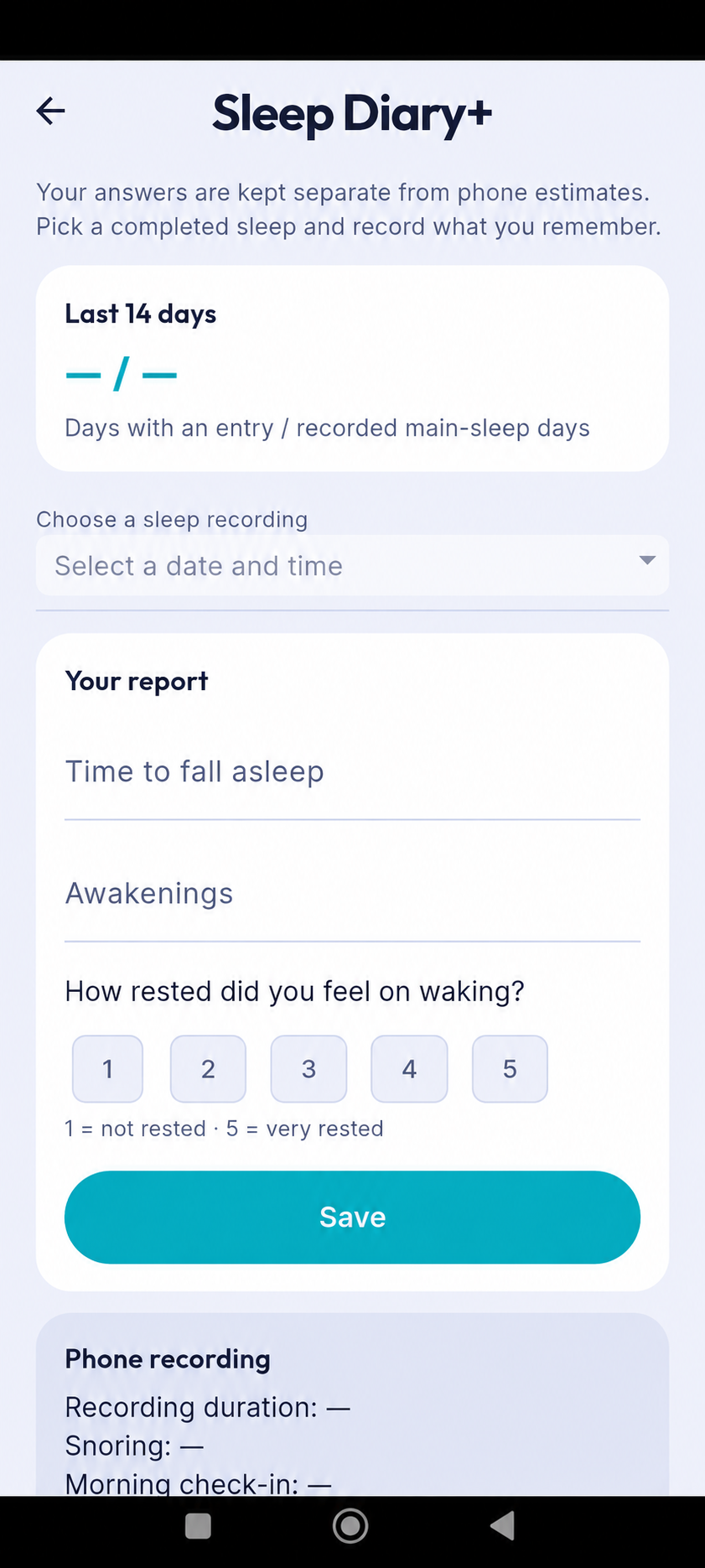
AuraSleep can help keep a personal record of sleep sessions and notes, so you can review what happened around a groggy wake-up. The record is self-reported context: AuraSleep does not measure sleep inertia, assess alertness, diagnose a disorder, or determine fitness for duty. If the app's statistics differ from how you feel, your lived experience and professional guidance matter more than a score.
When grogginess deserves attention
Look for a repeated pattern rather than overinterpreting a single day. Does grogginess follow a run of night duties, a shortened sleep opportunity, a split sleep period, or a call that interrupted rest? Does it fade, remain through the commute, or interfere with work? Keep the notes factual. A record can help you describe timing, but it cannot identify a sleep stage, measure reaction time, or prove why symptoms occurred.
Consider professional advice if excessive sleepiness is persistent, difficult to explain, disrupts everyday functioning, or creates a safety concern. Seek urgent help for an immediate emergency. Bring a concise record of sleep and work timing if it helps you explain the pattern, and include relevant medicines or health changes with a clinician. Do not stop prescribed treatment or change medication based on an article or an app.
The evidence has limits. The 2019 paper is a narrative review that summarizes heterogeneous studies, while the 2024 shift-worker comparison relies on self-reported questionnaire data. Neither gives a personal prediction or proves that one wake-up routine treats a condition. The most defensible use of this information is modest: recognize that sleep inertia is a real transition, allow for uncertainty after waking, and use records to support—not replace—conversation with a qualified professional.
Sleep inertia is a temporary wake-up transition whose effects vary by person, sleep history, and timing. Plan a buffer when your roster permits, track a few concrete details rather than chasing a perfect score, and get professional help when ongoing sleepiness affects daily life or safety. Research can describe group patterns; it cannot diagnose your morning.
Sources
- CDC/NIOSH: Sleep Inertia · View source
- Sleep inertia review · View source
- Sleep inertia and its associates in shift and non-shift workers (2024) · View source