
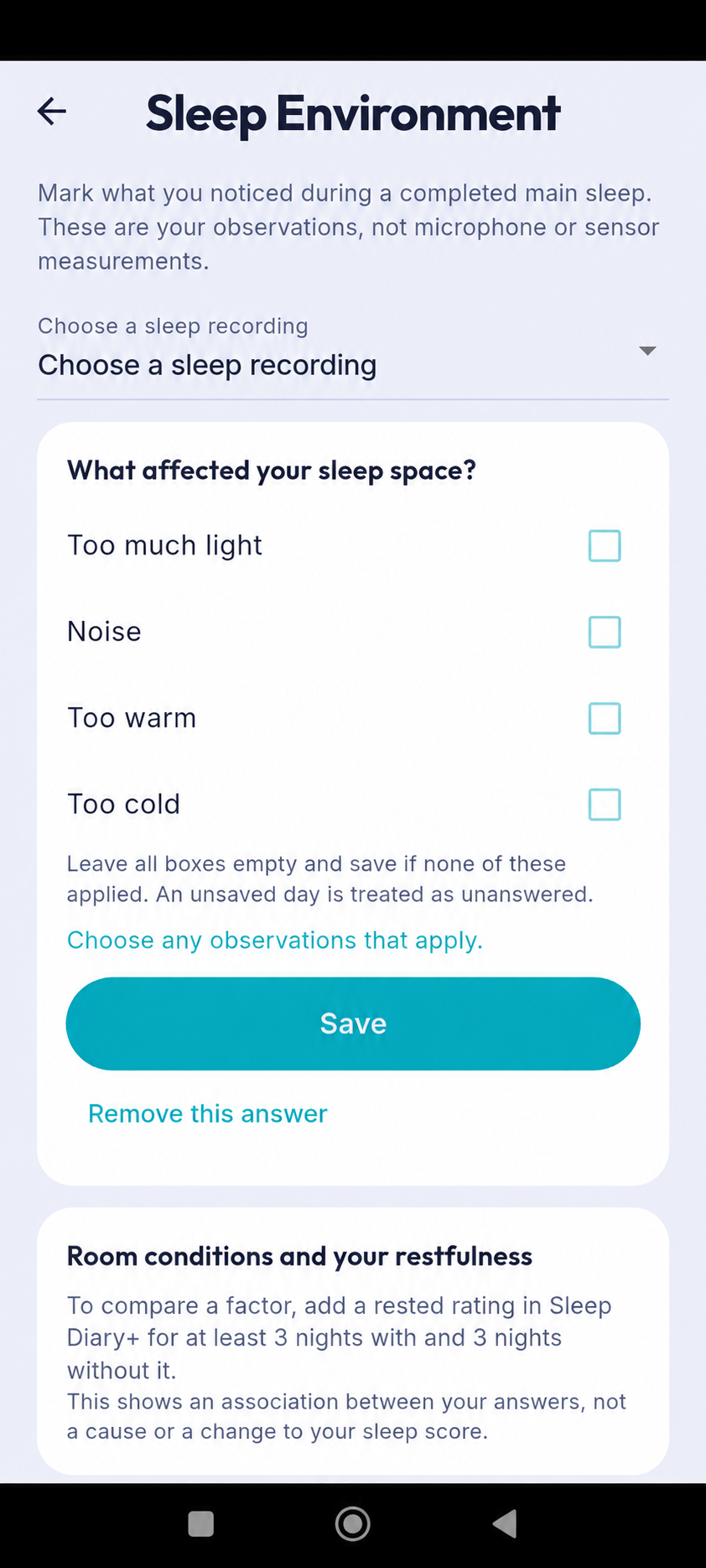
A sleep environment observation is a short description of the room and conditions around a sleep opportunity. Light, noise, temperature, comfort, and interruptions may be relevant, but a diary cannot isolate which factor caused a difficult night. This guide helps make notes specific and comparable, while avoiding unsupported promises about sound products, room settings, or sleep outcomes.
Describe what you observed, not what you assume
Use concrete details: curtains open or closed, street noise audible or not, fan running, room warmer than usual, phone alert received, or a roommate entering. If you do not know a precise temperature or sound level, do not invent one. Write “felt warmer than usual” rather than claiming a measured value. Keep observations brief enough to repeat each day.
Separate the condition from your impression. For example: “construction noise between 06:10 and 06:40; woke during that period” records sequence and timing. It does not establish that noise alone caused the waking. Other factors may include schedule, illness, stress, or normal night-to-night variation.
Use research as context, not a guarantee
NIOSH educational guidance for shift workers describes a dark, quiet, cool, and comfortable sleep environment as a practical goal and lists ways to reduce light and interruptions. This is general guidance; housing, climate, safety, and personal comfort can limit what is possible. A perfect room is not a prerequisite for keeping useful notes.
Evidence about continuous background noise is mixed. A systematic review of white noise and similar broadband sounds found varied results and rated evidence for improved sleep as very low, with the possibility of harm or disruption in some settings. Therefore, do not assume that white noise, an audio track, or a sound machine helps everyone. If a sound is irritating or interferes with hearing important alerts, stop using it and reconsider the setup.
Make one realistic comparison
Choose a small observation you can repeat, such as whether the room was dark enough for your comfort or whether nonessential phone alerts were silenced. Record the same item for several nights. If you change one condition, add the date and note other major changes. This makes the comparison more interpretable, though it is still not a formal experiment.
For shared rooms, discuss changes with other occupants. A fan, earplugs, blackout covering, or phone setting can affect another person's comfort or safety. Keep paths clear and preserve any alerts needed for caregiving or emergencies. Do not compromise fire safety, ventilation, or access to essential devices.
Notice patterns and practical constraints
Review notes weekly and ask what was repeated, what changed, and what remains uncertain. A light source may be easy to address with a shade; recurring outdoor noise may be outside your control. If you work nights, daytime conditions and household schedules may matter. Use the record to make a realistic request or adjust a routine where feasible, not to criticize yourself for circumstances you cannot control.
If you suspect a persistent sleep problem, room notes cannot tell you its cause or replace a clinical assessment. Bring a concise description of conditions and timing to a qualified professional if it would help explain your experience.
What AuraSleep contributes
AuraSleep can help you keep a personal note about the room alongside other sleep observations. It does not measure light, sound, temperature, or sleep stages unless a specific supported sensor does so; the app's ordinary recording features should not be treated as calibrated instruments. Review privacy settings before recording audio in a shared room, and obtain consent where required.
Use the journal to preserve context, not to claim that a room variable has been diagnosed. A few carefully written notes can make a later conversation more concrete while leaving uncertainty visible.
Pick one observable room detail and record it consistently for a short period. Interpret patterns cautiously and keep personal comfort and safety in view. AuraSleep can organize observations, but it cannot determine the cause of a sleep concern.
Sources
- NIOSH/CDC — Creating a Good Sleep Environment · View source
- Robbins et al. (2021), Noise as a sleep aid: A systematic review · View source
- NIH/NHLBI — Healthy Sleep Habits · View source