
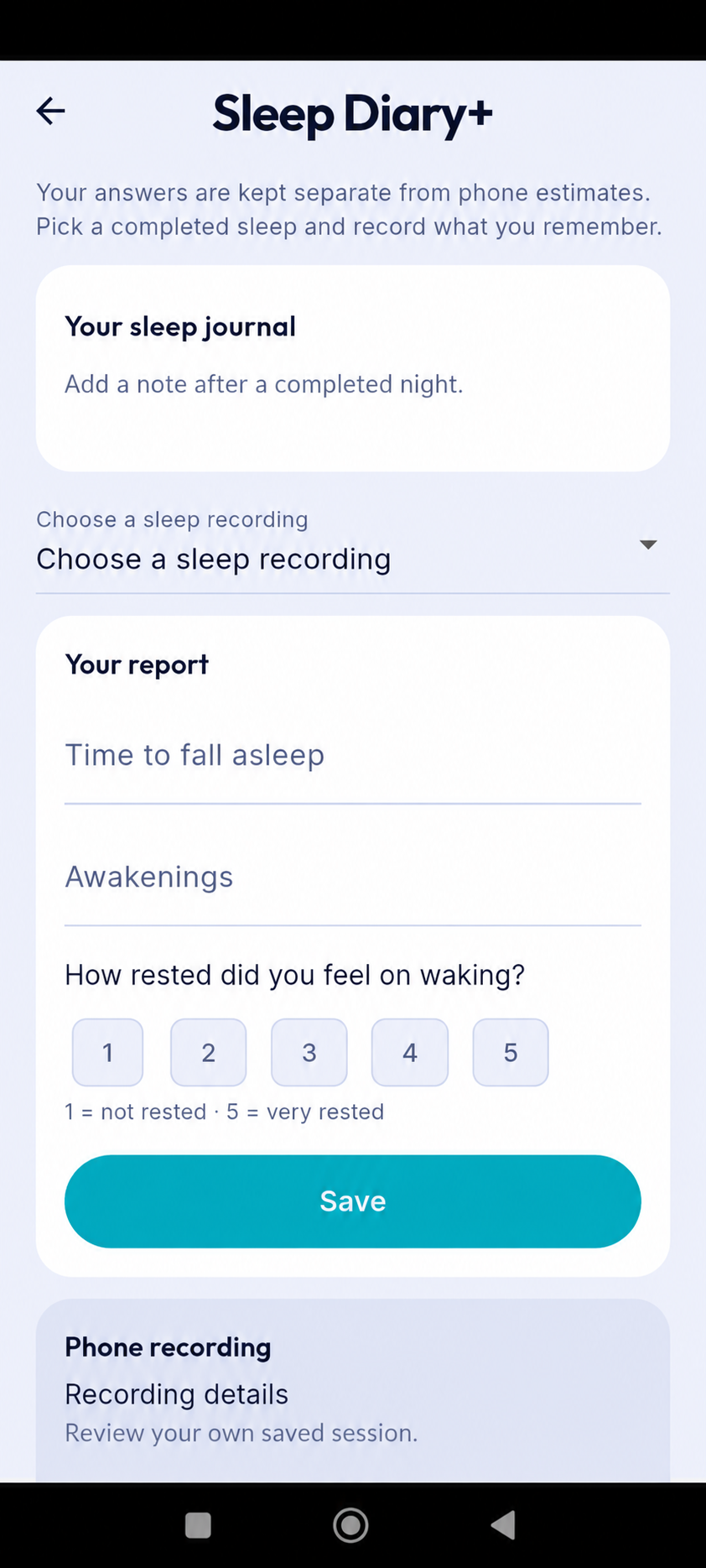
A sleep diary captures what you remember and how you felt. A sleep tracker estimates patterns from signals or recorded events. The two approaches answer different questions, so it helps to know what each can and cannot establish before comparing their results.
Understand the pattern
A diary can record context a device may not know: a noisy evening, a late shift, a stressful day, or a long nap. A tracker may make it easier to review sessions over time, but estimates are not the same as a clinical sleep study.
Start by describing, not judging. Compare several ordinary days.
Try a practical adjustment
Use one or two questions to guide your review, such as whether bedtimes drift on days off. If an estimate conflicts with how you felt, preserve both observations instead of treating either one as automatically correct.
Choose one change and give it a fair, comfortable trial.
Keep expectations realistic
AuraSleep is designed to help users review sleep sessions and personal notes. It does not diagnose sleep disorders or replace professional evaluation; use the record as context rather than a verdict.
Personal observations are useful context, not a diagnosis.
Sleep Diary vs Sleep Tracker is best approached as one part of a broader sleep picture. Observe your own routine, make a comfortable change if useful, and seek personalized guidance when ongoing symptoms affect daily life. AuraSleep can help organize sleep sessions and notes, but it does not diagnose or treat a sleep condition.
Sources
- NHLBI Sleep Diary · View source
- NHLBI: Insomnia Diagnosis · View source