
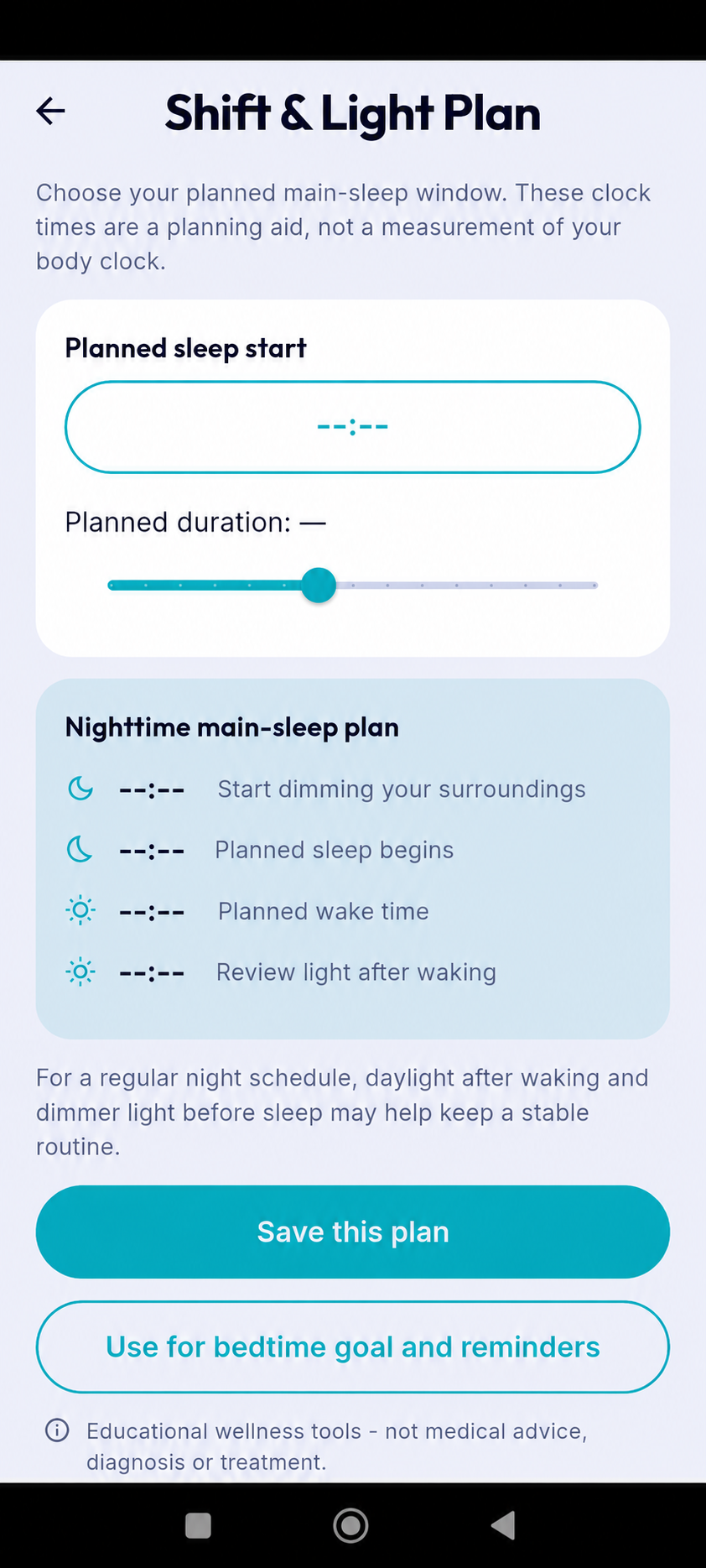
For shift workers, bedtime is better understood in relation to the next required wake time than to a conventional clock schedule. Rotating shifts can make it difficult to preserve one routine, so planning the sleep opportunity before a shift matters.
Understand the pattern
Work backward from the time you must be awake, leaving room for your commute and a calm transition. Protect the largest realistic sleep block and consider whether a planned nap is useful before a night shift.
Start by describing, not judging. Compare several ordinary days.
Try a practical adjustment
Keep track of shift type, sleep windows, naps, caffeine timing, and alertness. This record can help distinguish a run of short sleep from nights that were long enough but repeatedly interrupted.
Choose one change and give it a fair, comfortable trial.
Keep expectations realistic
Schedules and safety needs differ by job. Ask an occupational health professional about workplace options, and never treat an app estimate as proof that you are safe to drive or operate equipment.
Personal observations are useful context, not a diagnosis.
Shift Work and Sleep is best approached as one part of a broader sleep picture. Observe your own routine, make a comfortable change if useful, and seek personalized guidance when ongoing symptoms affect daily life. AuraSleep can help organize sleep sessions and notes, but it does not diagnose or treat a sleep condition.
Sources
- CDC/NIOSH: Shift Work and Long Hours · View source
- CDC/NIOSH: Fatigue Crisis Guidance · View source