
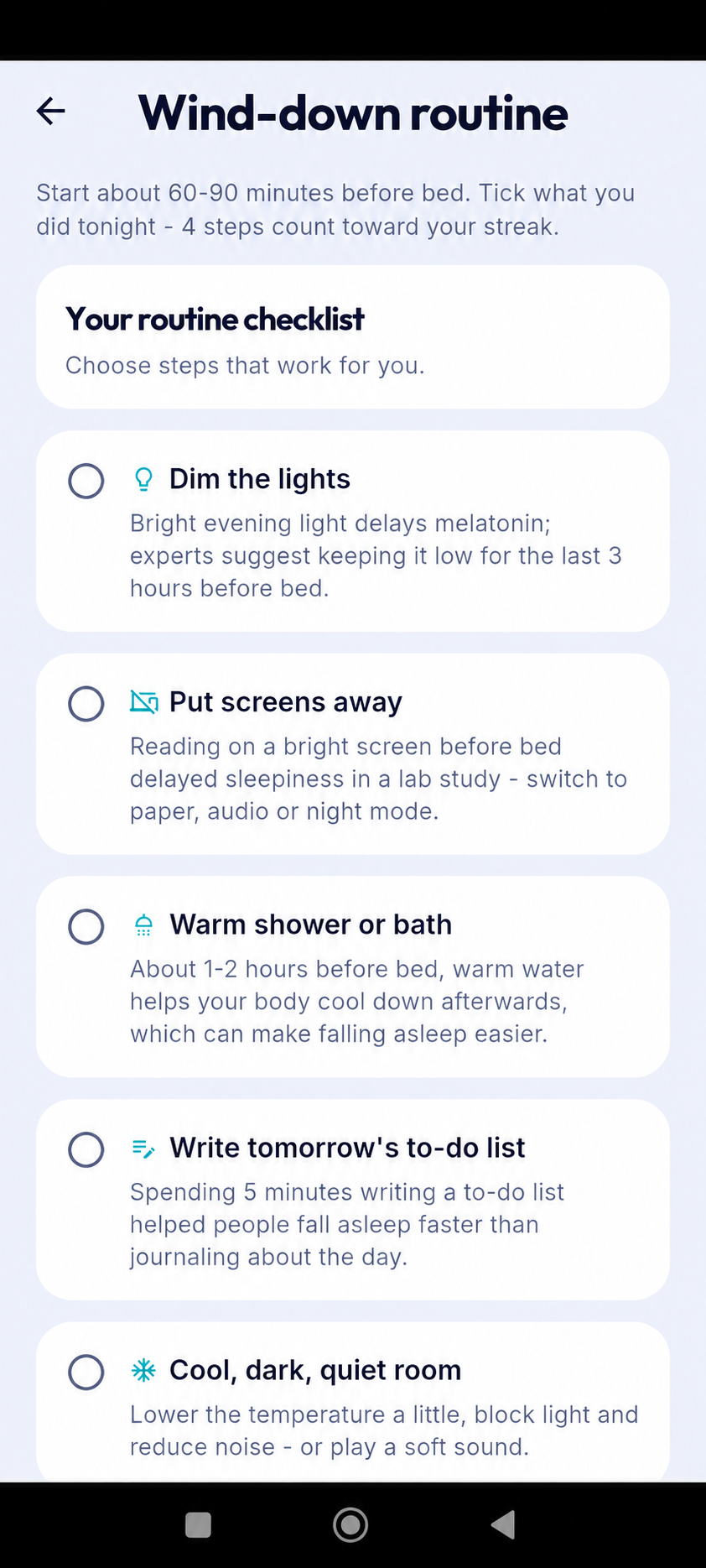
A phone can make it easy to keep reading, watching, or replying after you intended to wind down. If scrolling leaves you more alert or pushes bedtime later, trying a different transition may reveal whether the habit is part of the problem for you.
Understand the pattern
Move the phone out of reach for a short trial, or use a planned stopping cue and switch to paper reading, a quiet audio track, or gentle preparation for tomorrow. Avoid turning the experiment into a rule that creates more stress.
Start by describing, not judging. Compare several ordinary days.
Try a practical adjustment
Track both actual bedtime and how settled you felt, not only screen minutes. Notifications, emotionally charged content, and bright light may affect people differently, so note what applies in your routine.
Choose one change and give it a fair, comfortable trial.
Keep expectations realistic
If screens are needed for work or accessibility, choose practical boundaries that fit your life. NHLBI notes that electronic light can disrupt the sleep-wake cycle; the size of the effect varies by context.
Personal observations are useful context, not a diagnosis.
Screen-Free Wind-Down is best approached as one part of a broader sleep picture. Observe your own routine, make a comfortable change if useful, and seek personalized guidance when ongoing symptoms affect daily life. AuraSleep can help organize sleep sessions and notes, but it does not diagnose or treat a sleep condition.
Sources
- NHLBI: Insomnia Treatment and Healthy Sleep Habits · View source
- CDC/NIOSH: Improve Sleep · View source