
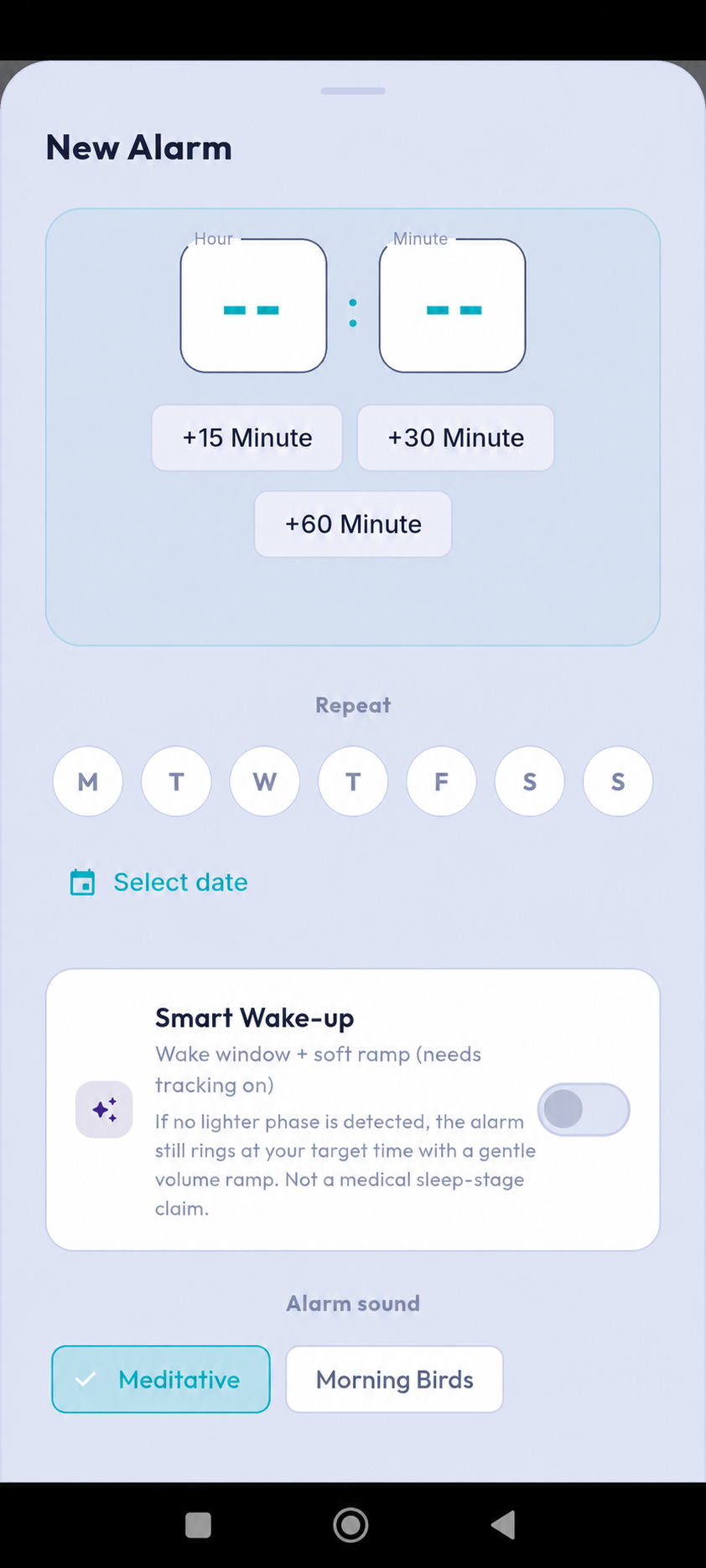
A sleep alarm is a practical reminder to get up; it cannot tell whether you have had enough sleep or guarantee that waking will feel easy. The most useful setup is one that matches the days you actually need to wake, can be heard without creating unnecessary stress, and is reviewed when your schedule changes. If you work nights, rotate shifts, care for someone, or share a room, a one-size-fits-all alarm pattern may not fit. Treat the alarm as one small part of a routine, and keep its limits in view.
Choose the wake-up days before choosing a sound
Start with the commitments that require a fixed wake time. Check the weekdays, repeat interval, and any one-off date before saving an alarm. A weekday schedule can be wrong for rotating work, school breaks, travel, or alternating caregiving. If your week changes often, use separate alarms only when they make the pattern easier to inspect; a crowded list of overlapping alarms can be harder to maintain than one clear schedule.
Write down what each alarm is for, such as “early clinic shift” or “school morning.” That small label gives you a reason to keep, edit, or remove it later. A sleep alarm should follow your real obligations rather than an app’s idealized timetable. If the needed wake time leaves too little opportunity for sleep, changing the alarm alone cannot solve that constraint; consider what part of the schedule can be adjusted and seek appropriate help if persistent sleep difficulty is affecting daily life.
Pick a cue you can hear without making it harsher than needed
Test the sound and volume while awake. Think about a shared bedroom, a sleeping partner, hearing needs, pets, and whether a vibration option is more suitable. A louder or more startling alarm is not automatically a better alarm. For an alarm that fails to sound, check the device’s own notification, volume, battery, and do-not-disturb settings; these vary by operating system and manufacturer.
Research on sound and waking is more limited than popular alarm advice suggests. A systematic review found a small and mixed evidence base across different settings, including emergency alarms and ordinary awakenings. Some findings about musical or melodic sounds are not proof that one tone works for everyone, and evidence from emergency settings should not be turned into a general consumer recommendation. Choose a sound you can reliably notice and live with, then judge it by whether it fits your circumstances.
Use snooze thoughtfully and leave a transition buffer
If you use snooze, notice whether repeated alarms help you get up or leave you more rushed. One laboratory study of snooze use included a small group of university students, so its results cannot predict every person’s experience or establish a universal rule. It does support treating snooze habits as something to observe rather than assuming that a fixed number of repeats is beneficial or harmful for everyone.
Some people feel temporarily groggy after waking, a phenomenon called sleep inertia. The degree can vary with factors such as sleep loss, timing, and individual differences. If you must drive, provide care, operate equipment, or make safety-sensitive decisions soon after waking, plan a transition period when possible. Do not rely on a particular alarm tone or snooze setting to make an unsafe level of sleepiness safe.
Review the alarm after a schedule change
After a shift swap, daylight-saving change, trip, or change in household responsibilities, review the next alarm date and time. Confirm whether a recurring alarm will ring on a day off and whether the time zone or device settings have changed. Remove temporary alarms once the event has passed, and keep a backup wake-up plan for commitments where missing the alarm has a serious consequence.
A useful review can be simple: “Which day is this for? Is this still the correct time? Will the device be able to sound?” AuraSleep can help organize a bedtime target and alarm settings, but it does not measure sleep stages or decide how much rest you need. If you regularly cannot wake despite adequate opportunity, or daytime sleepiness makes work or travel unsafe, discuss the pattern with a qualified health professional rather than continuing to make the alarm louder.
Build the alarm around the correct day and time, choose a tolerable cue, and leave room to become alert before demanding tasks. Check the setup whenever your schedule changes. An alarm can support a routine, but it cannot replace enough sleep or assess whether you are safe to drive or work.
Sources
- McFarlane et al. (2020), Alarm Tones, Voice Warnings, and Musical Treatments: A Systematic Review of Auditory Countermeasures for Sleep Inertia · View source
- Hayashi et al. (2022), Effects of using a snooze alarm on sleep inertia after morning awakening · View source