
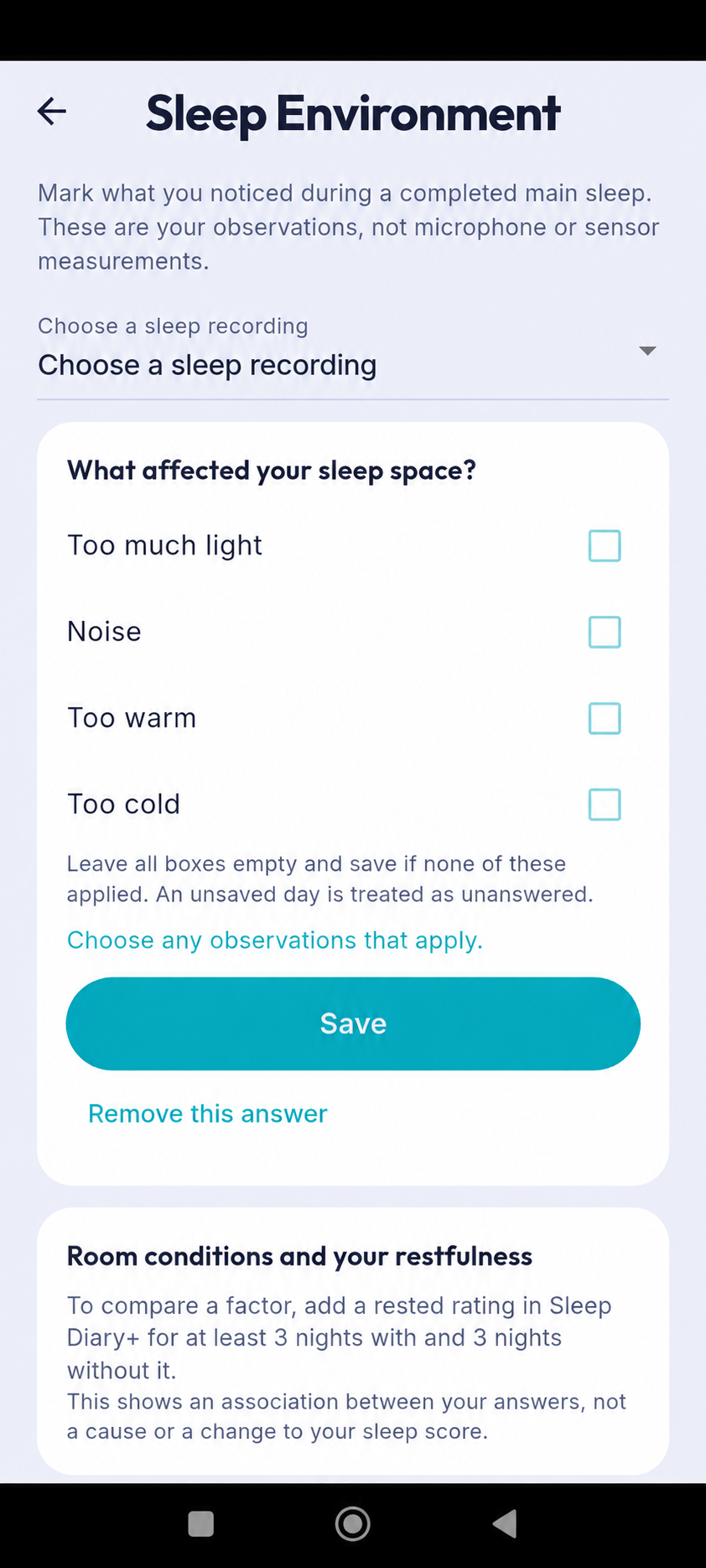
Noise can interrupt a sleep opportunity even when you do not remember fully waking. Traffic, household activity, pets, and shared walls are common sources, and the best response depends on what is actually within your control.
Understand the pattern
Try identifying the loudest recurring period before buying equipment. Earplugs, a fan, white noise, or a conversation with household members may help some people, but sound masking should not hide alarms or safety signals.
Start by describing, not judging. Compare several ordinary days.
Try a practical adjustment
Track the time of disruption and whether you recall waking or only notice a groggy morning. Small, targeted steps are easier to evaluate than changing the whole room at once.
Choose one change and give it a fair, comfortable trial.
Keep expectations realistic
Persistent sleep disruption may have causes beyond noise. If daytime functioning suffers, discuss the pattern with a clinician; a consumer tracker cannot reliably explain every awakening.
Personal observations are useful context, not a diagnosis.
Noise and Sleep is best approached as one part of a broader sleep picture. Observe your own routine, make a comfortable change if useful, and seek personalized guidance when ongoing symptoms affect daily life. AuraSleep can help organize sleep sessions and notes, but it does not diagnose or treat a sleep condition.
Sources
- NHLBI: Healthy Sleep Habits · View source
- CDC/NIOSH: Improve Sleep · View source