
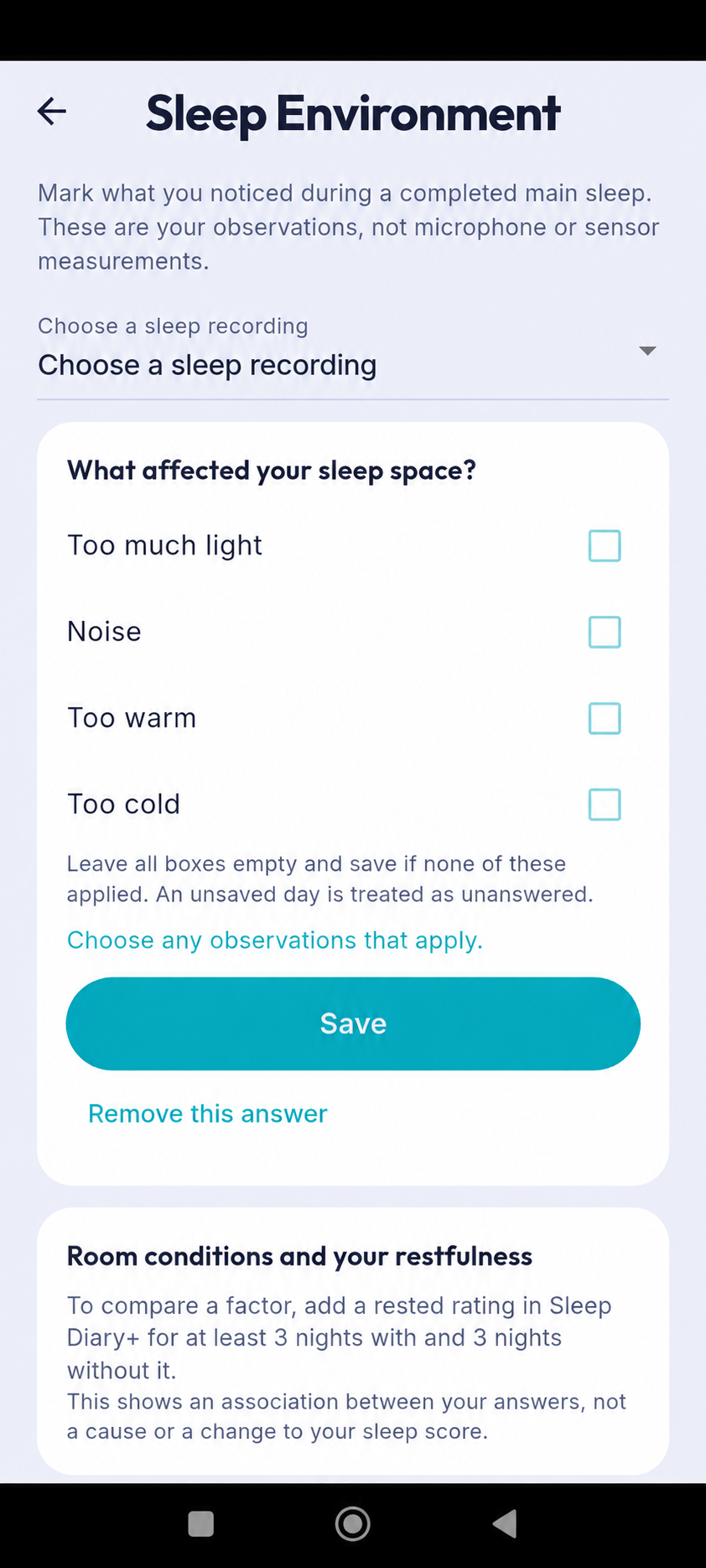
Light can act as a timing cue for the body clock, and unwanted light in the bedroom may distract some sleepers. You do not need an expensive redesign to notice whether a darker room feels more comfortable.
Understand the pattern
Look for the source first: hallway light, a bright clock, curtains that leave a gap, or a phone screen. Cover or reposition a small source if safe, and choose a night light when visibility matters.
Start by describing, not judging. Compare several ordinary days.
Try a practical adjustment
If you work nights, daytime sleep may require stronger light control and household coordination. Note whether changes improve your comfort without assuming they prove a medical effect.
Choose one change and give it a fair, comfortable trial.
Keep expectations realistic
NHLBI advises avoiding bright electronic light close to bedtime as part of healthy sleep habits. Safety, accessibility, and personal needs should guide any change.
Personal observations are useful context, not a diagnosis.
Light at Night is best approached as one part of a broader sleep picture. Observe your own routine, make a comfortable change if useful, and seek personalized guidance when ongoing symptoms affect daily life. AuraSleep can help organize sleep sessions and notes, but it does not diagnose or treat a sleep condition.
Sources
- NHLBI: Healthy Sleep Habits · View source
- CDC/NIOSH: Improve Sleep · View source