
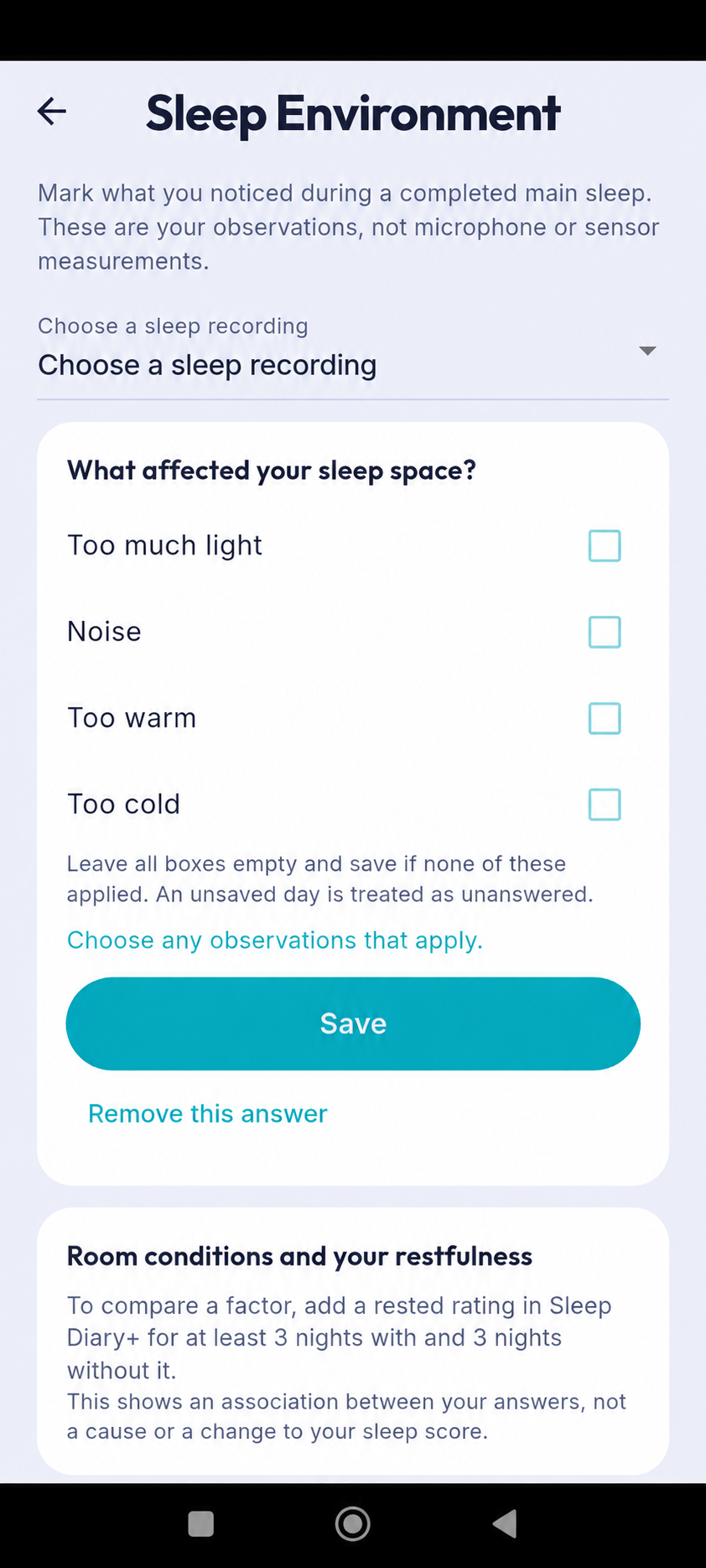
Room comfort depends on more than temperature. Bedding, pajamas, humidity, and airflow all influence whether a sleep space feels dry, stuffy, or too warm, but there is no single setup that suits every person.
Understand the pattern
Begin with the sensation you notice: overheating, dry air, or heavy bedding. Change one element at a time and keep any device settings within the manufacturer’s safe operating guidance.
Start by describing, not judging. Compare several ordinary days.
Try a practical adjustment
Pay attention to seasonal differences and allergies or respiratory sensitivities. A humidifier or fan is not automatically helpful, and equipment needs cleaning and maintenance according to instructions.
Choose one change and give it a fair, comfortable trial.
Keep expectations realistic
If breathing symptoms or severe discomfort persist, seek medical advice rather than relying on room adjustments alone. Comfort experiments are personal observations, not treatment.
Personal observations are useful context, not a diagnosis.
Humidity, Bedding, and Comfort is best approached as one part of a broader sleep picture. Observe your own routine, make a comfortable change if useful, and seek personalized guidance when ongoing symptoms affect daily life. AuraSleep can help organize sleep sessions and notes, but it does not diagnose or treat a sleep condition.
Sources
- NHLBI: Healthy Sleep Habits · View source
- CDC/NIOSH: Improve Sleep · View source