
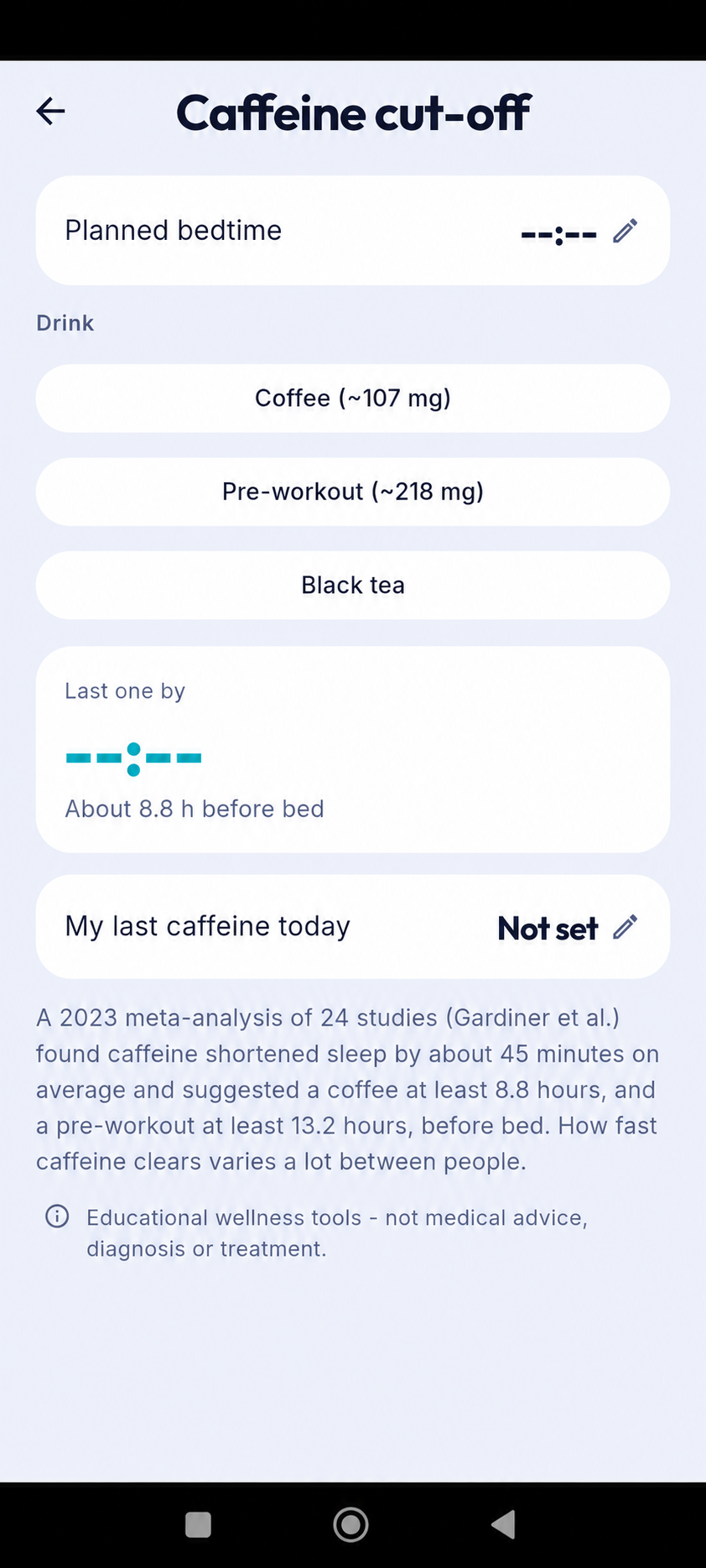
If you want to see whether caffeine affects your sleep, reducing it gradually may be easier than stopping abruptly. The FDA notes that cutting back slowly can help avoid unpleasant withdrawal symptoms for people who consume caffeine regularly.
Understand the pattern
Start by identifying the drink that contributes most or is latest in your day. Adjust one serving or move one drink earlier, then give yourself enough days to notice the new routine before making another change.
Start by describing, not judging. Compare several ordinary days.
Try a practical adjustment
Choose a replacement that fits the moment: decaf, water, or a caffeine-free drink. Remember that decaf can still contain some caffeine, and check labels for energy products or supplements.
Choose one change and give it a fair, comfortable trial.
Keep expectations realistic
People who are pregnant, managing a health condition, or taking medicines should seek individualized advice. Use a sleep diary to observe patterns without treating a short experiment as proof.
Personal observations are useful context, not a diagnosis.
How to Reduce Caffeine Without Disrupting Your Routine is best approached as one part of a broader sleep picture. Observe your own routine, make a comfortable change if useful, and seek personalized guidance when ongoing symptoms affect daily life. AuraSleep can help organize sleep sessions and notes, but it does not diagnose or treat a sleep condition.
Sources
- FDA: How Much Caffeine Is Too Much? · View source
- CDC/NIOSH: Improve Sleep · View source