
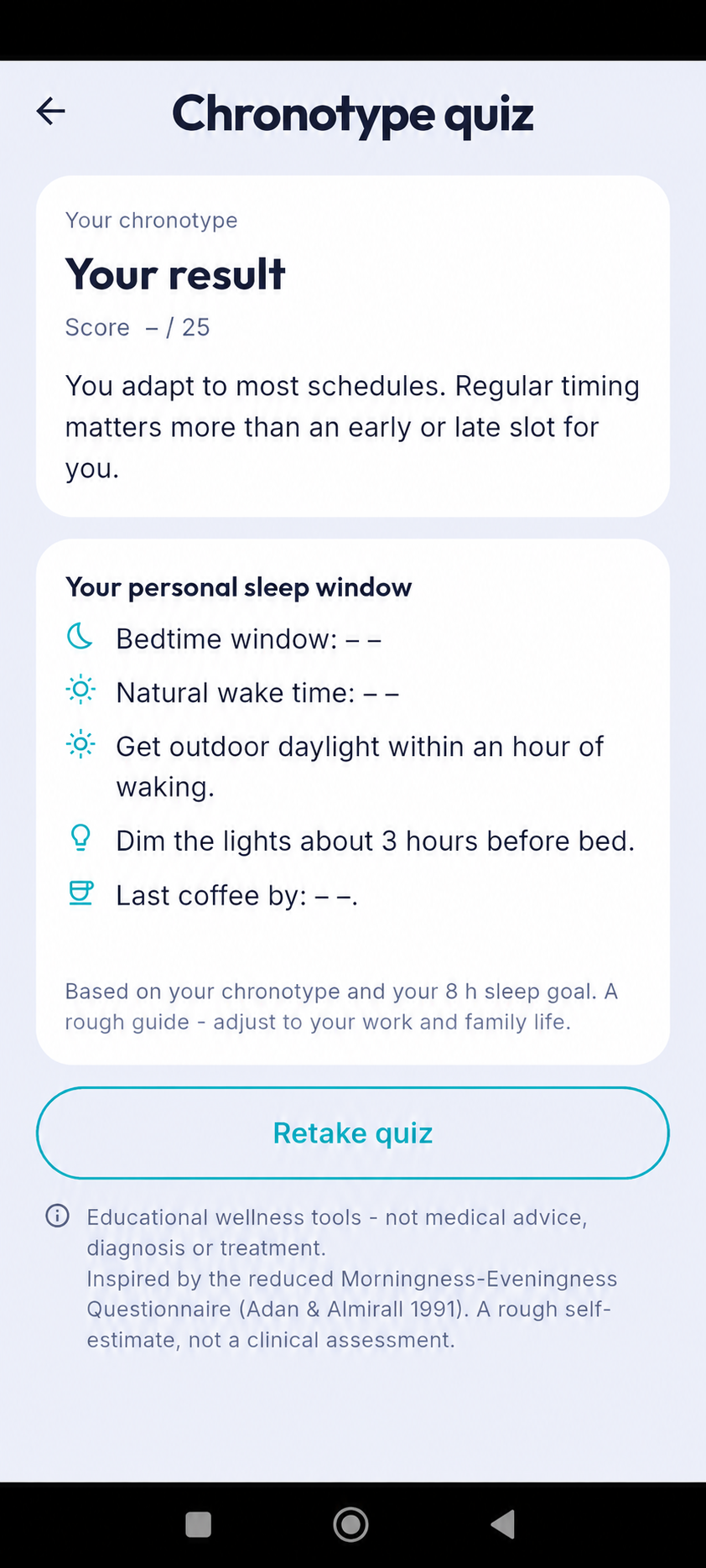
Finding your preferred sleep timing takes observation, not a quiz result alone. When obligations allow, watch for the hours when sleepiness arrives and when waking feels easiest, while accounting for recent sleep loss and unusual days.
Understand the pattern
Keep a simple record of bedtime, wake time, naps, and daytime alertness for a couple of weeks. Include workdays and free days, because a single weekend may be shaped by accumulated fatigue.
Start by describing, not judging. Compare several ordinary days.
Try a practical adjustment
Look for a repeated window rather than a perfect number. If your schedule changes across the week, describe the variation rather than forcing yourself into a “morning” or “evening” category.
Choose one change and give it a fair, comfortable trial.
Keep expectations realistic
Chronotype is not a diagnosis, and self-observation cannot identify a sleep disorder. AuraSleep can help you review sleep sessions and notes; discuss troublesome patterns with a qualified professional.
Personal observations are useful context, not a diagnosis.
How to Find Your Natural Sleep Timing Without Guessing is best approached as one part of a broader sleep picture. Observe your own routine, make a comfortable change if useful, and seek personalized guidance when ongoing symptoms affect daily life. AuraSleep can help organize sleep sessions and notes, but it does not diagnose or treat a sleep condition.
Sources
- NIGMS: Circadian Rhythms · View source
- NIGMS: Circadian Rhythm Vocabulary · View source