
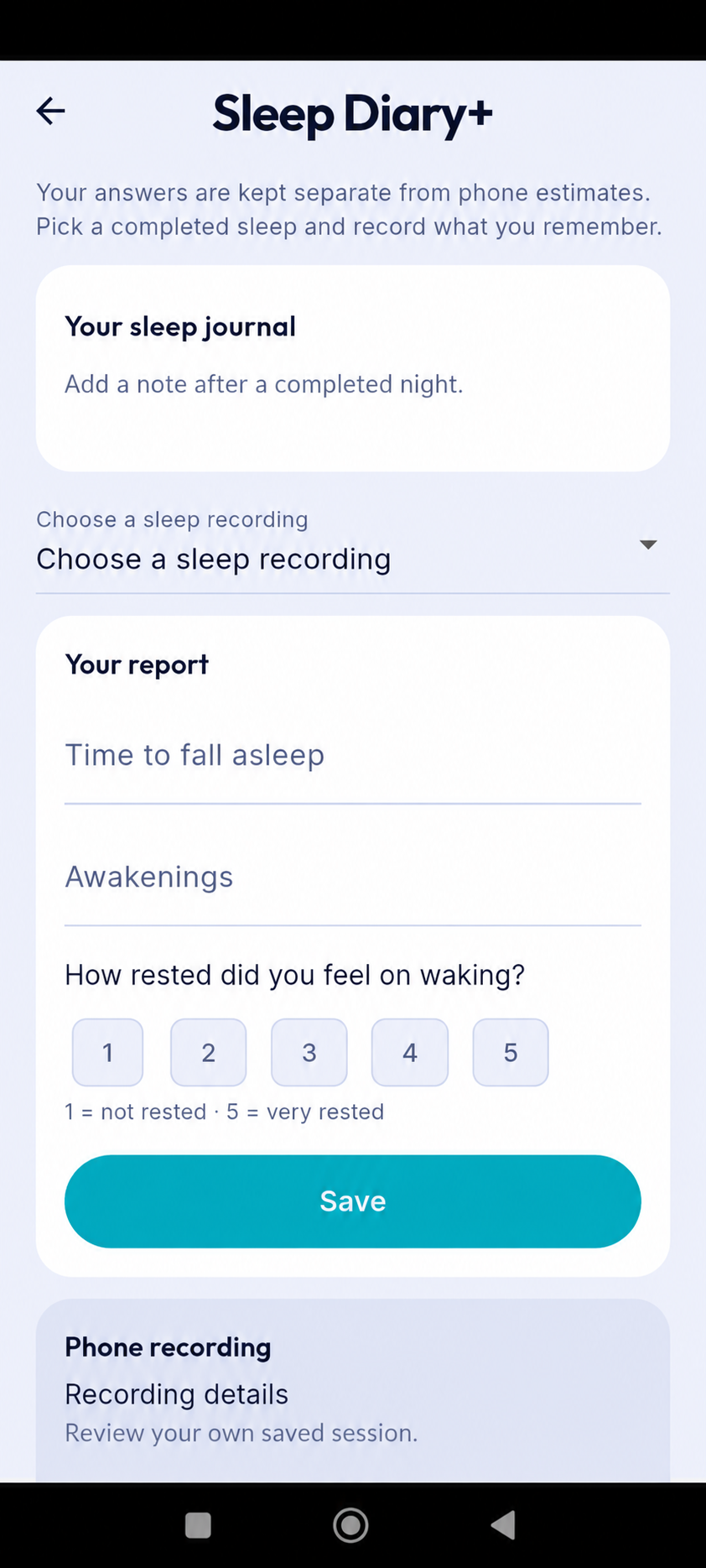
A sleep diary becomes more informative when it covers more than one unusually good or bad night. Many clinical resources suggest keeping a record for roughly one to two weeks when preparing to discuss sleep concerns, though the useful period depends on the question.
Understand the pattern
Start with a manageable window and record the same details each day. If your schedule rotates or weekends differ substantially, include those days rather than stopping after a neat but unrepresentative stretch.
Start by describing, not judging. Compare several ordinary days.
Try a practical adjustment
At the end, summarize patterns in plain language: typical sleep opportunity, frequent interruptions you remember, nap timing, caffeine timing, and daytime effects. The summary can guide a conversation without claiming that the diary found a cause.
Choose one change and give it a fair, comfortable trial.
Keep expectations realistic
You do not need to track indefinitely. If tracking becomes stressful, simplify it. AuraSleep offers session history and notes for personal review, not a substitute for a professional sleep evaluation.
Personal observations are useful context, not a diagnosis.
How Long Should You Keep a Sleep Diary? is best approached as one part of a broader sleep picture. Observe your own routine, make a comfortable change if useful, and seek personalized guidance when ongoing symptoms affect daily life. AuraSleep can help organize sleep sessions and notes, but it does not diagnose or treat a sleep condition.
Sources
- NHLBI Sleep Diary · View source
- NHLBI: Insomnia Diagnosis · View source