
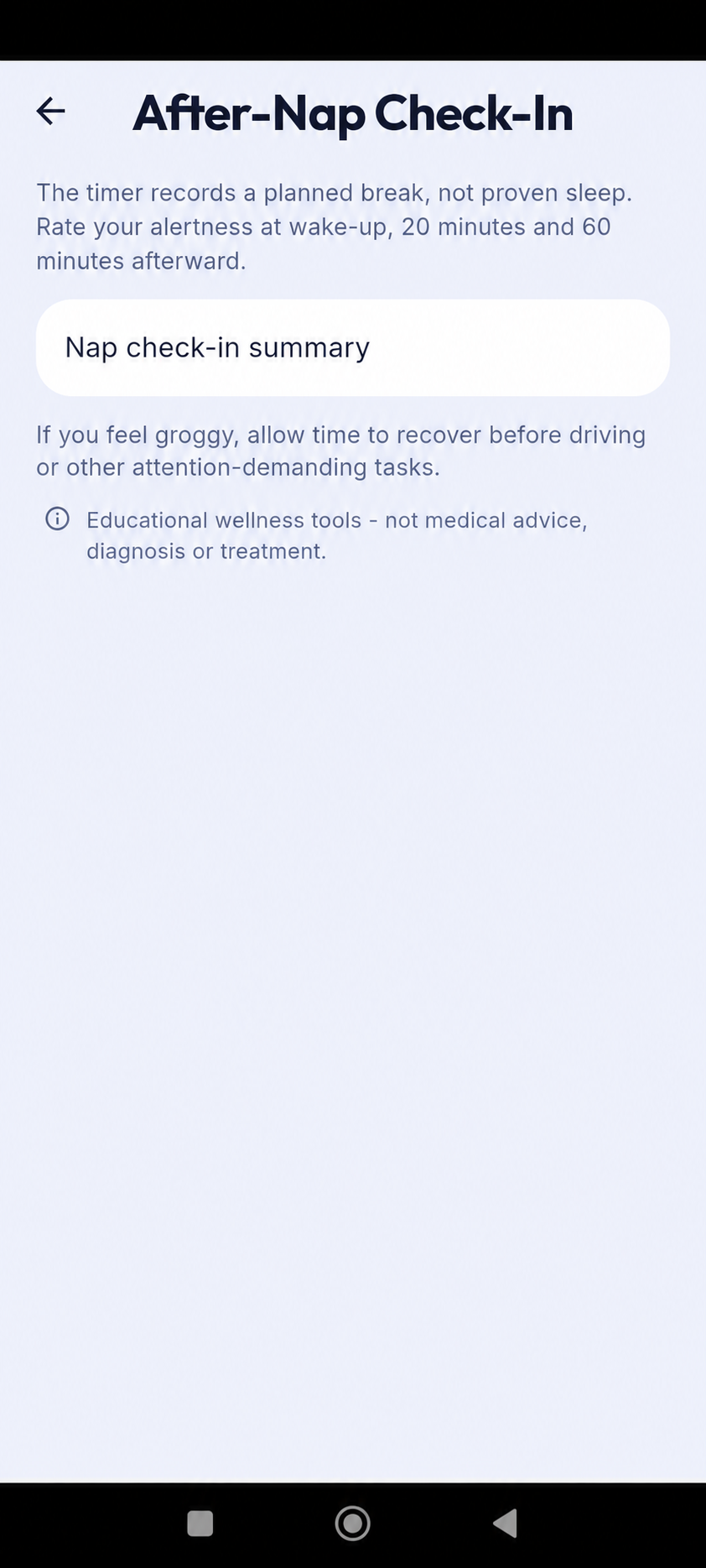
The best nap length depends on why you are napping and what you need to do afterward. NIOSH guidance often discusses brief naps of about 15–30 minutes for alertness, while longer opportunities may be used in specific work contexts.
Understand the pattern
Think backward from the next task and leave time to wake fully. A longer nap can bring more grogginess for some people and may make it harder to sleep later, especially if it is close to bedtime.
Start by describing, not judging. Compare several ordinary days.
Try a practical adjustment
Try one duration at a time and record how you felt afterward rather than assuming that a particular number works for everybody. If you are severely sleep deprived, a nap may not restore safe alertness.
Choose one change and give it a fair, comfortable trial.
Keep expectations realistic
Do not drive or perform critical work while drowsy. A nap is a temporary aid and should not be used to normalize chronic insufficient sleep.
Personal observations are useful context, not a diagnosis.
How Long Should a Nap Be? Choose Around Your Next Task is best approached as one part of a broader sleep picture. Observe your own routine, make a comfortable change if useful, and seek personalized guidance when ongoing symptoms affect daily life. AuraSleep can help organize sleep sessions and notes, but it does not diagnose or treat a sleep condition.
Sources
- CDC/NIOSH: Naps at Work · View source
- CDC/NIOSH: Napping Guidance · View source