
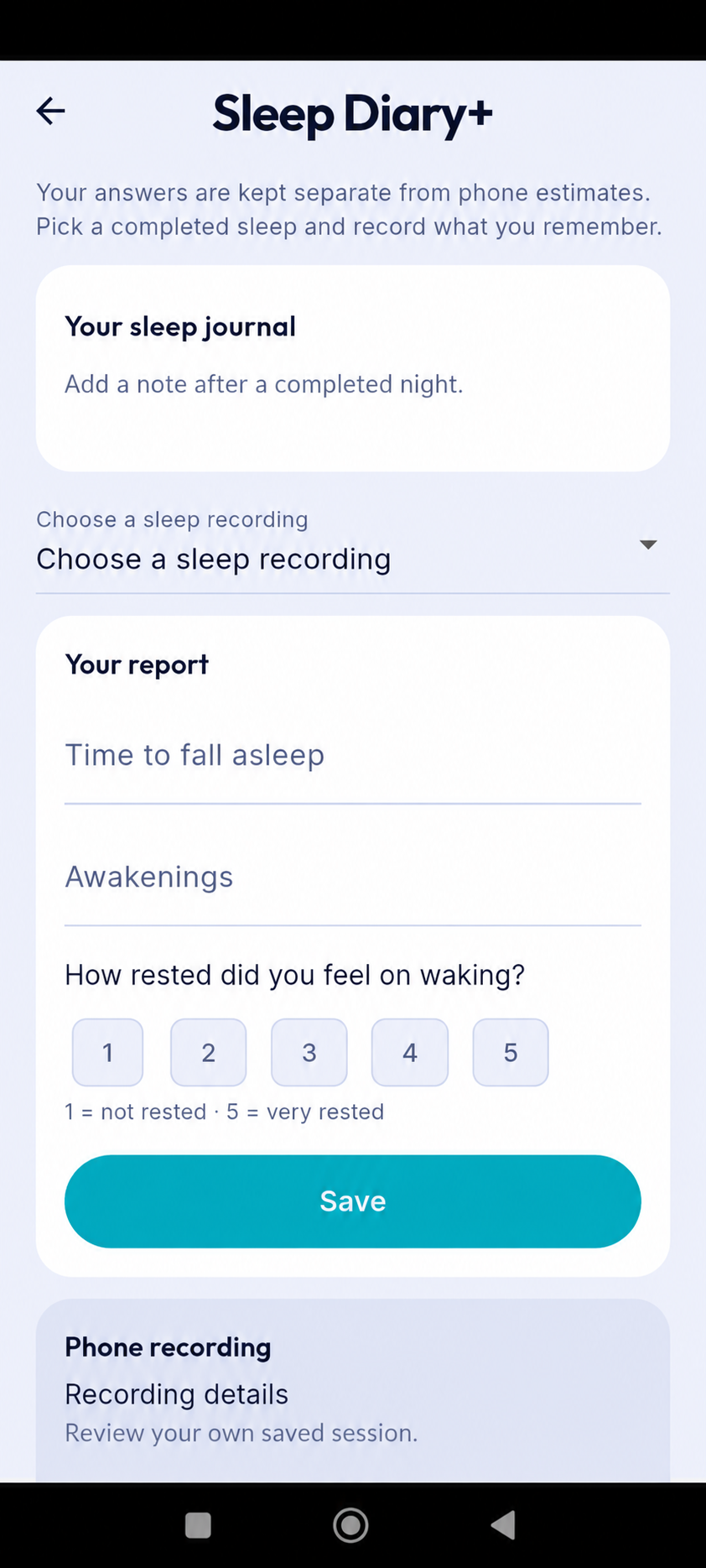
One late night can feel memorable, but it rarely explains a month of tired mornings. A sleep diary turns separate impressions into a timeline: bedtime, wake time, naps, and daytime alertness can show whether a difficult stretch follows schedule changes or repeats on ordinary days.
Understand the pattern
The goal is not to find a single culprit from one entry. Look for patterns that recur across several nights and note what changed before them, while remembering that a diary cannot prove cause and effect.
Start by describing, not judging. Compare several ordinary days.
Try a practical adjustment
Compare a typical workweek with a weekend, or a stretch with early shifts against one with later shifts. Keep entries factual: “coffee at 4 p.m.” is more useful than “bad sleep because of coffee.”
Choose one change and give it a fair, comfortable trial.
Keep expectations realistic
Bring a concise record to a clinician if ongoing sleepiness or disrupted sleep concerns you. AuraSleep can keep session notes together with your own tracking, but personal observations are not a medical assessment.
Personal observations are useful context, not a diagnosis.
How a Sleep Diary Can Reveal Patterns You Miss is best approached as one part of a broader sleep picture. Observe your own routine, make a comfortable change if useful, and seek personalized guidance when ongoing symptoms affect daily life. AuraSleep can help organize sleep sessions and notes, but it does not diagnose or treat a sleep condition.
Sources
- NHLBI Sleep Diary · View source
- NHLBI: Insomnia Diagnosis · View source