
A workout that ends after sunset is not automatically a threat to sleep. The useful question is more specific: what kind of activity did you do, when did it end relative to your intended sleep, and what happened across more than one night? Broad rules often flatten a mixed research picture into a simple warning. This guide separates the average findings from the situations where an individual may want to experiment with timing.
What the research says about evening workouts
A systematic review and meta-analysis by Stutz and colleagues examined 23 experimental studies in healthy adults. At the group level, the results did not support a blanket claim that evening exercise harms sleep; some measured sleep-stage outcomes shifted in a favorable direction. The authors did identify a possible exception: vigorous exercise that ended within about an hour of bedtime could affect sleep onset, total sleep time, or efficiency. The review also cautioned that several moderator findings were sensitive to removal of one study, so they should not be turned into a universal prescription.
A later comparative review, including randomized trials, likewise did not find a clear overall advantage for morning exercise across most sleep outcomes. It reported a possible difference in wake after sleep onset for evening or nighttime exercise. These reviews are not contradictory proof that one time is best: they pool different exercise protocols, people, and measurements. “Evening exercise” can mean a relaxed walk in one study and a demanding session in another. Evidence about healthy adults also may not describe people with persistent insomnia, specific health conditions, or unusual work schedules.
Why timing and intensity can matter
Exercise temporarily changes more than the clock. A vigorous session can leave a person feeling activated and warm, while the transition from training to bed may be short. Some people settle quickly; others notice that their heart rate, body temperature, hunger, or mental alertness remains elevated. The research does not establish one exact recovery interval that fits every sport and every sleeper. The commonly repeated one-hour figure is a finding about a subgroup in a review, not a guarantee that exercising 61 minutes before bed is safe or that a workout 59 minutes before bed will disrupt sleep.
Intensity is only one part of context. A long endurance session, competitive match, heavy lifting session, and gentle mobility routine place different demands on the body. The bedtime itself may also vary: someone who finishes work at midnight and sleeps at 9 a.m. has a different schedule from someone ending exercise at 9 p.m. before a conventional night. Consider the time until your actual intended sleep opportunity rather than judging by wall-clock time alone.
A practical way to test your own pattern
If you suspect a connection, treat it as a small personal observation rather than a clinical experiment. For two or three weeks, note the workout type, approximate intensity, finish time, planned bedtime, and a simple morning reflection such as “settled quickly,” “awake longer than usual,” or “felt typical.” Also record major competing factors that could explain a different night, such as illness, travel, alcohol, stress, unusually late caffeine, or a changed wake time. A short note is more useful than an elaborate score that creates extra work.
Change one feature at a time. For example, keep the same activity but finish it earlier on several comparable days, or keep the timing and choose a less intense session. Avoid changing bedtime, caffeine, meal timing, exercise, and bedroom conditions together; if sleep changes, you will not know which adjustment mattered. Look for a repeated pattern, not a single unusually good or difficult night. A diary can help you remember what happened, but it cannot prove that exercise caused the change.
Keep movement workable instead of chasing a perfect rule
When daytime exercise is impractical, dropping movement altogether may not be the most useful response to a general caution. Consider a gradual cool-down, a less intense late session, or moving the hardest workout earlier on days when that is realistic. A calm post-exercise routine can make the transition feel more predictable, though it is not a treatment and does not guarantee sleep. If your own repeated notes show that a particular kind of late session makes settling harder, use that observation to choose a schedule that fits your life.
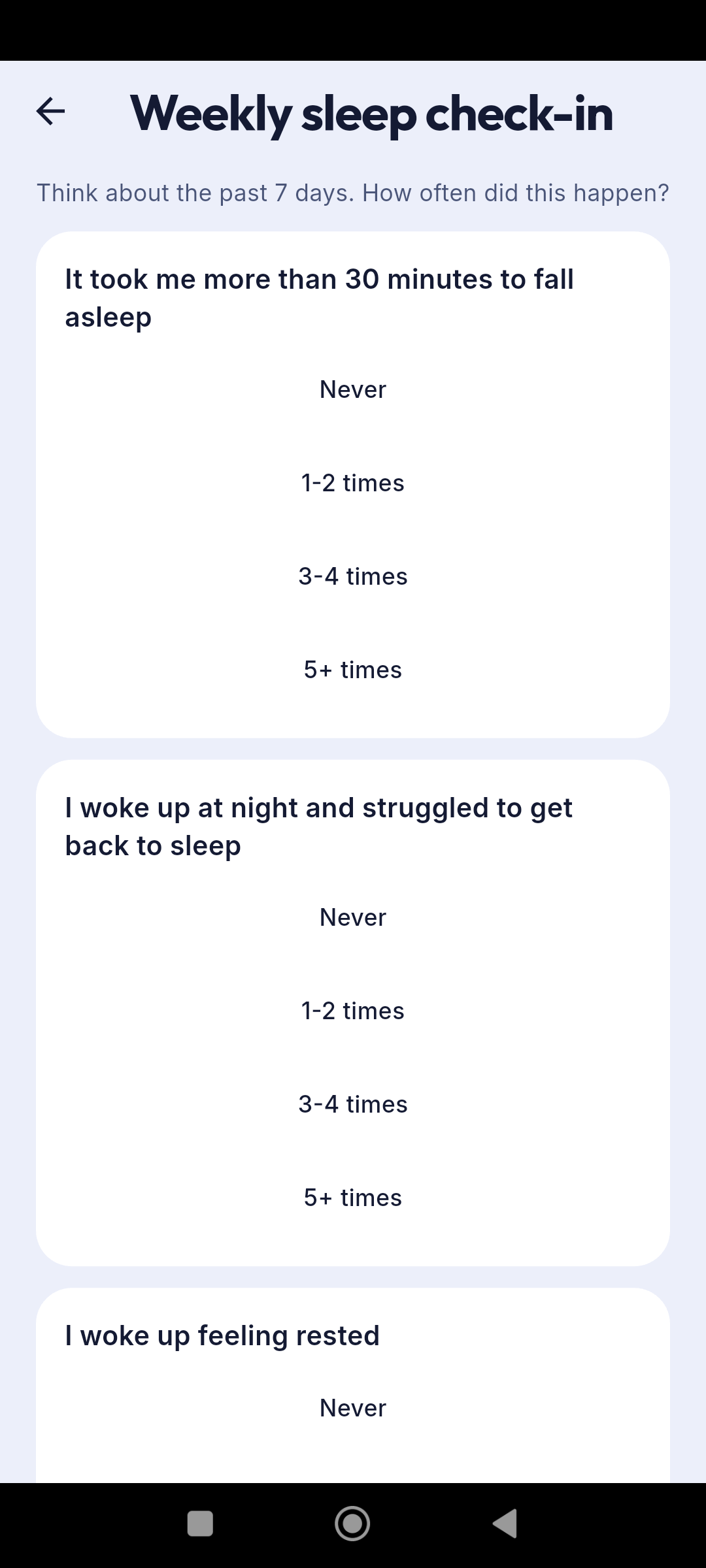
AuraSleep can help keep a brief sleep reflection with a recorded session and let you review patterns over time. Add workout details as a personal note; the app does not measure exercise physiology, diagnose a sleep condition, or establish cause and effect. Recording should remain optional and low effort. If tracking makes you more preoccupied with sleep, simplify it or stop.
When individual guidance is more appropriate
Persistent sleep difficulty can involve many interacting factors, including pain, medication, stress, an untreated sleep disorder, or shift work. A workout log cannot identify those causes. If sleep problems continue, affect daytime functioning, or are accompanied by concerning symptoms, discuss them with a qualified healthcare professional. Anyone managing a health condition should follow advice tailored to that condition rather than changing exercise based only on an article.
The research summarized here has limits: much of it studies short-term exercise in healthy adults, group averages can hide different individual responses, and sleep outcomes vary across measurement methods. It is best used to frame a sensible question about timing, not to promise a particular outcome or replace clinical assessment.
The evidence does not justify a universal ban on evening workouts. Intensity, the interval before your actual sleep opportunity, and your personal response all matter. If you want to adjust timing, make one modest change, observe several comparable nights, and seek professional guidance for persistent or concerning sleep problems.
Sources
- Stutz et al. (2019), systematic review and meta-analysis of evening exercise · View source
- Souabni et al. (2026), comparative systematic review and RCT meta-analysis · View source
- Physical Activity and Sleep: Updated Umbrella Review · View source