
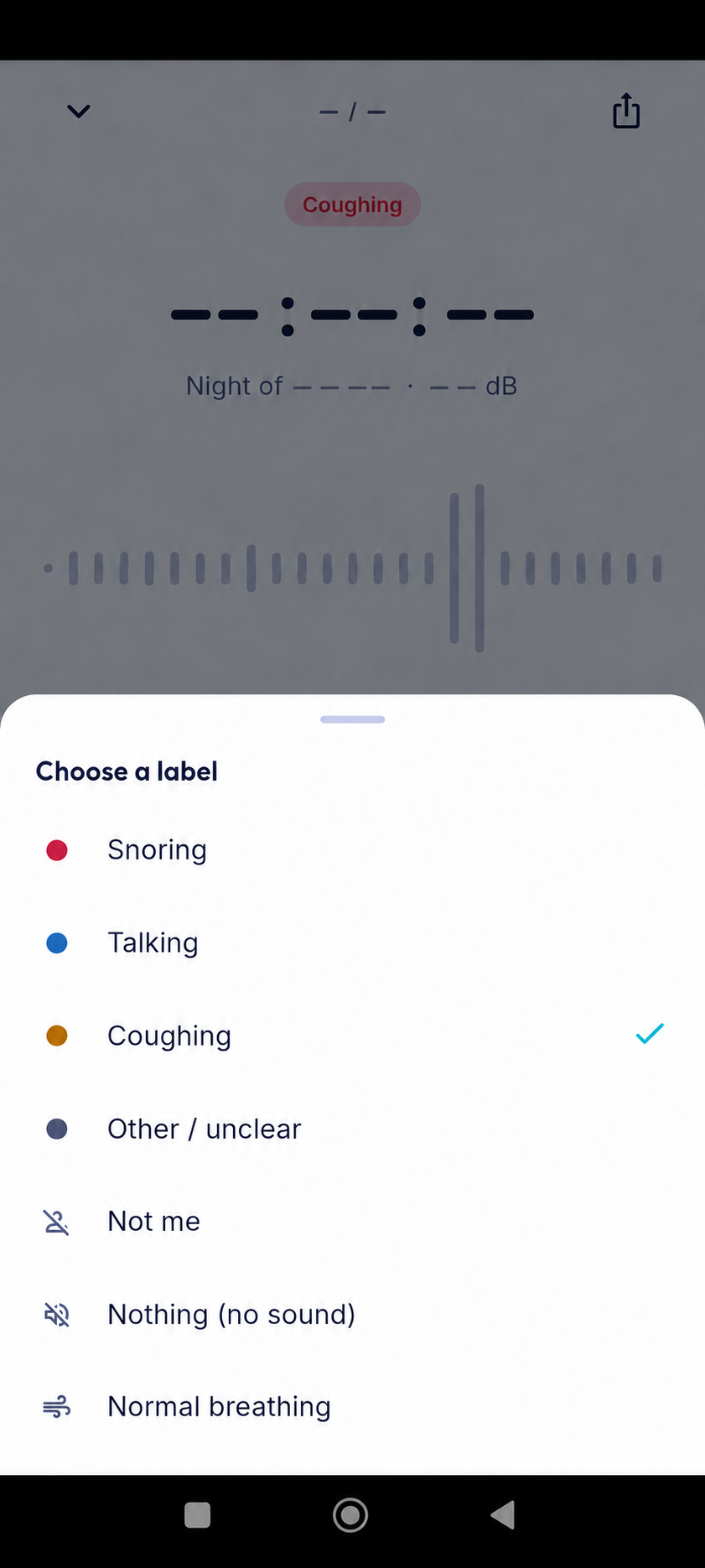
A cough detected in a sleep recording is one audio observation, not an explanation of its cause. A bedroom clip may include room noise, another person, or a sound that only resembles coughing. Reviewing the audio carefully can help you organize what you noticed, while keeping health questions for an appropriate professional assessment.
Check what the clip actually captures
Play the selected clip at a comfortable volume and listen for the sound itself before relying on its suggested label. A short cough-like sound may be muffled or overlap with bedding, a fan, or other room noise. If you cannot tell what it is, mark it as uncertain rather than forcing a category.
Use the timeline to see whether the clip is a single brief event or part of a longer stretch of room sound. The timeline and waveform can guide playback, but neither confirms that a cough occurred or identifies who made the sound.
Add useful context without diagnosing
If you keep a sleep diary, note simple context such as a change in room, a late meal, or a night when you already felt unwell. These notes describe your experience; they do not establish why a sound happened. Look across several nights before deciding whether an observation is worth following up.
A nighttime cough can have many possible explanations. An app recording cannot distinguish among them or evaluate symptoms. Avoid using the number of detected clips as a measure of health or as a reason to change prescribed care.
Respect everyone’s privacy
Audio may capture a bed partner or roommate. Before replaying or exporting a clip, consider whether other people are identifiable and whether they agreed to recording. Keep access limited and use the app’s controls to delete clips you do not want to retain.
If you share a clip, make sure the recipient and the purpose are appropriate. Avoid posting sleep audio publicly or using it to make claims about someone else. Personal notes can often preserve the context you need without sharing the recording itself.
Know when to get health advice
AuraSleep is a wellness app, not a medical device. It cannot diagnose the cause of coughing or assess breathing. If a cough is persistent, severe, rapidly worsening, or accompanied by breathing difficulty or other worrying symptoms, contact a qualified healthcare professional or follow local urgent-care guidance.
The NHS advises seeking medical advice for a cough lasting more than three weeks and urgent help for severe or quickly worsening symptoms, chest pain, difficulty breathing, or coughing blood. Use the official health guidance for your location and circumstances.
Treat a nighttime cough clip as a prompt to review, not a diagnosis. Listen in context, keep descriptive notes, protect the privacy of anyone recorded, and seek professional advice when symptoms persist or become concerning.
Sources
- NHS: Cough · View source
- MedlinePlus: Cough · View source