
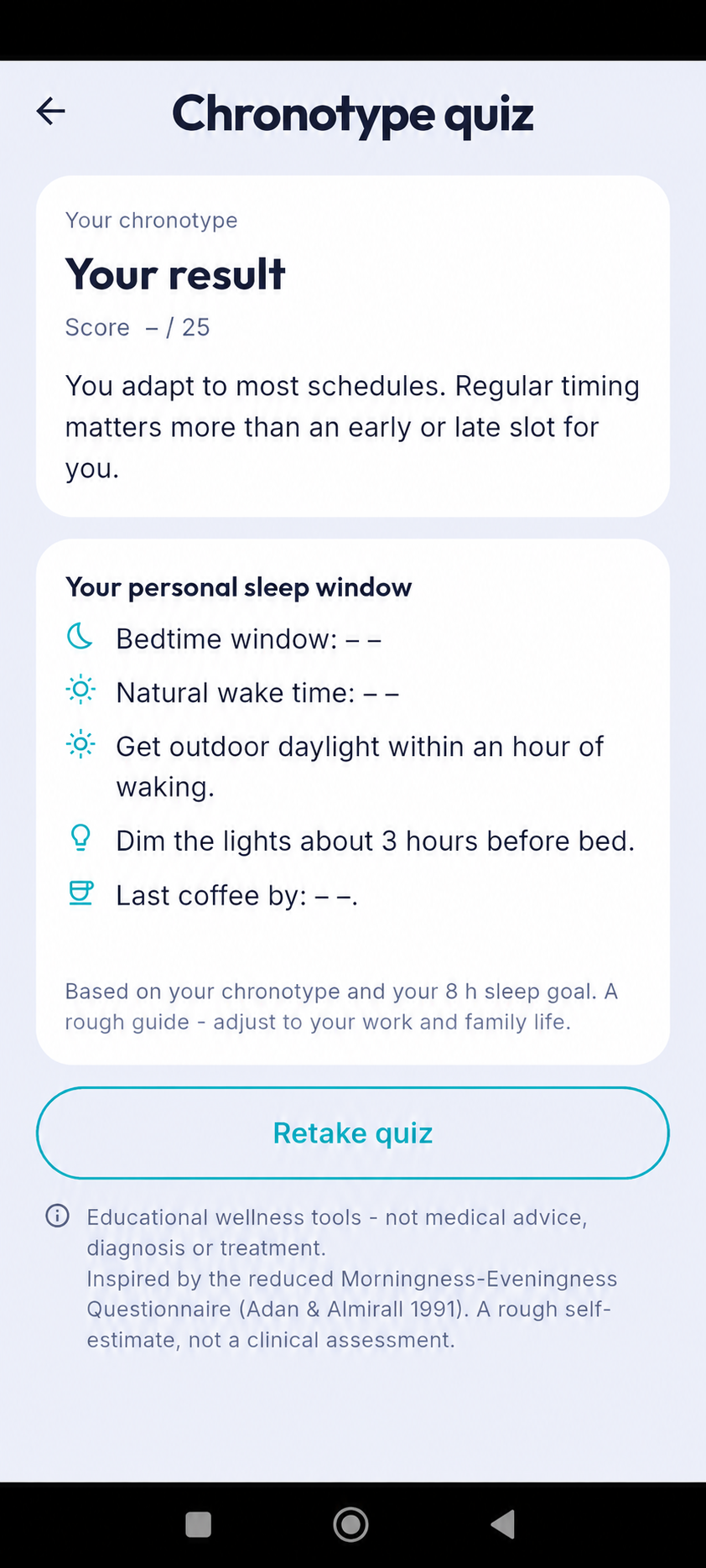
A late bedtime does not automatically mean someone has a late chronotype. It may reflect work, screens, social plans, stress, or a temporary period of short sleep. Chronotype is about preferred timing; sleep debt describes missed sleep opportunity over time.
Understand the pattern
These ideas can overlap but should not be confused. A person who prefers later hours may also be sleep deprived if an early alarm cuts the sleep period short. A morning person can accumulate too little sleep as well.
Start by describing, not judging. Compare several ordinary days.
Try a practical adjustment
Record both timing and duration for several days, including how you feel when you can choose your wake time. This gives a more useful picture than looking only at the clock time you went to bed.
Choose one change and give it a fair, comfortable trial.
Keep expectations realistic
Do not use a chronotype label to dismiss persistent fatigue. AuraSleep notes can keep schedule context beside sessions, while ongoing sleepiness deserves individualized professional advice.
Personal observations are useful context, not a diagnosis.
Chronotype vs Sleep Debt is best approached as one part of a broader sleep picture. Observe your own routine, make a comfortable change if useful, and seek personalized guidance when ongoing symptoms affect daily life. AuraSleep can help organize sleep sessions and notes, but it does not diagnose or treat a sleep condition.
Sources
- NIGMS: Circadian Rhythms · View source
- NIGMS: Circadian Rhythm Vocabulary · View source