
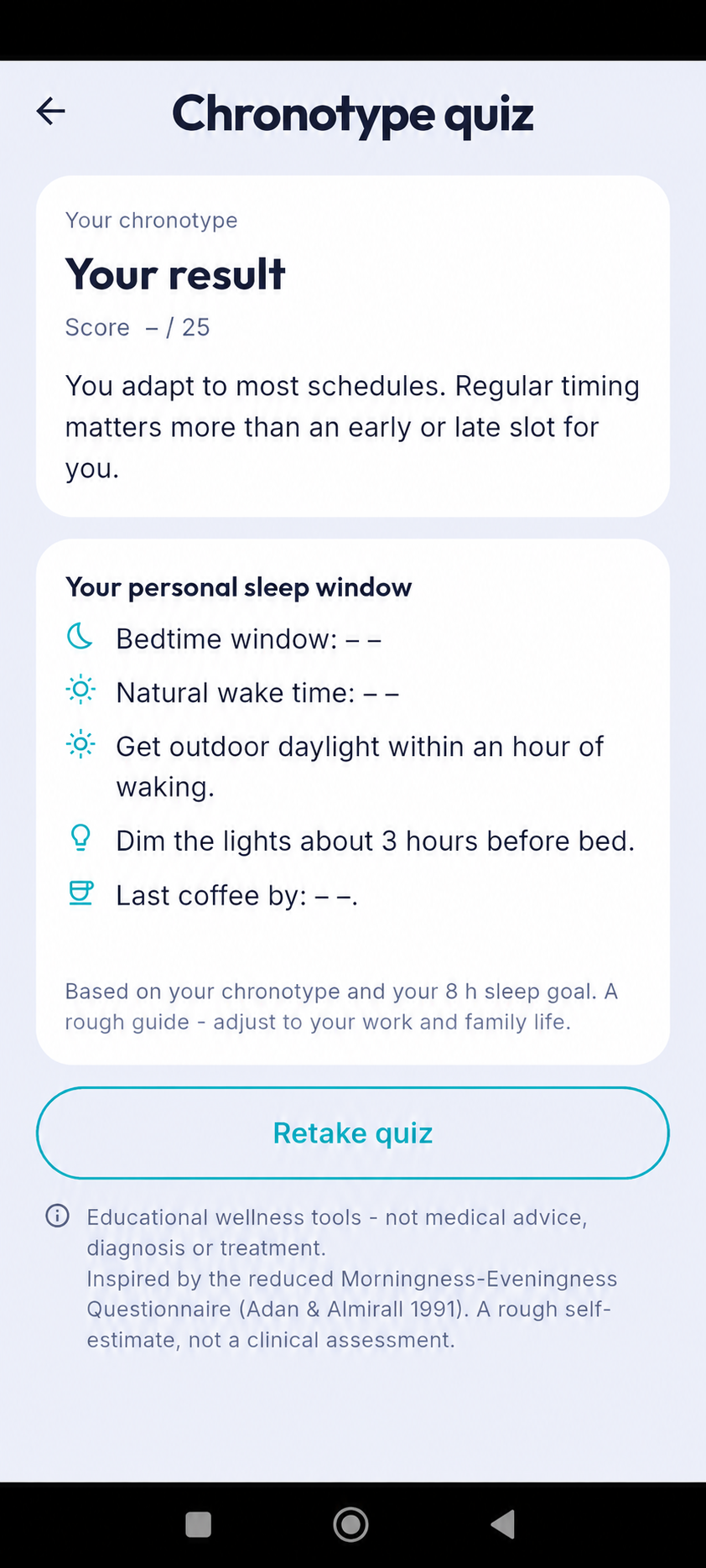
Chronotype describes a person’s preferred timing for sleep and activity. People differ: some feel naturally alert earlier, others later, and many fall between those descriptions. It is one influence on daily timing, not a fixed label that explains every night of sleep.
Understand the pattern
Your body clock also responds to cues such as light and the regularity of routines. Work, family responsibilities, age, and sleep opportunity can make your lived schedule differ from your preferred one.
Start by describing, not judging. Compare several ordinary days.
Try a practical adjustment
Instead of declaring yourself a “night owl” after one late evening, notice when you tend to feel sleepy and alert across ordinary days. A diary can separate a stable preference from a temporary schedule disruption.
Choose one change and give it a fair, comfortable trial.
Keep expectations realistic
If your preferred timing repeatedly conflicts with obligations and causes significant difficulty, a health professional can discuss options. AuraSleep helps organize personal sleep observations without assigning a medical chronotype.
Personal observations are useful context, not a diagnosis.
Chronotype Explained is best approached as one part of a broader sleep picture. Observe your own routine, make a comfortable change if useful, and seek personalized guidance when ongoing symptoms affect daily life. AuraSleep can help organize sleep sessions and notes, but it does not diagnose or treat a sleep condition.
Sources
- NIGMS: Circadian Rhythms · View source
- NIGMS: Circadian Rhythm Vocabulary · View source