
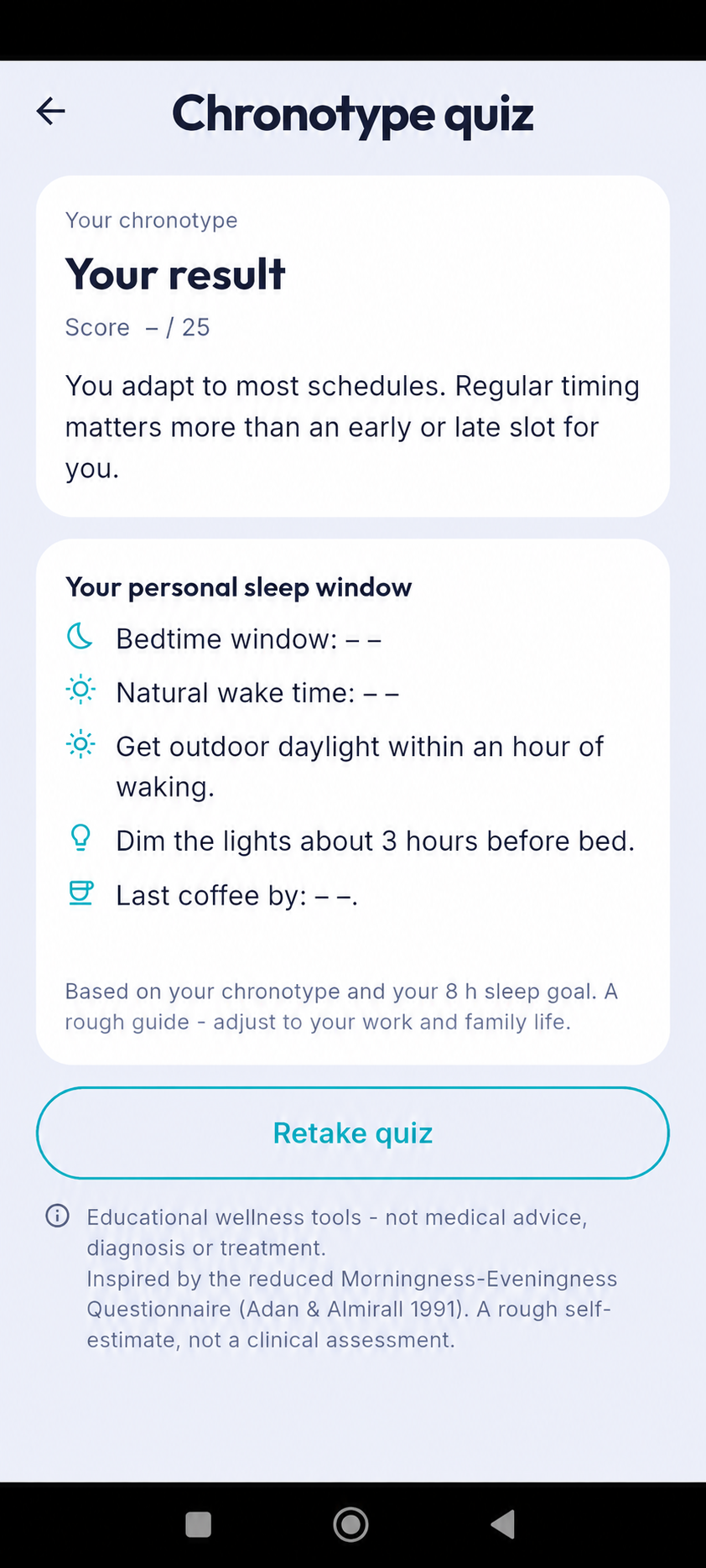
A mismatch between preferred timing and required work hours can make a routine feel harder to sustain. Chronotype is only one part of the picture, but noticing when alertness naturally rises and falls may help explain why the same schedule feels different for different people.
Understand the pattern
List the sleep opportunity your schedule permits, not only the bedtime you intend. Commute, family care, and rotating hours can shrink the time available for sleep even when someone is motivated to keep a consistent routine.
Start by describing, not judging. Compare several ordinary days.
Try a practical adjustment
If you can, protect a stable sleep window on comparable workdays and limit unnecessary shifts in timing. For rotating or overnight work, ask occupational health about practical options rather than relying on generic advice.
Choose one change and give it a fair, comfortable trial.
Keep expectations realistic
AuraSleep notes can help connect session timing to workdays. Significant or safety-related sleepiness calls for professional guidance, especially when your schedule involves driving or hazardous tasks.
Personal observations are useful context, not a diagnosis.
Chronotype and Work Schedules is best approached as one part of a broader sleep picture. Observe your own routine, make a comfortable change if useful, and seek personalized guidance when ongoing symptoms affect daily life. AuraSleep can help organize sleep sessions and notes, but it does not diagnose or treat a sleep condition.
Sources
- NIGMS: Circadian Rhythms · View source
- NIGMS: Circadian Rhythm Vocabulary · View source