
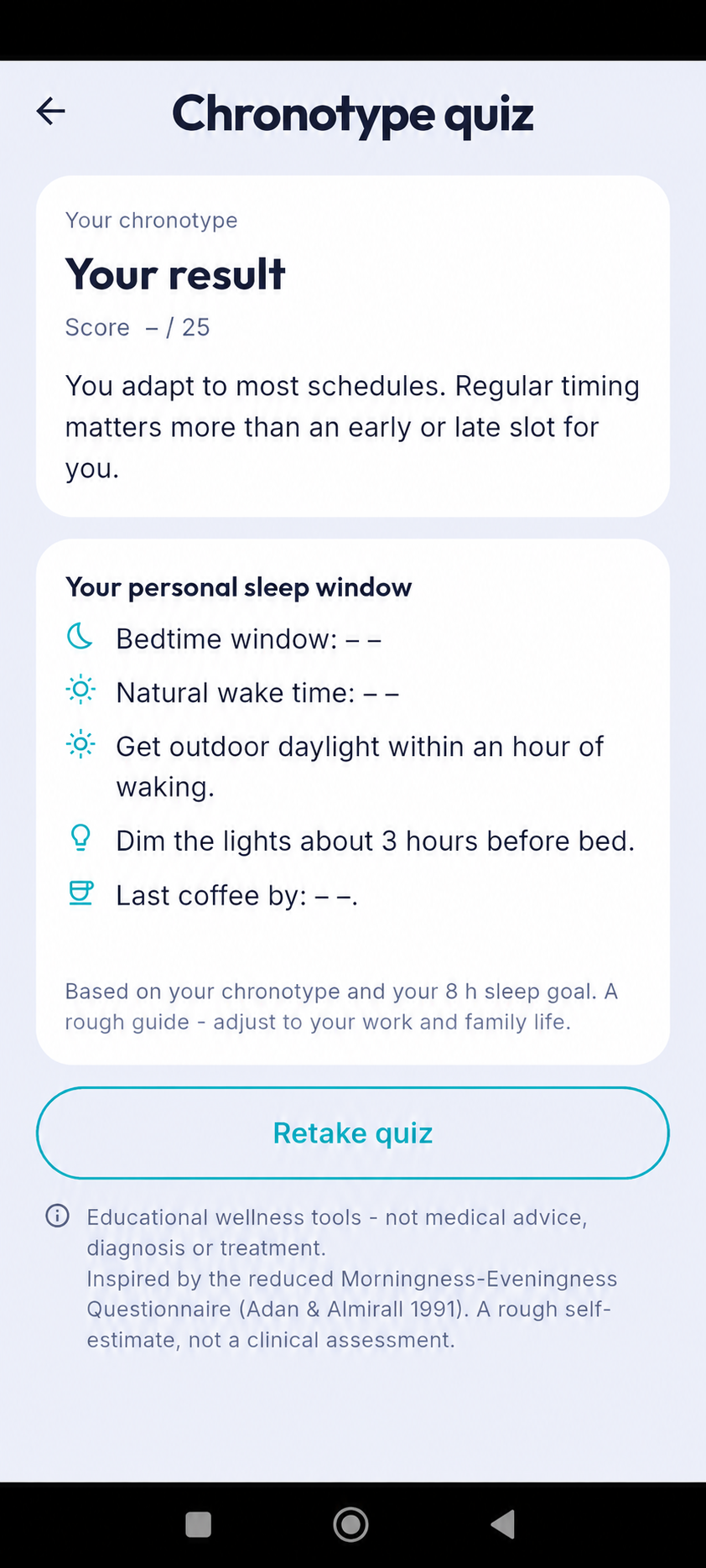
A chronotype quiz can offer a simple prompt to think about when you tend to feel alert or ready for sleep. It is a starting point for reflection, not a medical assessment or a fixed label. Your schedule, light exposure, responsibilities, and sleep opportunity all influence how a day feels.
Treat a quiz result as a rough description
Chronotype is commonly used to describe preferences in the timing of sleep and activity. A short questionnaire can summarize your answers, but it cannot measure your internal body clock or determine whether you have a sleep disorder. Results may vary with wording, recent routines, and life circumstances.
Use the result as a question rather than a verdict: does it resemble your experience on days when you can choose your schedule? If work, family care, or school sets your hours, your actual bedtime may not reflect your preferred timing.
Compare preference with your real routine
For a week or two, note when you feel most alert, when you begin winding down, and when you sleep and wake. Add context such as shift work, travel, illness, or unusually early obligations. A sleep diary helps preserve observations; it does not confirm a biological type.
Look for repeated patterns across ordinary days instead of drawing a conclusion from one late night. The body clock follows a roughly 24-hour rhythm and responds to cues such as light and darkness, while sleep pressure also builds during time awake.
Make practical changes gently
If your schedule allows, try a consistent sleep and wake window that gives you enough opportunity to rest. Make gradual adjustments and record how they feel, rather than attempting a dramatic shift based on a quiz label. Some schedules cannot be changed, and personal observations are not a substitute for clinical advice.
NHLBI and CDC describe regular routines and attention to sleep habits as helpful general practices. AuraSleep can organize your notes, but it does not diagnose circadian rhythm conditions. If sleep timing causes persistent difficulty or affects daily life, discuss it with a qualified health professional.
A chronotype quiz is most useful as a low-stakes prompt. Combine it with repeated personal observations, account for the schedule you actually live, and avoid treating a label or app result as a diagnosis.
Sources
- NHLBI: What Makes You Sleep? · View source
- CDC: About Sleep · View source