
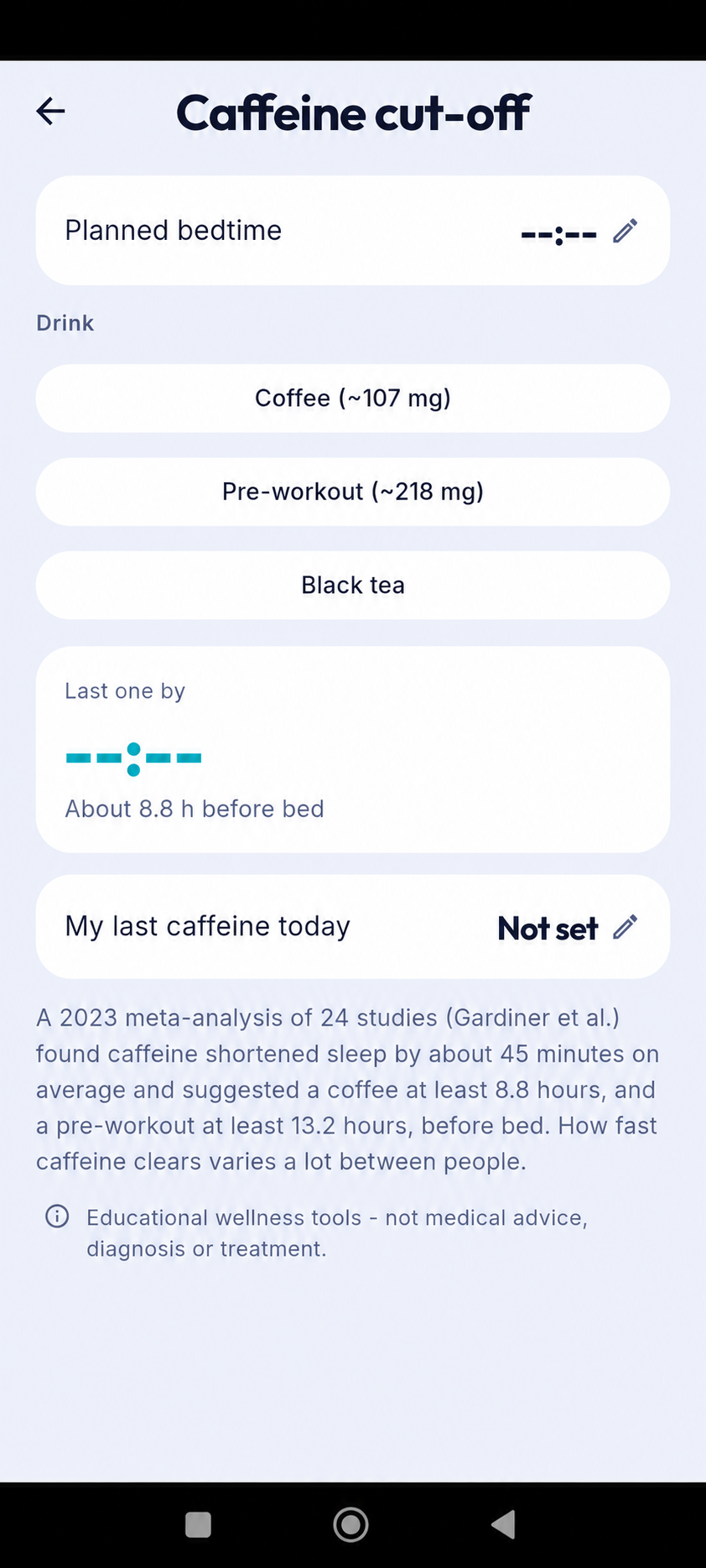
There is no single caffeine cutoff that feels right for everyone. Caffeine can remain active for hours, and sensitivity varies with the person, amount, medicines, and other factors. A late drink that barely affects one person may make another feel more alert at bedtime.
Understand the pattern
Treat published timing suggestions as starting points, not guarantees. The CDC/NIOSH advice for workers says to avoid caffeine for at least five hours before planned sleep, and longer if sensitive; individual patterns may differ.
Start by describing, not judging. Compare several ordinary days.
Try a practical adjustment
Track the time and approximate amount of coffee, tea, energy drinks, chocolate, or other sources alongside bedtime and next-day alertness. Change one timing habit at a time so you can observe your own pattern.
Choose one change and give it a fair, comfortable trial.
Keep expectations realistic
Do not increase caffeine to compensate for chronic short sleep. If you are pregnant, take medicines, or have health concerns, ask a healthcare professional about appropriate limits.
Personal observations are useful context, not a diagnosis.
Caffeine Cutoff Before Bed is best approached as one part of a broader sleep picture. Observe your own routine, make a comfortable change if useful, and seek personalized guidance when ongoing symptoms affect daily life. AuraSleep can help organize sleep sessions and notes, but it does not diagnose or treat a sleep condition.
Sources
- FDA: How Much Caffeine Is Too Much? · View source
- CDC/NIOSH: Improve Sleep · View source