
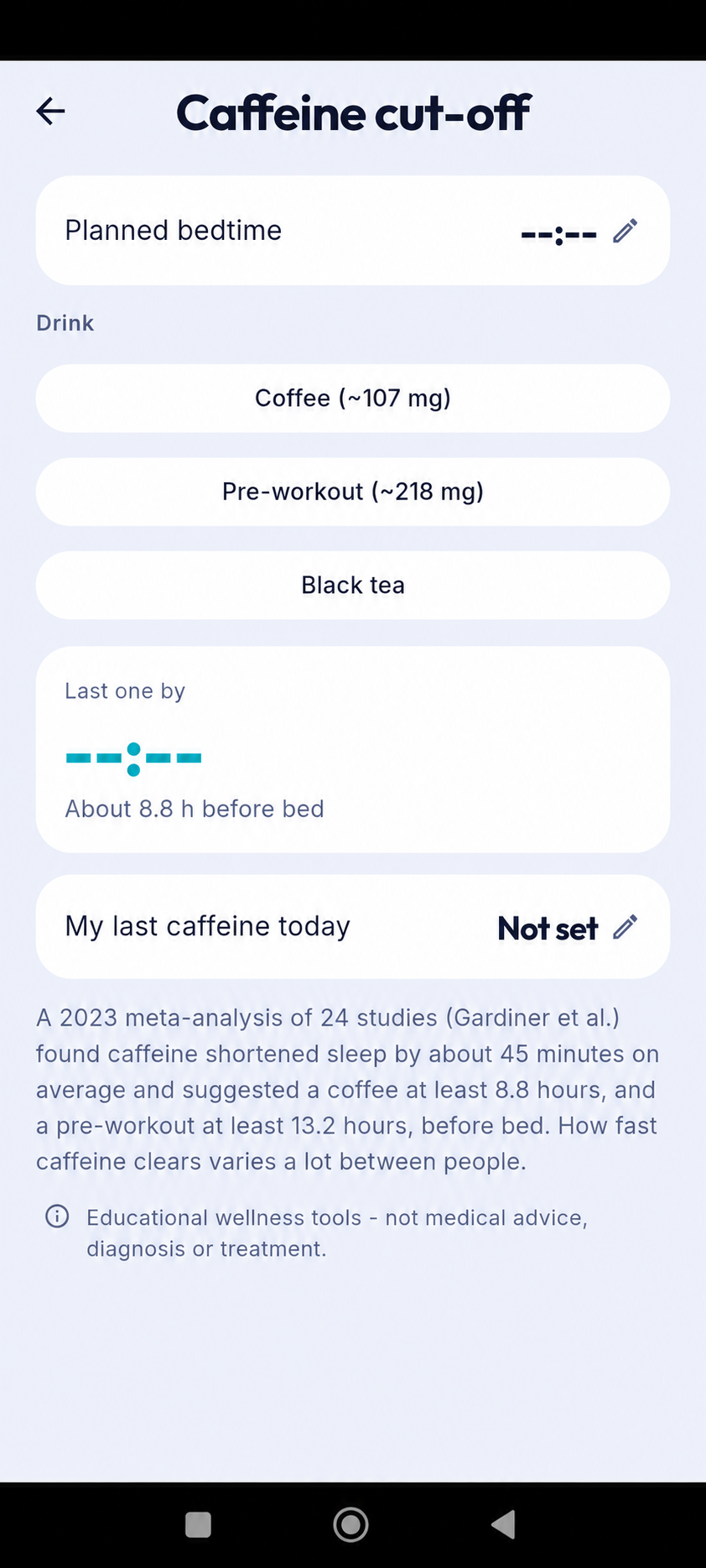
Coffee is not the only source worth noticing when you are exploring caffeine and sleep. Tea, cola, energy drinks, chocolate, some supplements, and certain medicines may contribute, and serving sizes differ widely.
Understand the pattern
A product label or manufacturer information can help you estimate intake, but the caffeine amount in café drinks may be harder to know. Decaffeinated coffee generally contains less caffeine, not necessarily none.
Start by describing, not judging. Compare several ordinary days.
Try a practical adjustment
Write down sources and timing rather than trying to calculate a perfect total from memory. If sleep changes after a new supplement or medicine, ask a pharmacist or clinician rather than stopping prescribed treatment on your own.
Choose one change and give it a fair, comfortable trial.
Keep expectations realistic
For most adults, FDA cites 400 mg per day as an amount not generally associated with negative effects, while emphasizing individual variation. That daily figure is not a sleep-specific target or guarantee.
Personal observations are useful context, not a diagnosis.
Caffeine and Sleep is best approached as one part of a broader sleep picture. Observe your own routine, make a comfortable change if useful, and seek personalized guidance when ongoing symptoms affect daily life. AuraSleep can help organize sleep sessions and notes, but it does not diagnose or treat a sleep condition.
Sources
- FDA: How Much Caffeine Is Too Much? · View source
- CDC/NIOSH: Improve Sleep · View source