
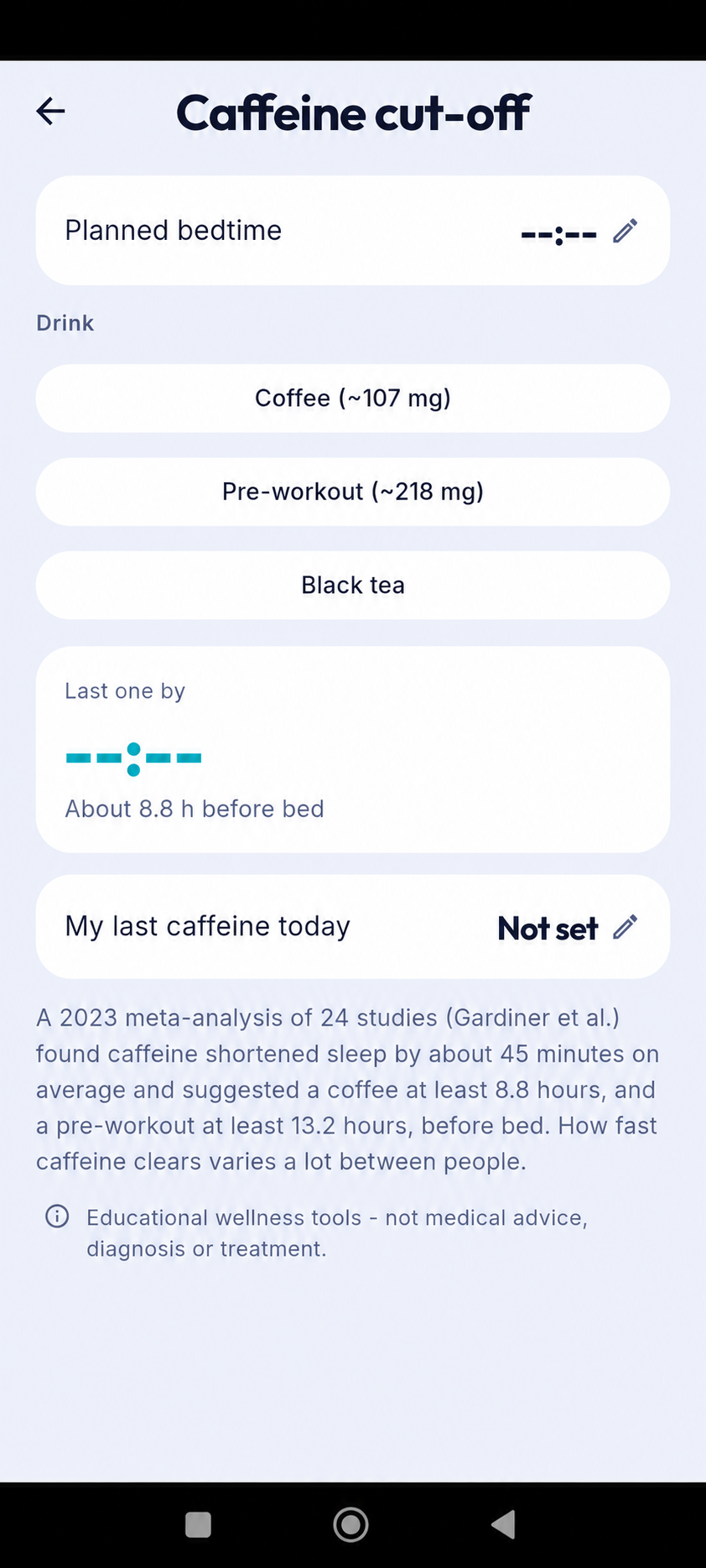
Caffeine can be part of a person's daily routine, but its relationship to sleep varies with dose, timing, sensitivity, and the rest of the day. A sleep diary can help you notice what happened on your own schedule; it cannot prove that caffeine caused a particular night or tell you a medically appropriate cutoff. This guide offers a consistent way to record timing and context without turning a study average into a rule for every person.
Record the details that make a note interpretable
Write down the time and approximate amount of a caffeinated drink or product, using the package label or a familiar serving as a guide. Include coffee, tea, energy drinks, cola, chocolate, and supplements when relevant; caffeine content can differ substantially. Then note intended bedtime, the time you tried to sleep, and a brief morning reflection such as “longer to settle than usual” or “woke twice.” Avoid trying to estimate a blood caffeine level from a diary entry.
Keep the note neutral. A record such as “large coffee at 16:00; lights out 23:00; unusual work deadline” is more useful than “coffee ruined my sleep.” The second statement assumes a cause before other factors are considered. A diary is a tool for noticing patterns and preparing questions, not a controlled experiment.
What the research can and cannot tell you
A 2023 systematic review and meta-analysis examined how caffeine affects subsequent sleep across the studies it included. Research can estimate average effects under studied conditions, but study doses, participants, and sleep measures do not represent every individual or every product. The paper is useful context for why timing may matter; it does not establish one safe cutoff that suits all ages, health conditions, medicines, or work schedules.
The U.S. Food and Drug Administration also notes that people can differ in sensitivity and that caffeine amounts vary between products. If you are pregnant, have a health condition, use medicines that may interact, or are concerned about symptoms, ask a qualified clinician for personal guidance. Do not use an app score or an online rule to change prescribed treatment.
Compare like with like over several nights
After recording several ordinary nights, compare similar days where possible. A late caffeine entry on a workday is not directly comparable with a caffeine-free holiday if bedtime, stress, light, exercise, and wake time also changed. Mark unusual events—travel, illness, overnight duty, alcohol, or a noisy room—so you can see when the comparison is weak. Look for a recurring association rather than treating one night as a conclusion.
If you decide to change a routine, make one modest, feasible adjustment and note it clearly. Keep other parts of the routine as steady as practical, then review the entries without expecting a perfect result. Avoid abrupt or extreme changes that could create discomfort; seek qualified advice if reducing caffeine raises concerns.
Use a diary as a conversation aid
A concise record can help you describe your routine to a healthcare professional: approximate intake, timing, bedtime, wake time, and what you noticed. Bring questions, not a diagnosis. The diary cannot measure sleep stages, identify a sleep disorder, or show the exact cause of awakenings. AuraSleep is a personal recording and journaling tool, not a medical device or diagnostic service.
AuraSleep lets you keep sleep notes and review them over time. Treat the notes as observations and protect their privacy. The app does not calculate caffeine metabolism or tell you when it is medically safe to consume caffeine.
Choose a simple, repeatable note format and review several comparable nights before drawing a personal conclusion. If sleep difficulty is persistent or concerning, speak with a qualified healthcare professional. AuraSleep can help organize observations, not diagnose or treat a condition.
Sources
- Gardiner et al. (2023), The effect of caffeine on subsequent sleep: A systematic review and meta-analysis · View source
- U.S. FDA — Spilling the Beans: How Much Caffeine is Too Much? · View source