
A bedtime reminder is a cue to do something you chose in advance, such as write a short sleep note, dim a screen, or begin getting ready for bed. It is not a command to fall asleep at a precise minute. Work shifts, caregiving, travel, pain, and household responsibilities can all move an evening. A reminder is most useful when it supports a realistic action and remains easy to ignore, postpone, or change when the day does not follow the plan.
Choose the action before choosing the time
Start by naming the behavior you want the reminder to cue. “Prepare for tomorrow” is broad; “put my work badge and water bottle by the door” is specific and short. If your goal is to record a night, the reminder can prompt a note rather than a judgment about how well you slept. Decide whether the cue should appear at a fixed clock time, relative to a planned bedtime, or only on selected days.
Use a time that leaves room for the action and the rest of your evening. A notification at the moment you hope to be asleep may feel like a deadline; an earlier prompt may be easier to act on. If you have rotating shifts, choose a cue that follows your changing sleep opportunity instead of assuming every night begins at the same hour. Skip or move the reminder when the plan no longer fits.
What reminder research actually tested
A 2025 factorial randomized trial involving 447 adults with moderate to severe insomnia examined interface design, automated reminders, and adaptive support inside a digital self-help treatment. The reminder component increased sleep-log activity and logins, while the larger intervention combined reminders with treatment elements such as CBT-I strategies and support. This does not show that a standalone consumer bedtime alarm improves sleep or that one reminder time works for everyone.
A 2022 Japanese trial studied a sleep-prompt app among workers with mild insomnia. Its four-week program combined personalized notifications, a sleep diary, education, stimulus-control guidance, and sleep-restriction methods. The researchers reported changes in insomnia scores, but the package bundled several components and excluded shift workers. The result cannot isolate a notification’s effect or establish how a simple bedtime reminder will work for a different user or app.
Keep the cue supportive instead of turning it into a score
Try one reminder for a week and notice whether it helps you start the chosen action. If you repeatedly dismiss it, that is information about the cue or timing—not a personal failure. Move it, reduce its frequency, change the action, or turn it off. Avoid adding several alerts that interrupt wind-down or create pressure to achieve a perfect bedtime.
A reminder should not tell you that you have slept enough, prescribe a sleep window, or evaluate whether you are safe to work or drive. People differ, and an app notification is not a health assessment. If a reminder raises worry about missed sleep, use a less evaluative message such as “add a note if useful” or remove it. Keep important medication instructions and clinical plans with the qualified professional who provided them.
Make reminders fit the app and your real schedule
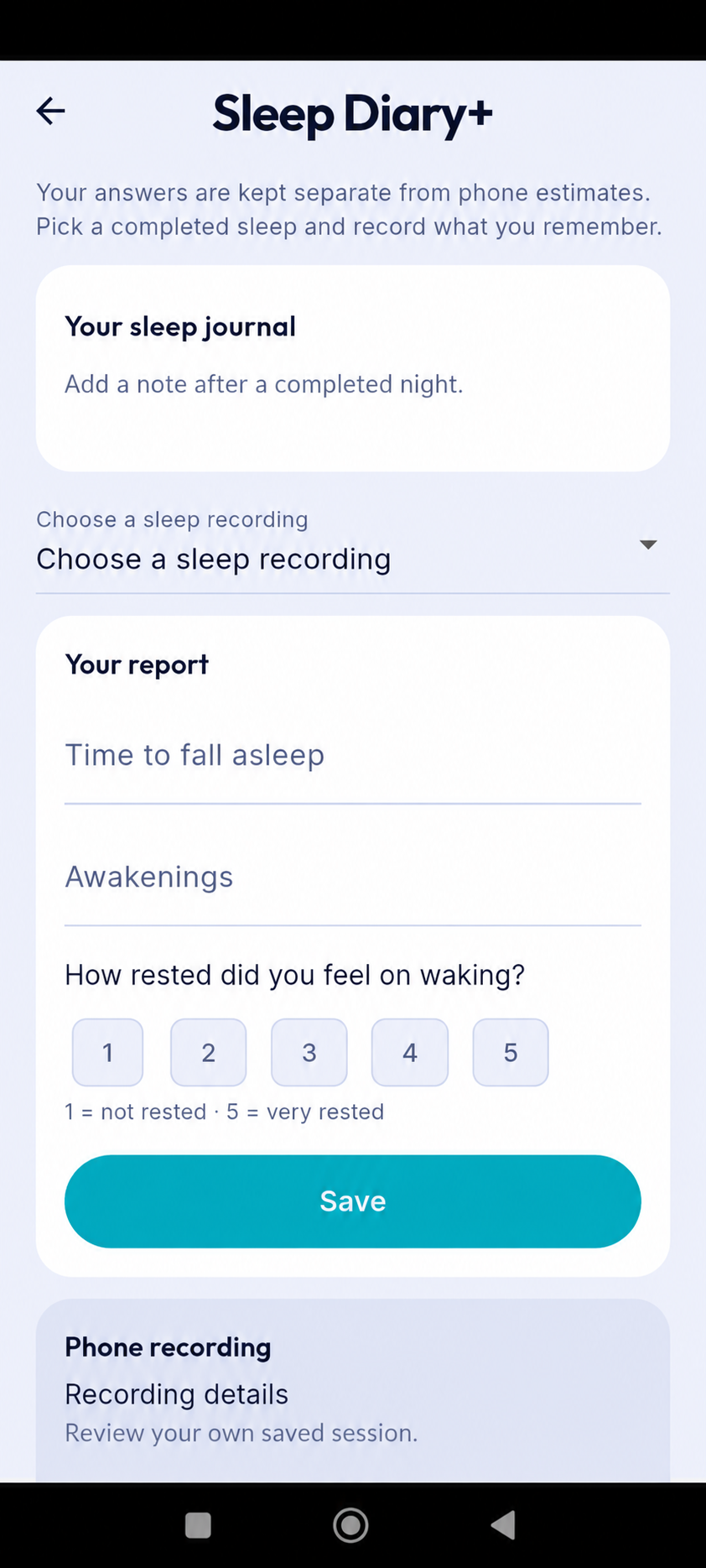
AuraSleep’s reminder settings can serve as a personal prompt for a routine or record, while its notes and statistics can help you look back later. Set only the cue that supports something you actually intend to do. A reminder cannot create a quiet bedroom, remove an early shift, or replace care for persistent insomnia. If the reminder does not fit a night shift or a change in plans, adjust it rather than forcing the day around the notification.
When reviewing whether the reminder helps, consider ease and burden as well as completion. Did it arrive at a useful moment? Did it interrupt another responsibility? Did it make the routine feel simpler? Those practical observations can guide your settings, but they are not proof of a medical benefit. The product is a planning and journaling aid, not a substitute for individualized insomnia treatment.
Choose one specific, flexible action and a reminder time that suits your current routine. Treat completion as optional feedback, not a sleep score. Studies of digital treatment packages show that reminders can support engagement in some settings, but they do not establish that a standalone bedtime alert improves sleep for every person. AuraSleep can help organize a personal routine without prescribing it.
Sources
- Hentati et al. (2025), Effects of intervention design on engagement and outcomes in digital self-help for insomnia: factorial randomized controlled trial · View source
- Sakai et al. (2022), Providing Brief Personalized Therapies for Insomnia Among Workers Using a Sleep Prompt App: Randomized Controlled Trial · View source