
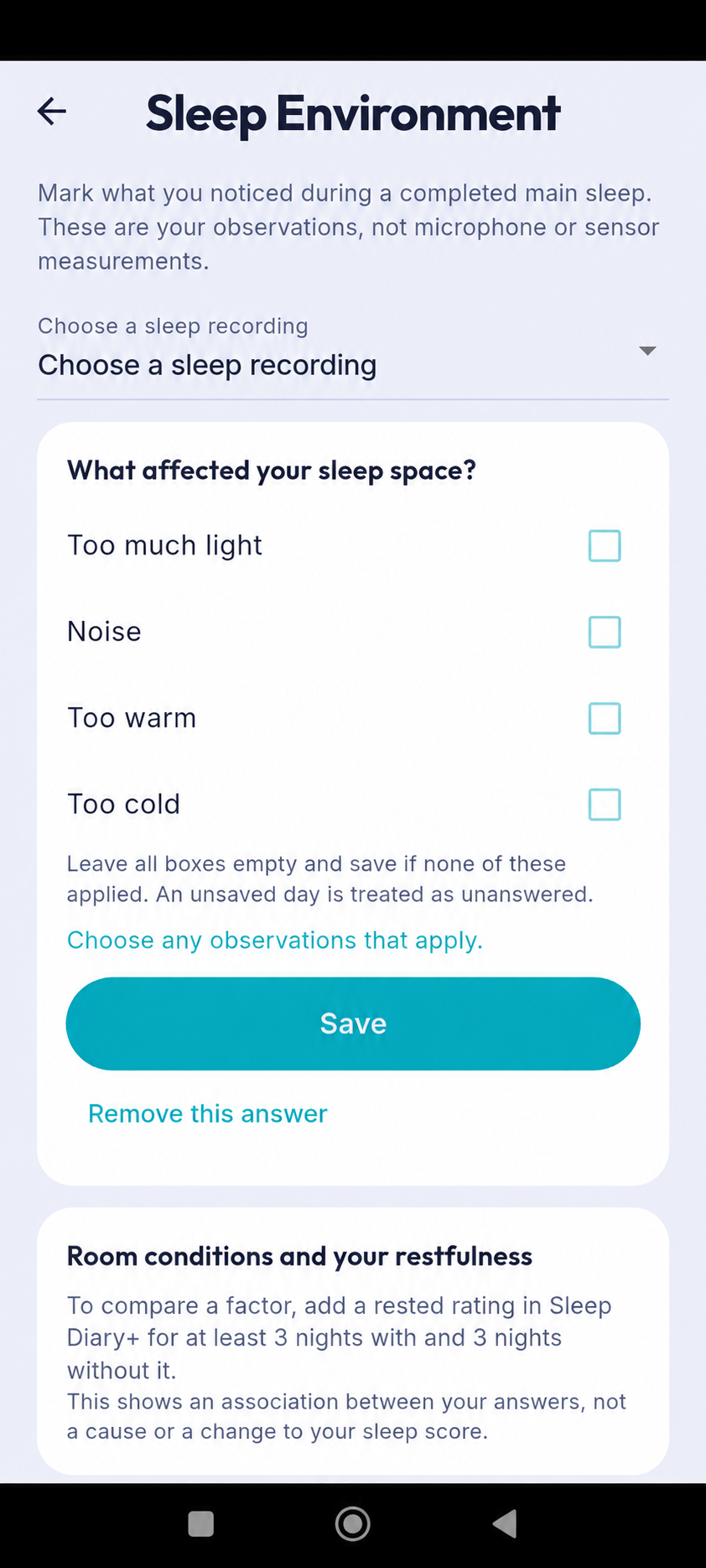
People often ask for one ideal bedroom temperature, but comfort depends on bedding, clothing, humidity, health, and personal preference. A room that feels too warm or too cold can be distracting even when the thermostat number seems conventional.
Understand the pattern
Start with a small adjustment and note whether you wake because of heat or chill. Change one factor at a time, such as a lighter blanket or airflow, so the result is easier to interpret.
Start by describing, not judging. Compare several ordinary days.
Try a practical adjustment
Keep the sleep space comfortable through the night and account for seasonal changes. For shift workers sleeping in daylight, room temperature may vary as the outdoor day warms up.
Choose one change and give it a fair, comfortable trial.
Keep expectations realistic
NHLBI recommends a cool, quiet, dark sleep environment as a general habit. That is not a specific temperature prescription; choose a safe and comfortable setting for yourself.
Personal observations are useful context, not a diagnosis.
Bedroom Temperature and Sleep is best approached as one part of a broader sleep picture. Observe your own routine, make a comfortable change if useful, and seek personalized guidance when ongoing symptoms affect daily life. AuraSleep can help organize sleep sessions and notes, but it does not diagnose or treat a sleep condition.
Sources
- NHLBI: Healthy Sleep Habits · View source
- CDC/NIOSH: Improve Sleep · View source