
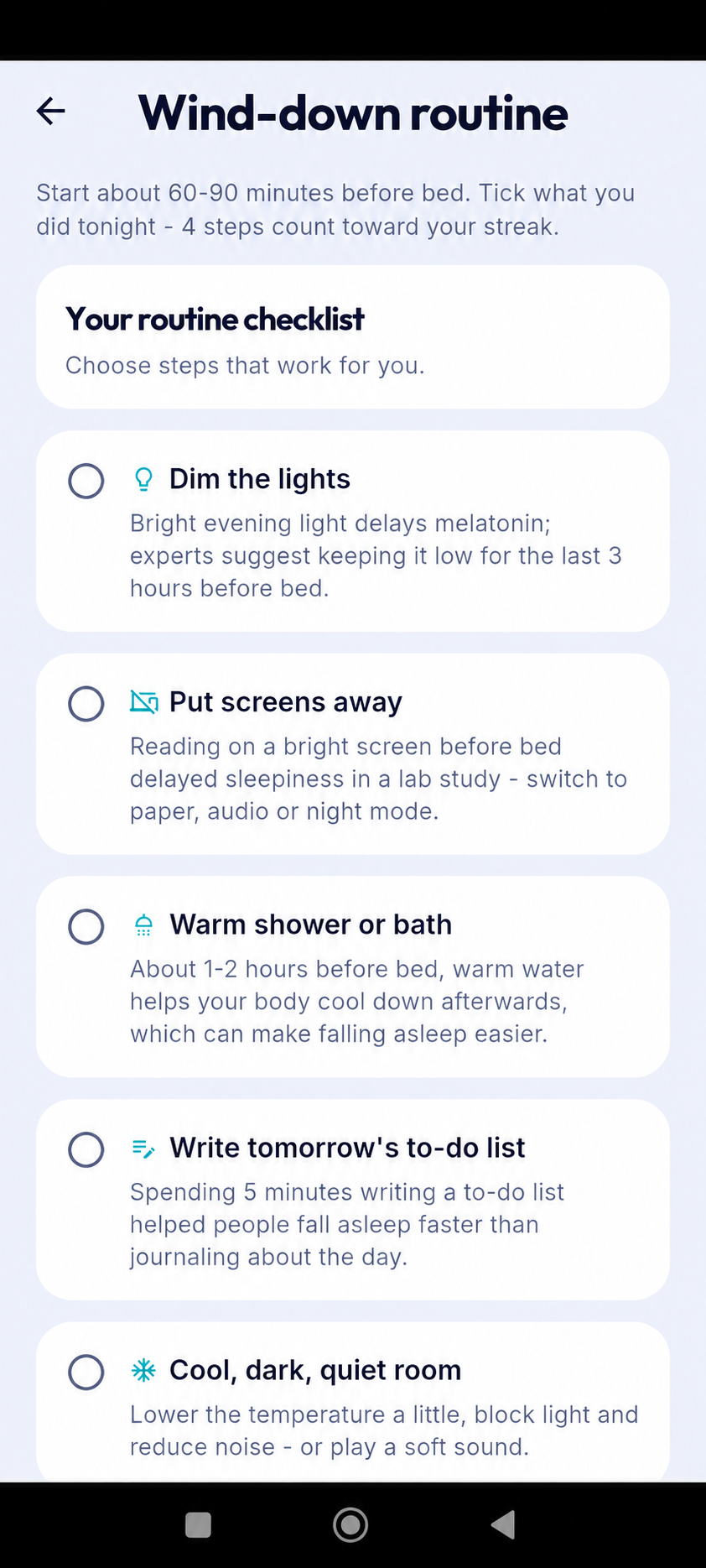
When work ends close to your intended sleep time, a standard “start winding down an hour before bed” rule may not fit. Focus on a short transition that separates work demands from the sleep opportunity you have.
Understand the pattern
Set a clear end-of-work cue, reduce stimulating tasks where possible, and prepare only what is essential for the next day. A brief wash-up or calm breathing practice can mark the shift without requiring a long routine.
Start by describing, not judging. Compare several ordinary days.
Try a practical adjustment
If late work changes nightly, record shift end, bedtime, and wake time for a week. The pattern may show that the main barrier is not the routine itself but the limited time available for sleep.
Choose one change and give it a fair, comfortable trial.
Keep expectations realistic
A routine cannot create hours that the schedule removes. If work leaves inadequate sleep opportunity or causes safety concerns, discuss workload and scheduling options with a supervisor or clinician.
Personal observations are useful context, not a diagnosis.
An Evening Routine for People Who Work Late is best approached as one part of a broader sleep picture. Observe your own routine, make a comfortable change if useful, and seek personalized guidance when ongoing symptoms affect daily life. AuraSleep can help organize sleep sessions and notes, but it does not diagnose or treat a sleep condition.
Sources
- NHLBI: Insomnia Treatment and Healthy Sleep Habits · View source
- CDC/NIOSH: Improve Sleep · View source