
Alcohol may make some people feel sleepy sooner, which can create the impression that it improves sleep. But falling asleep quickly is only one part of the night. Research has found changes in sleep architecture, including effects on REM sleep, and the experience can vary with amount and timing.
Sleep onset is not the full picture
Alcohol has sedating effects, but sedation is different from normal sleep. A 2024 systematic review and meta-analysis reported delayed REM onset and reduced REM duration, with larger effects at higher doses in the included studies.
The evidence does not mean every person will notice the same change on every night. Dose, timing, individual biology, and other substances or health factors can all matter.
Notice the full night and next day
If you are tracking a routine, note whether alcohol was consumed and roughly when, alongside bedtime and how you felt the next day. Do not treat a sleep score as a direct measure of alcohol’s effect or overall health.
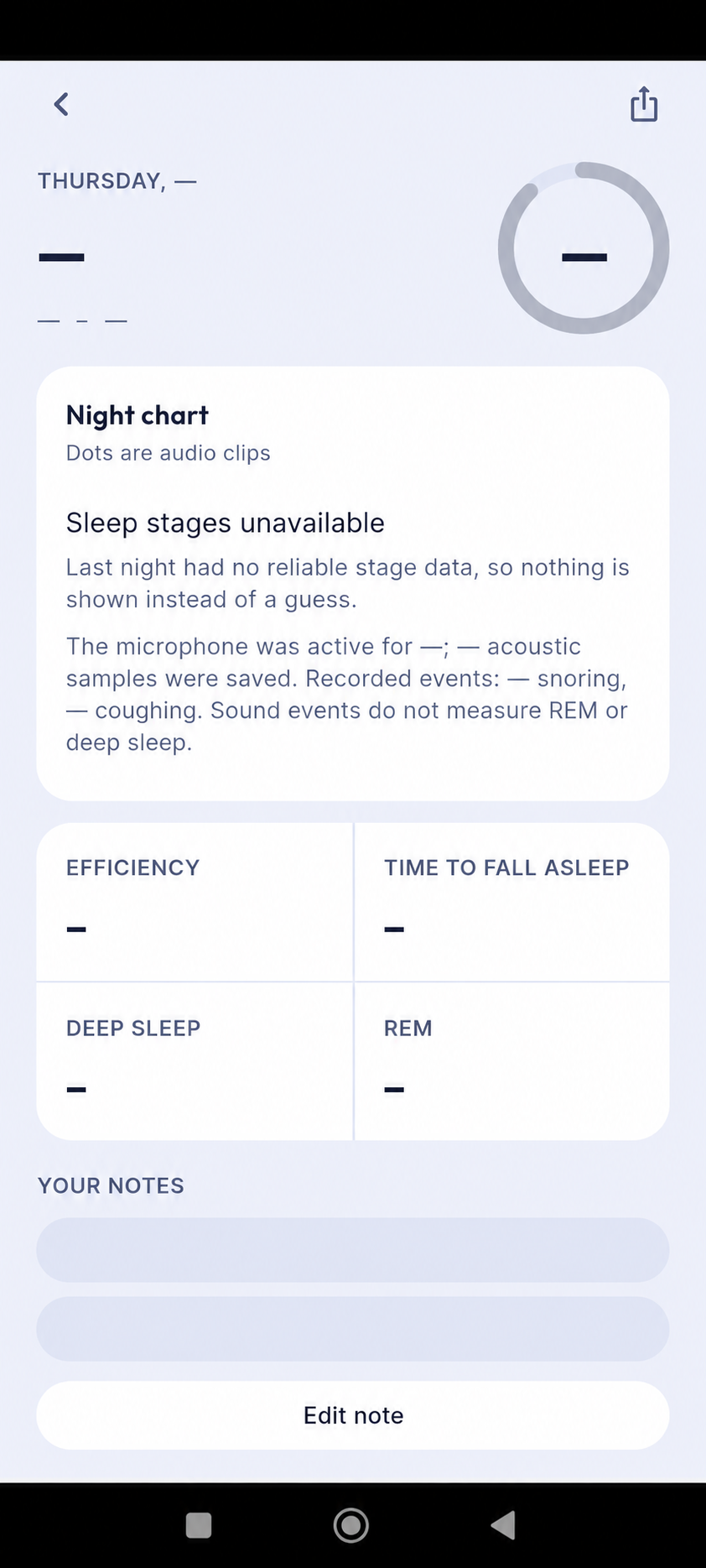
AuraSleep can store a morning reflection with a session, but it does not determine alcohol consumption or diagnose a sleep problem. Any comparison is a personal observation, not a controlled experiment.
Avoid using alcohol as a sleep aid
Using alcohol to fall asleep can create other health risks and may contribute to fragmented rest for some people. More is not a safe strategy for improving sleep.
If reducing alcohol feels difficult or you have concerns about its effects, talk with a healthcare professional or a trusted support service.
Consider symptoms and safety
Snoring, breathing pauses, severe daytime sleepiness, or repeated waking deserve attention on their own. Alcohol-related recordings or app labels cannot determine the cause.
For persistent concerns, speak with a clinician. Consumer tracking can help you describe a routine, but medical assessment uses more than a phone’s estimates.
Feeling sleepy sooner after alcohol does not tell the whole story of the night. Evidence suggests REM sleep can be affected, but individual experiences differ; avoid using alcohol as a sleep aid and discuss persistent concerns with a professional.
Sources
- 2024 systematic review and meta-analysis of alcohol and sleep · View source
- NIH: Healthy Sleep · View source