
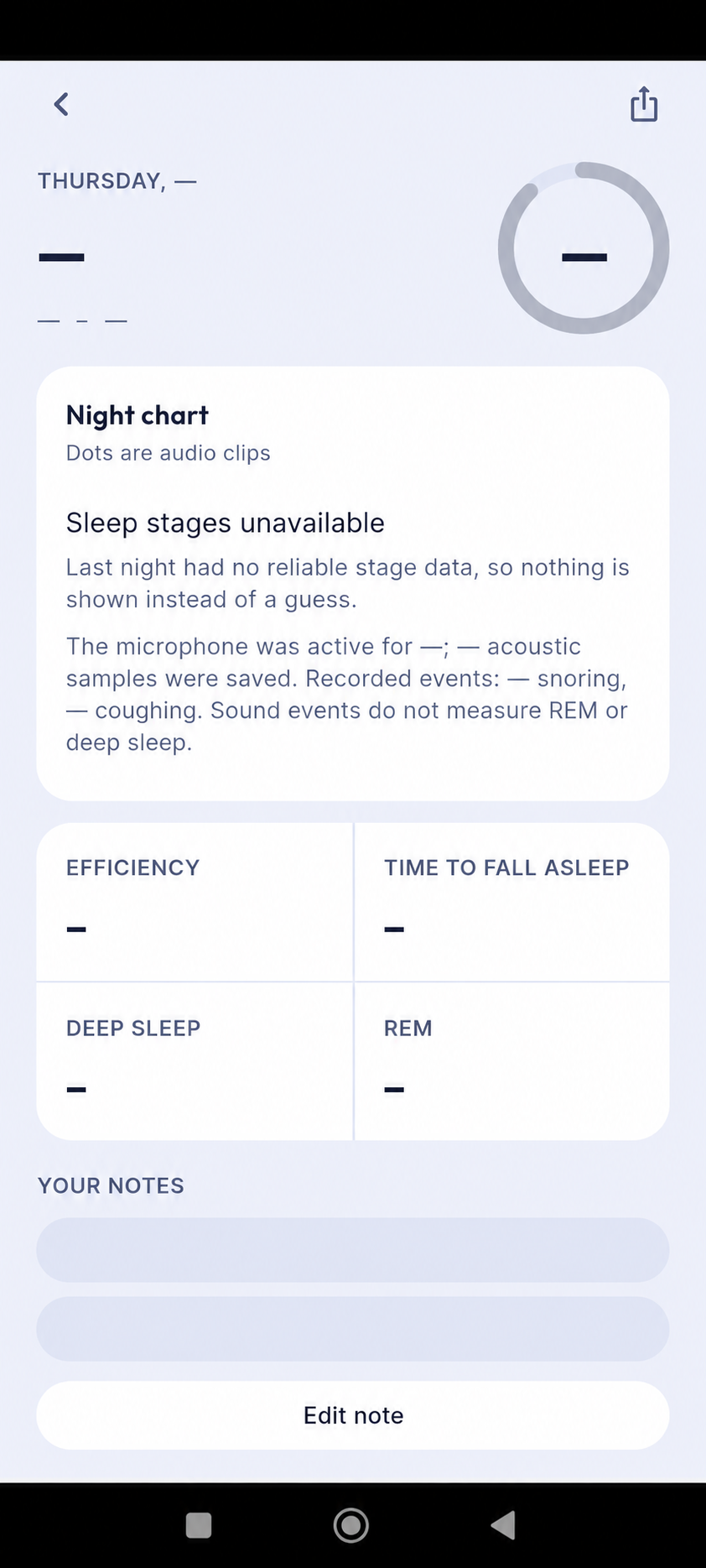
A sleep app can summarize estimates and events, but a number cannot explain what was happening in your life that night. A short personal note can preserve context such as a late shift, travel, a noisy room, or how rested you felt. It helps you remember your experience alongside the app’s output, without turning that output into a medical conclusion.
Add the context a number cannot show
After waking, write one or two details you are likely to forget: an unusual bedtime, a changed routine, a nap, an interruption, or a feeling such as “rested” or “still tired.” Use your own words and keep the note short. A note is most useful when it captures something observable rather than an explanation you cannot verify.
For example, “neighbor’s music woke me once” describes a remembered event, while “noise caused my poor sleep” assumes a cause. Keeping observation and interpretation separate makes later reflection more careful.
Review notes beside estimates, not instead of them
Look across several nights and ask whether a circumstance appeared repeatedly. Compare nights with similar schedules where possible, and remember that an app estimate may be incomplete or wrong. Notes can help you question a pattern, but they do not validate sensor data or measure sleep stages.
A sleep diary may be useful when discussing sleep with a clinician. NHLBI suggests recording sleep and daytime habits for a period before an appointment. AuraSleep is a personal wellness tool; its notes are not a clinical assessment and may not include every detail your clinician needs.
Keep personal details purposeful and private
You do not need to record every thought or sensitive detail. Note only what helps you understand your own routine, and review the app’s privacy and retention settings before storing audio or health-related information. If you share a report, check that private notes and identifying details are not included unintentionally.
If sleep problems persist or affect daily activities, consider discussing a sleep history with a qualified health professional. Personal notes can support that conversation, but neither a diary nor an app can diagnose a sleep condition on its own.
Brief personal notes add the human context that tracking estimates cannot provide. Record observations in your own words, compare them carefully across similar nights, and use them as conversation support—not as proof of a cause or diagnosis.
Sources
- NHLBI: Insomnia Diagnosis and Sleep Diary · View source
- NHLBI: Sleep Diary · View source