
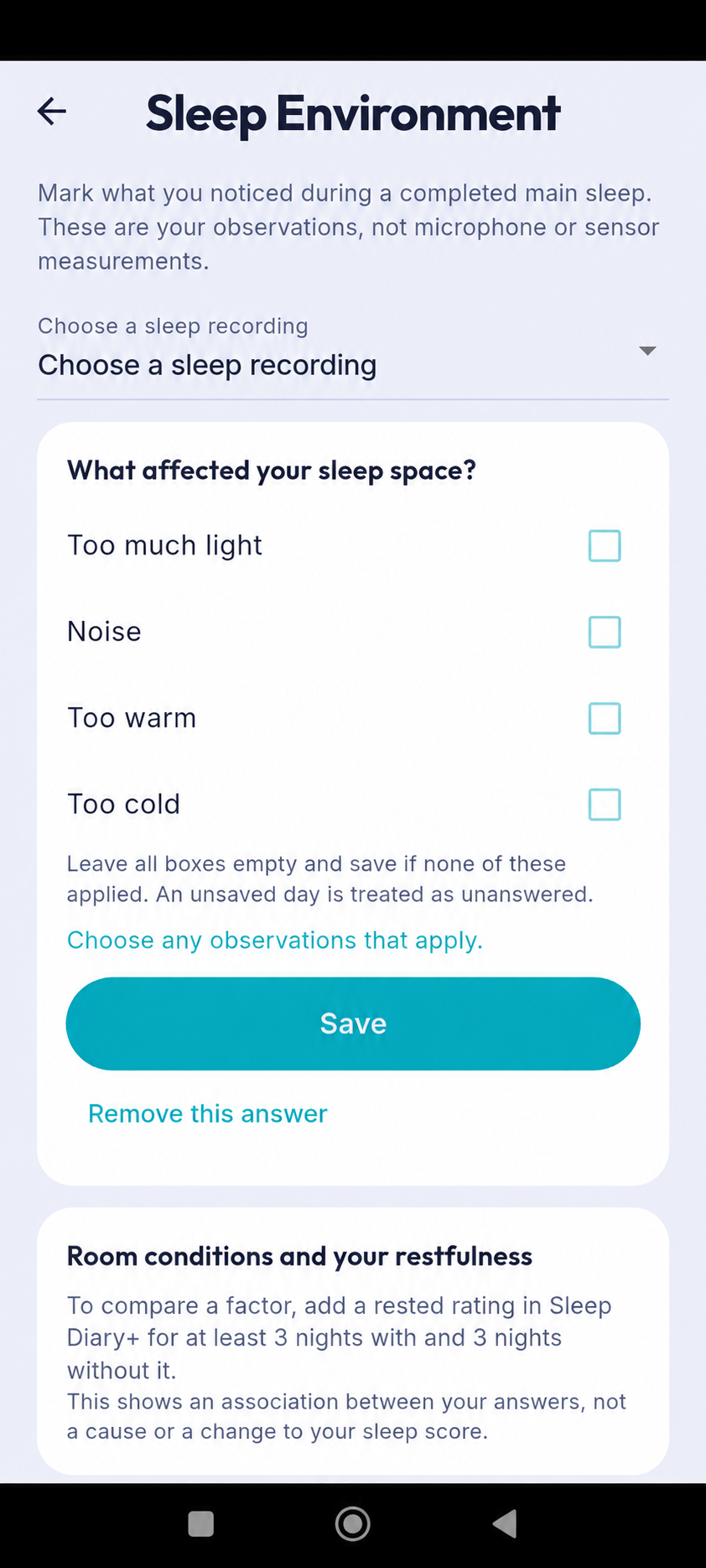
A sleep-friendly room is not defined by its size or style. In a small apartment or shared bedroom, a few repeatable boundaries around light, sound, and bedtime activity may matter more than a major renovation.
Understand the pattern
Use a sleep mask or a curtain divider if comfortable, agree on quiet hours where possible, and keep devices from lighting the entire room. A simple basket can move work items out of sight when the sleep window begins.
Start by describing, not judging. Compare several ordinary days.
Try a practical adjustment
If household schedules differ, communicate the times when you need quiet and the times when others can use the room normally. Focus on achievable changes rather than expecting complete silence.
Choose one change and give it a fair, comfortable trial.
Keep expectations realistic
Shared housing can limit control. AuraSleep can record how your sleep varies with environmental changes, but it cannot tell whether a particular sound caused a specific event.
Personal observations are useful context, not a diagnosis.
A Sleep-Friendly Bedroom for Small Apartments and Shared Rooms is best approached as one part of a broader sleep picture. Observe your own routine, make a comfortable change if useful, and seek personalized guidance when ongoing symptoms affect daily life. AuraSleep can help organize sleep sessions and notes, but it does not diagnose or treat a sleep condition.
Sources
- NHLBI: Healthy Sleep Habits · View source
- CDC/NIOSH: Improve Sleep · View source