
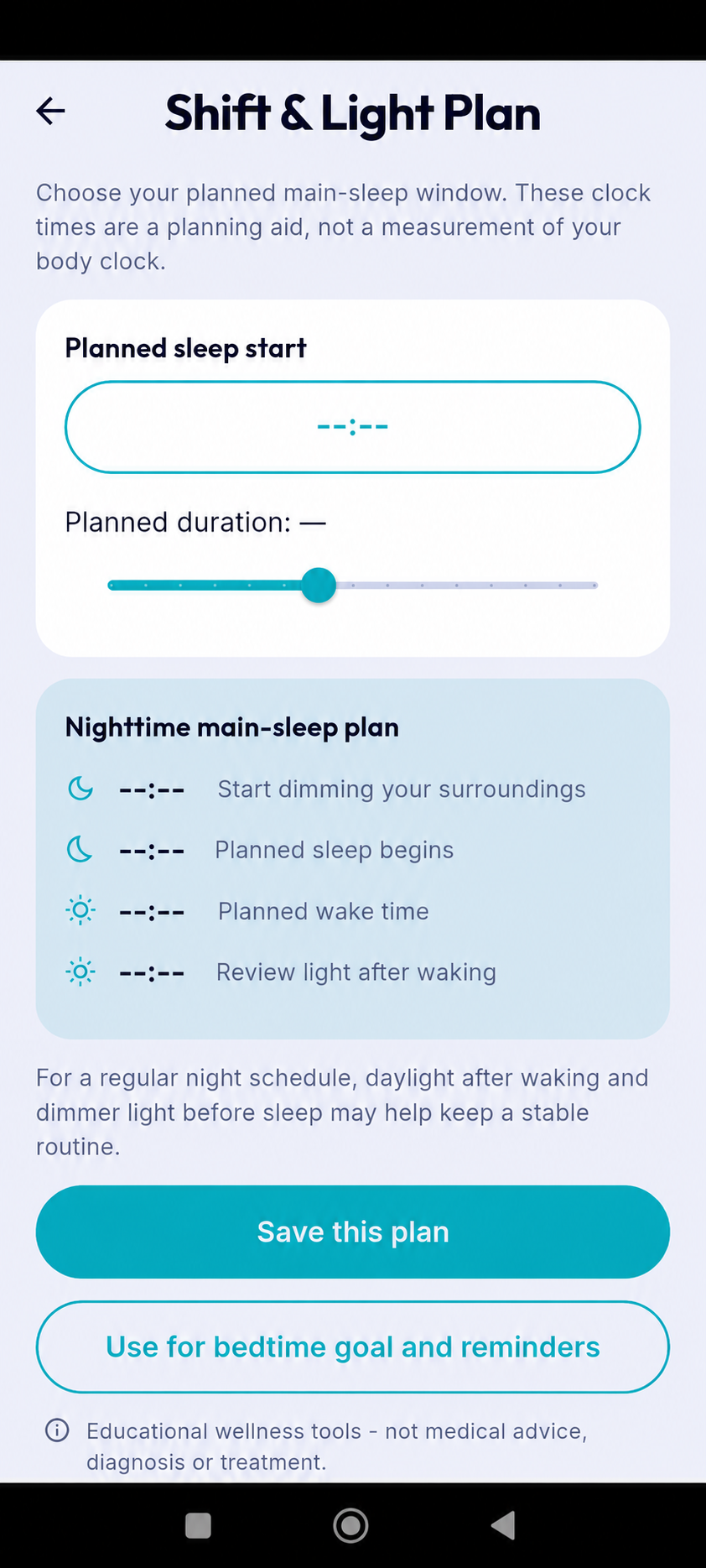
A rotating schedule can create more than one sleep period in a day. A useful diary records each block separately, so the record does not mistake a nap for the main sleep period or ignore sleep after an overnight shift.
Understand the pattern
For every block, note start and end estimates, interruptions you remember, and whether it was planned or unplanned. Add the shift hours, commute, caffeine, and alertness when those details help explain the day.
Start by describing, not judging. Compare several ordinary days.
Try a practical adjustment
Review a few weeks together rather than treating one difficult shift as representative. You may see that a particular rotation leaves too little recovery time or that the sleep window varies more than expected.
Choose one change and give it a fair, comfortable trial.
Keep expectations realistic
A diary can support a workplace or clinical discussion, but it cannot diagnose a circadian rhythm disorder. AuraSleep notes help organize personal entries without claiming to measure every sleep stage.
Personal observations are useful context, not a diagnosis.
A Sleep Diary for Rotating Shifts is best approached as one part of a broader sleep picture. Observe your own routine, make a comfortable change if useful, and seek personalized guidance when ongoing symptoms affect daily life. AuraSleep can help organize sleep sessions and notes, but it does not diagnose or treat a sleep condition.
Sources
- CDC/NIOSH: Shift Work and Long Hours · View source
- CDC/NIOSH: Fatigue Crisis Guidance · View source