
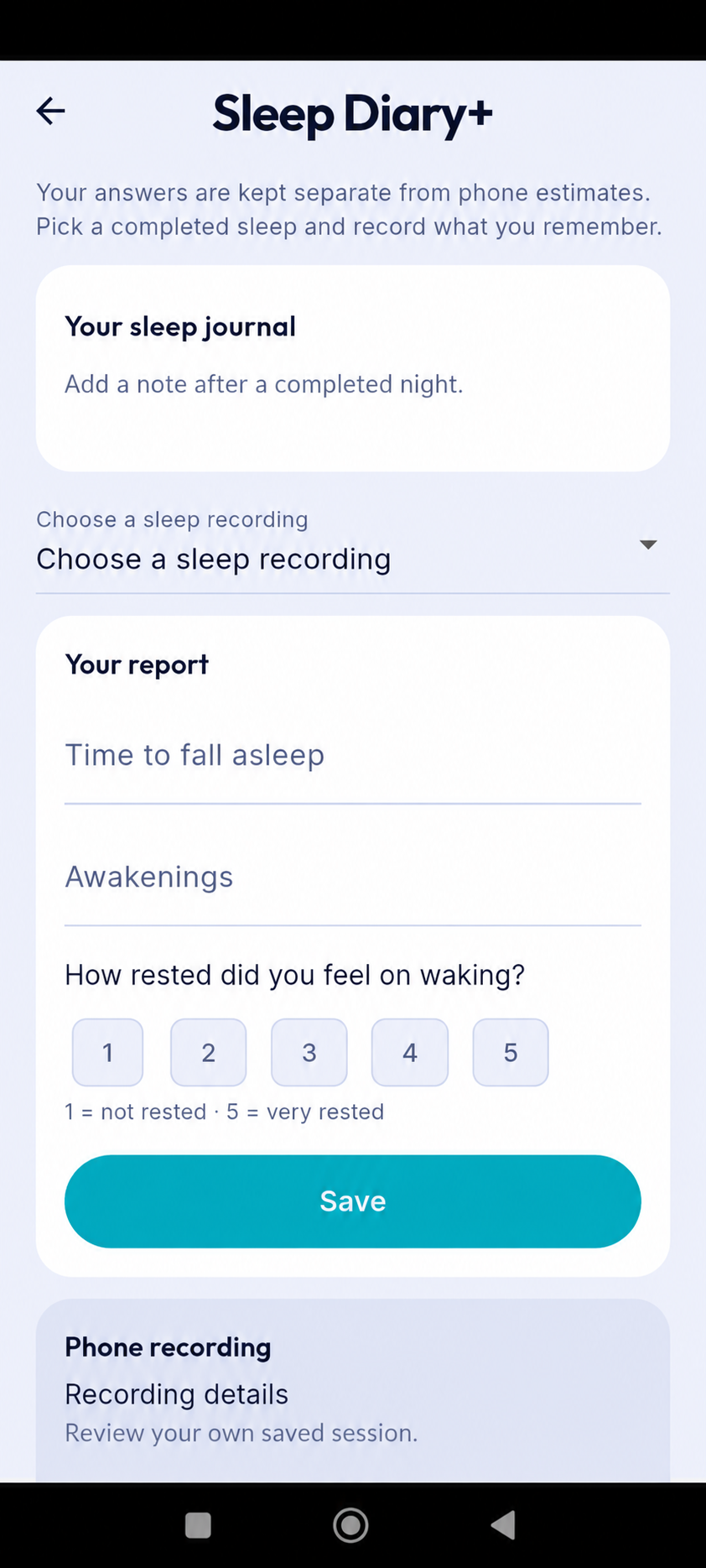
When work, caregiving, or travel changes your bedtime, a calendar alone can hide the pattern. A sleep diary can record the sleep period that actually happened, including split sleep, naps, and the time you needed to be awake.
Understand the pattern
Write down the start and end of each sleep opportunity separately when you sleep in more than one block. Label the main sleep period and any nap, so the record reflects your schedule instead of forcing it into a conventional night.
Start by describing, not judging. Compare several ordinary days.
Try a practical adjustment
After several entries, note which days had the biggest shifts and whether you felt alert or sleepy at important times. Avoid judging yourself against a standard bedtime that does not fit your obligations.
Choose one change and give it a fair, comfortable trial.
Keep expectations realistic
Shift workers may benefit from advice tailored to their schedule. AuraSleep can help organize session notes, while a clinician or occupational health professional can help interpret persistent problems safely.
Personal observations are useful context, not a diagnosis.
A Sleep Diary for Irregular Schedules and Changing Bedtimes is best approached as one part of a broader sleep picture. Observe your own routine, make a comfortable change if useful, and seek personalized guidance when ongoing symptoms affect daily life. AuraSleep can help organize sleep sessions and notes, but it does not diagnose or treat a sleep condition.
Sources
- NHLBI Sleep Diary · View source
- NHLBI: Insomnia Diagnosis · View source