
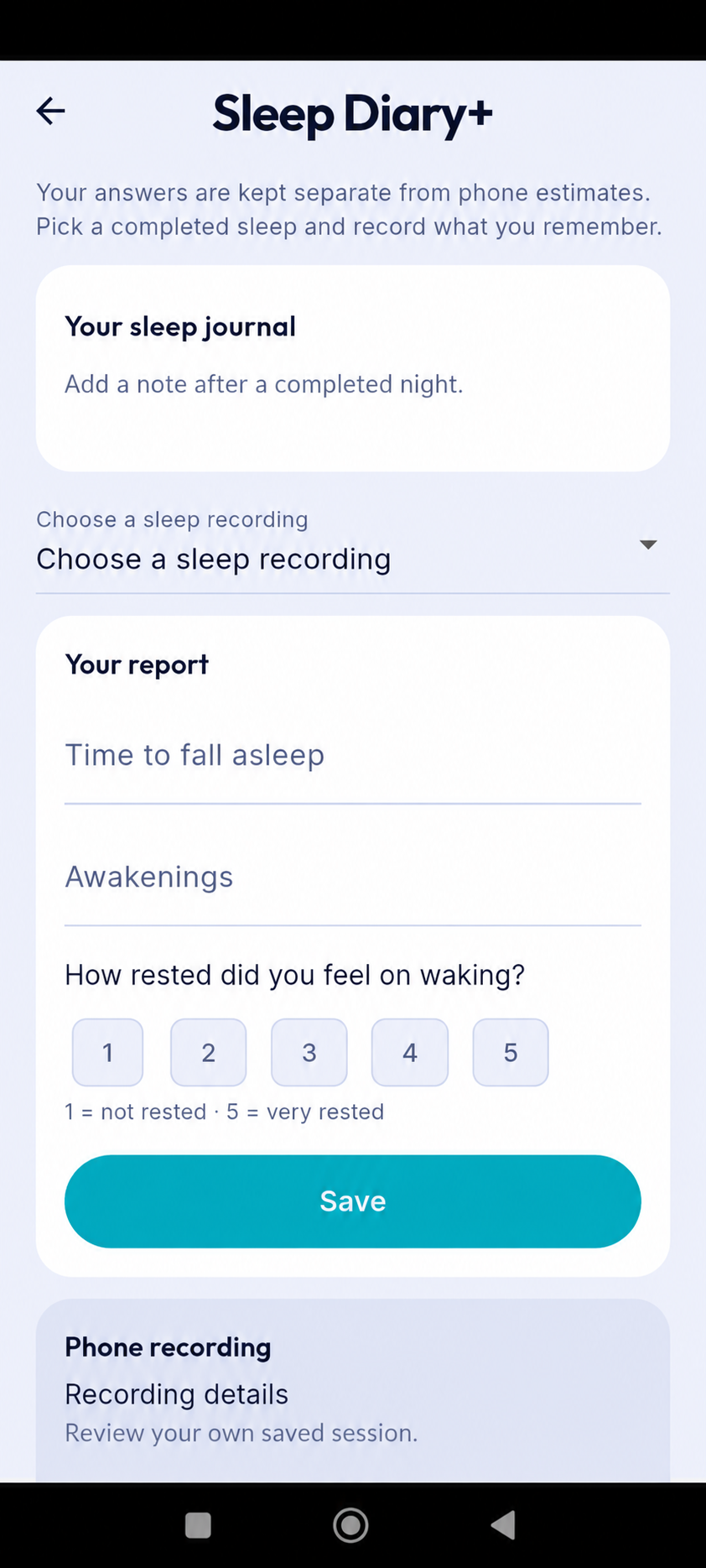
A useful sleep diary is brief enough to keep. Record when you went to bed, an estimate of when sleep began, awakenings you remember, final wake time, naps, and how alert you felt. Add caffeine, alcohol, medicines, exercise, or unusual events only when they may help explain a change.
Understand the pattern
Use the same few fields every day rather than trying to reconstruct a perfect night. Notes are estimates, not laboratory measurements; consistency makes them more useful than false precision.
Start by describing, not judging. Compare several ordinary days.
Try a practical adjustment
After a week, compare weekdays with weekends and look for recurring patterns. AuraSleep lets you add personal context to a sleep session, so a late coffee or a changed schedule can sit beside your own observations.
Choose one change and give it a fair, comfortable trial.
Keep expectations realistic
If tracking starts to make bedtime feel like a performance, simplify it or pause. A diary supports reflection and a healthcare conversation; it should not become a scorecard or a diagnosis.
Personal observations are useful context, not a diagnosis.
A Simple Sleep Diary is best approached as one part of a broader sleep picture. Observe your own routine, make a comfortable change if useful, and seek personalized guidance when ongoing symptoms affect daily life. AuraSleep can help organize sleep sessions and notes, but it does not diagnose or treat a sleep condition.
Sources
- NHLBI Sleep Diary · View source
- NHLBI: Insomnia Diagnosis · View source