
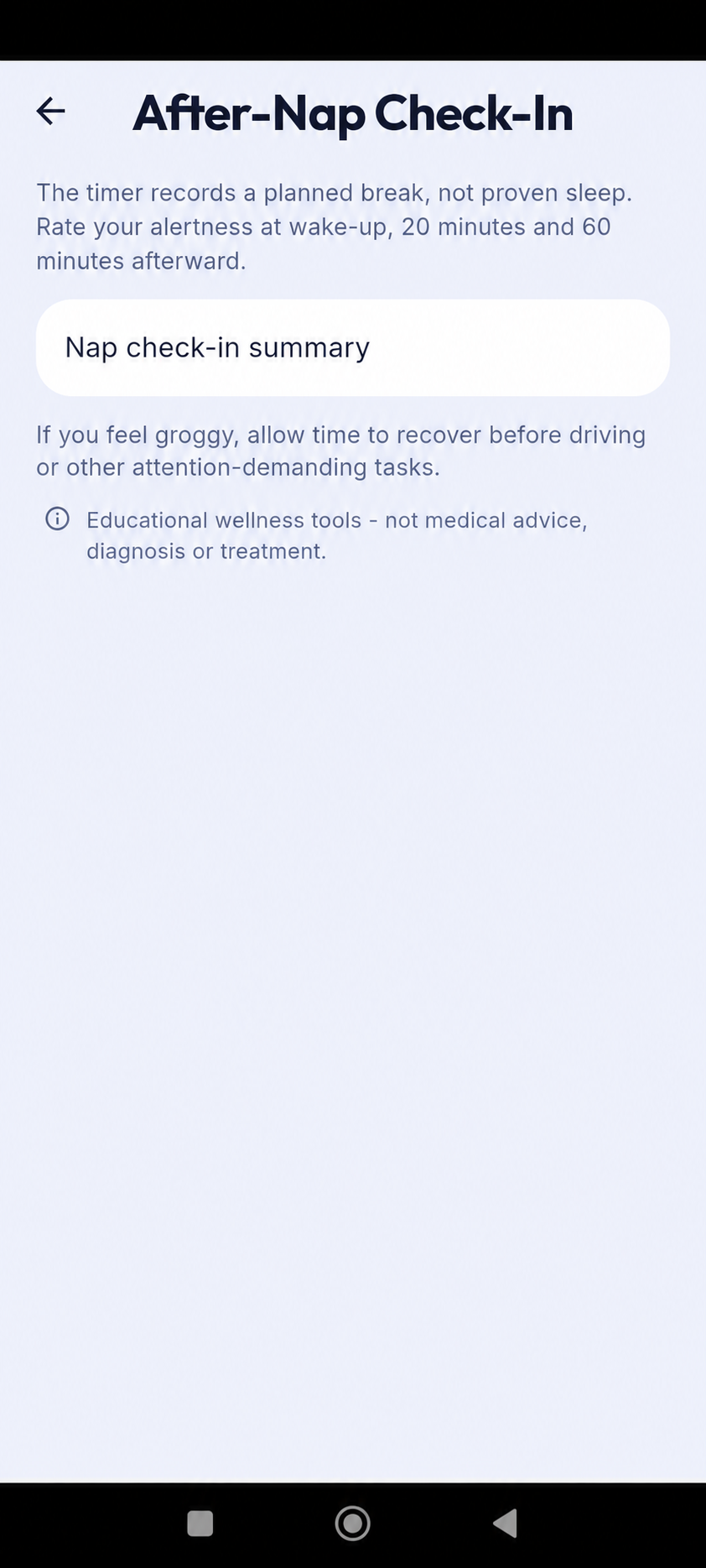
Some workers plan a nap before a night shift to create extra rest opportunity. NIOSH notes that longer naps before a night shift may help prevent fatigue in some circumstances, but waking from sleep can temporarily reduce alertness.
Understand the pattern
Build in time after the nap to become fully awake before commuting or handling safety-sensitive duties. Set up a quiet, dark place and decide in advance how you will transition into the shift.
Start by describing, not judging. Compare several ordinary days.
Try a practical adjustment
Record whether the nap was possible, how long it lasted, and your alertness at the start of work. A realistic plan should fit your sleep history and shift demands, not just an ideal schedule.
Choose one change and give it a fair, comfortable trial.
Keep expectations realistic
Workplace policies and individual health matter. Seek occupational guidance when fatigue is recurring, and never assume a pre-shift nap eliminates the risk from long hours.
Personal observations are useful context, not a diagnosis.
A Nap Before a Night Shift is best approached as one part of a broader sleep picture. Observe your own routine, make a comfortable change if useful, and seek personalized guidance when ongoing symptoms affect daily life. AuraSleep can help organize sleep sessions and notes, but it does not diagnose or treat a sleep condition.
Sources
- CDC/NIOSH: Naps at Work · View source
- CDC/NIOSH: Napping Guidance · View source