
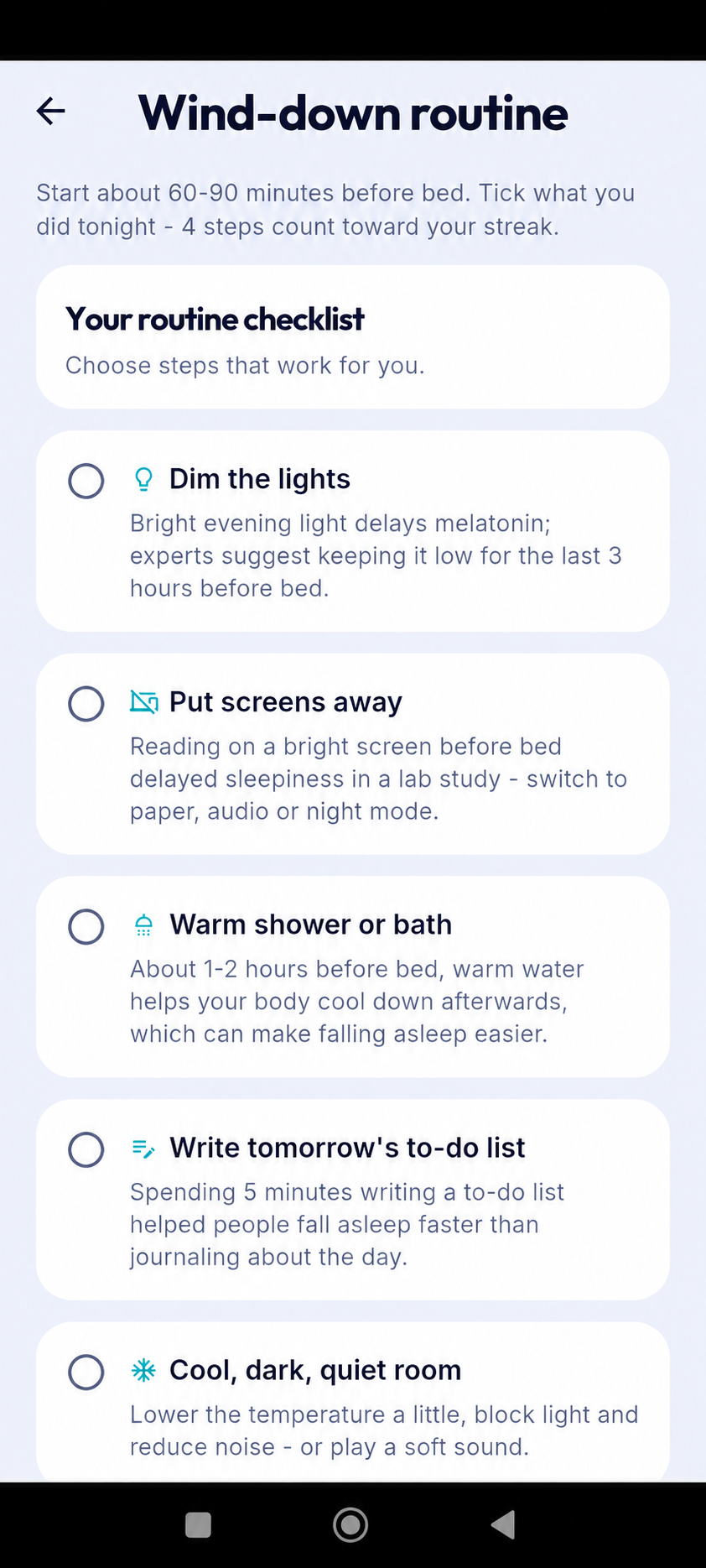
A bedtime routine works best when it is simple enough to repeat on an ordinary evening. Thirty minutes is a planning example, not a biological requirement: some people need less time, and shift workers may follow the sequence at a different hour.
Understand the pattern
Choose a few low-effort steps, such as preparing tomorrow’s essentials, dimming bright lights, washing up, and reading or listening to something calming. Keep the order stable while allowing the clock time to vary when work requires it.
Start by describing, not judging. Compare several ordinary days.
Try a practical adjustment
If your routine repeatedly gets interrupted, shorten it instead of treating the interruption as failure. A two-step version is more useful than an elaborate checklist you can only complete on ideal days.
Choose one change and give it a fair, comfortable trial.
Keep expectations realistic
NHLBI suggests regular sleep timing and a sleep-friendly room among healthy habits. A routine can support those habits, but persistent insomnia may need professional treatment.
Personal observations are useful context, not a diagnosis.
A 30-Minute Bedtime Routine That Does Not Feel Like Homework is best approached as one part of a broader sleep picture. Observe your own routine, make a comfortable change if useful, and seek personalized guidance when ongoing symptoms affect daily life. AuraSleep can help organize sleep sessions and notes, but it does not diagnose or treat a sleep condition.
Sources
- NHLBI: Insomnia Treatment and Healthy Sleep Habits · View source
- CDC/NIOSH: Improve Sleep · View source